Japan's Lithography Giant Nikon Faces 85 Billion Yen Loss in FY2025—Can It Hold On?
 04/01 2026
 620
620

Source | Home Appliance Daily (jiadpai) Author | Xiaoxiao

A few days ago, I saw a number that made my heart skip a beat.
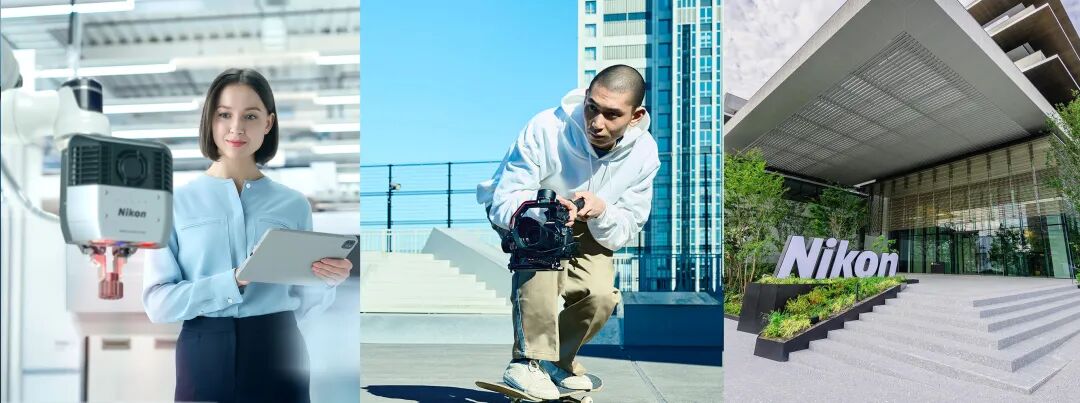
Nikon, the century-old Japanese powerhouse known for its legendary cameras, is projecting an 85 billion yen loss for FY2025—its largest ever.
What went wrong? Officially, it blames its 3D printing business.
But everyone’s eyes are on another figure: Nikon sold just nine lithography machines in the past six months, mostly older models for mature processes. Meanwhile, ASML in the Netherlands shipped 160 units, including over 20 high-end EUV models.
Nine versus 160. That’s not a gap—it’s a dimensional collapse.
Inside Nikon’s Tokyo headquarters, 70-year-old Chairman Toshikazu Uehara stared at the financials, likely recalling his younger, ambitious self three decades ago. As the company’s top lithography expert, he witnessed Nikon’s peak—and its gradual decline.
Having seen it all, this moment stings the most.

The Former Champion
Let’s rewind to the 1980s.
Back then, Nikon was synonymous with Japanese precision manufacturing. It dominated cameras and lithography machines alike.
What is a lithography machine? It’s the core tool for making chips—the heart of the semiconductor industry. And Nikon’s machines were the heart of that heart.
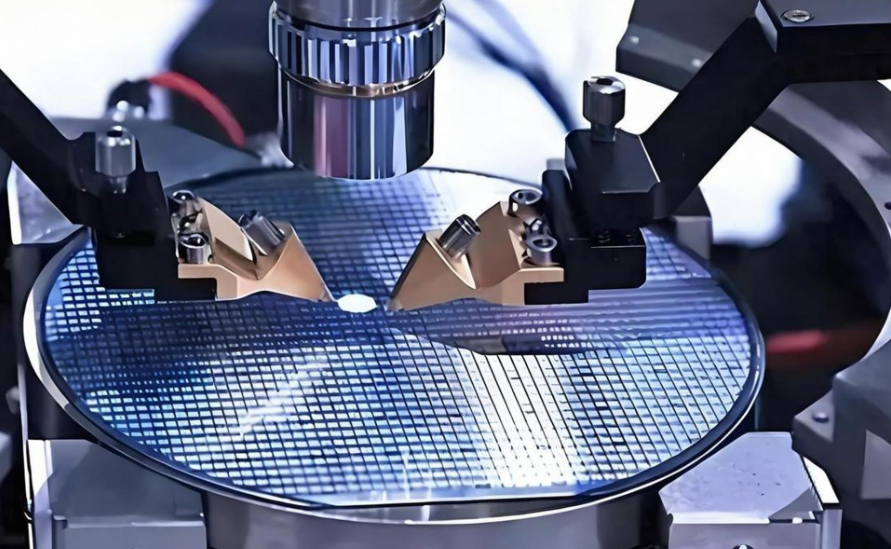
Media described Nikon’s precision like this: imagine standing atop Mount Fuji and hitting a sewing needle on a Tokyo street with pinpoint accuracy. Some even claimed modern semiconductors wouldn’t exist without Nikon.
That wasn’t hyperbole.
From Intel, IBM, to Texas Instruments, global chip giants stationed teams at Nikon’s Silicon Valley office just to secure priority access. One semiconductor CEO even camped out at Nikon’s factory, prepaying in full for a debug (debugging) slot.
At its peak, Nikon controlled half the global lithography market, as unshakable as today’s ASML. It crushed American pioneer GCA and left ASML scrambling for survival, with no voice in the industry. Young engineer Toshikazu Uehara witnessed Nikon’s golden age firsthand.
He never imagined he’d one day lead the company—or that it would end up here.

The ‘Madman’ Who Was Rejected
How did Nikon lose its edge? The story begins in 2002.
That year, TSMC engineer Burn J. Lin knocked on Nikon’s door.
Stuck at 193nm dry lithography with no breakthrough in next-gen light sources, the industry was desperate. Lin proposed a radical idea: inject water between the lens and wafer. Using water’s refraction, 193nm light could achieve effects akin to a shorter wavelength.
This became the legendary “immersion lithography.”
Low-cost, high-impact—a genius concept. But Nikon’s executives laughed.
To them, Nikon’s lenses were the pinnacle of precision optics. Dunking such expensive glass in water? Blasphemy.

Nikon’s representative grilled Lin: “If water contaminates the lens, can TSMC afford the damage? If bubbles cause defects, who takes responsibility?”
More critically, Nikon had already sunk over $700 million into 157nm dry technology. Switching to immersion would render that investment worthless—unacceptable to executives.
So Nikon not only rejected Lin but tried to squash his idea using its industry clout.
Lin later recalled Nikon’s high-level (executives) calling TSMC’s R&D VP after his visit: “Control your Burn J. Lin. Stop him from peddling this industry-disrupting idea—it’s distracting everyone.”
Lin didn’t give up. After Nikon’s rebuff, he flew to the Netherlands.
There, he met ASML’s technical visionary Martin van den Brink, a risk-taking European engineer. ASML, then struggling to survive, seized the opportunity. Lin’s idea thrilled van den Brink.
Defying skeptics, van den Brink bet ASML’s future on this “crazy idea.”
The outcome is history.
In 2004, ASML’s immersion lithography machine debuted, dominating the market. Nikon’s prized lenses suddenly became obsolete. Its high-end lithography empire crumbled.

A Riskier Gamble
If missing immersion was a blow, Nikon’s EUV gamble delivered the final blow. Undeterred, Nikon bet on next-gen technology: EUV extreme ultraviolet light.
With a shorter wavelength, EUV could etch smaller circuits on chips.
Uehara, now lithography tech chief, still envisioned Nikon’s heyday. He launched internal EUV R&D, vowing full in-house development and Japanese production. Japan backed him, treating it as a national priority. The economy ministry invested billions, rallying top experts from Tokyo, Kyoto, and Tsukuba universities, along with Nikon, Canon, Tokyo Electron, and Shin-Etsu Chemical.
Typical Japanese strategy: concentrate resources, single-minded focus.
By 2012, Uehara became executive director, overseeing EUV fully. Armed with resources, he tried to brute-force EUV’s development.
But the world had already changed.
That same year, ASML secured joint investments from Intel, Samsung, and TSMC, forming its EUV alliance. It tied itself to three key customers and assembled global supply chain giants—Zeiss lenses from Germany, Cymer light sources from the U.S.
Worse, the U.S. cited security concerns to exclude Canon, Nikon, and other Japanese firms from the EUV tech alliance, cutting Nikon off from American innovations. Meanwhile, Nikon’s cameras remained global bestsellers.
Tokyo was helpless. Uehara’s “full in-house, full Japanese” approach became isolationist.
By 2018, Nikon had poured over 100 billion yen into EUV, yielding only a non-commercial prototype. ASML’s EUV machines, meanwhile, were already iterating crazy ( crazy here means "rapidly") on TSMC’s production lines. Uehara finally conceded defeat, halting EUV commercialization.

Nikon’s Tragic Transformation
When Lin approached Nikon with immersion tech, he trusted them first. But Nikon’s arrogance and blind faith in its own tech bred resistance to outside innovations.
After missing immersion, Nikon doubled down on closed (closed-door) self-reliance, turning innovation into isolation.
Today, Nikon is trapped: ASML races ahead; Chinese lithography firms erode its mid-to-low-end market. The former champion gasps for air. Nine versus 160 epitomizes its plight.

In September 2025, Nikon closed its 58-year-old Yokohama plant. Uehara, 70, prepares to step down. From tech pioneer to corporate leader, this veteran tried to restore glory alone but fell short. Standing by his office window, gazing at his aged reflection, does he recall his younger, ambitious self?
Does he whisper, “If only we’d given Lin a testbed, just to try…”?
But there are no ifs in tech’s cruel arena. The greatest danger isn’t falling behind—it’s arrogance, isolation, refusing to look outward, and evolving in a vacuum.
The ‘madman’ you mocked is now a god you can’t reach.
END
-
Alibaba’s Earnings Soar with Triple Catalysts: Full-Stack AI Hits Maturity, Capital Efficiency Drives Sustainable Growth
-
![]()
Raking in Big Profits Overseas! Chery’s Overseas Revenue Makes Up 70% in H1, with Gross Margin Climbing to 16.1%
-
![]()
Alibaba’s New Fiscal Quarter: 45% Revenue Surge in Alibaba Cloud, Enhanced Profitability in AI Cloud, but Widening Losses in the Application Layer
-
![]()
The AI Version of 'PayPal Mafia' Has Arrived: 20 AI Startups Raise Over $4.6 Billion in Funding
-
![]()
Wang Jian's Vision: Paving a Pathway for Alibaba Through AI
-
![]()
Hyundai Motor Workers Strike Today, Fearing Job Losses to Robots
-
![]()
Embracing 'Light': O-film Unveils Its 'Illuminating the Future' Strategy
-
![]()
SenseTime’s SenseNova U1.5 Lite Goes Open Source: Ushering in a New Era of Predictable AI Image Generation