Behind the US$717 Million Acquisition: Meituan's Strategic Reinforcement and Dingdong Maicai's Quest for Stability
 02/10 2026
 1086
1086
By Wang Huiying & Dou Wenxue
Edited by Ziye
The US$717 million acquisition of Dingdong Maicai has been finalized, with Meituan as the buyer.
According to the announcement, after the acquisition, Dingdong Maicai will become an indirect wholly-owned subsidiary of Meituan. However, Dingdong Maicai's overseas business is not included in this transaction and will be divested before closing. During the transition period, Dingdong Maicai will continue to operate under its pre-transaction model.
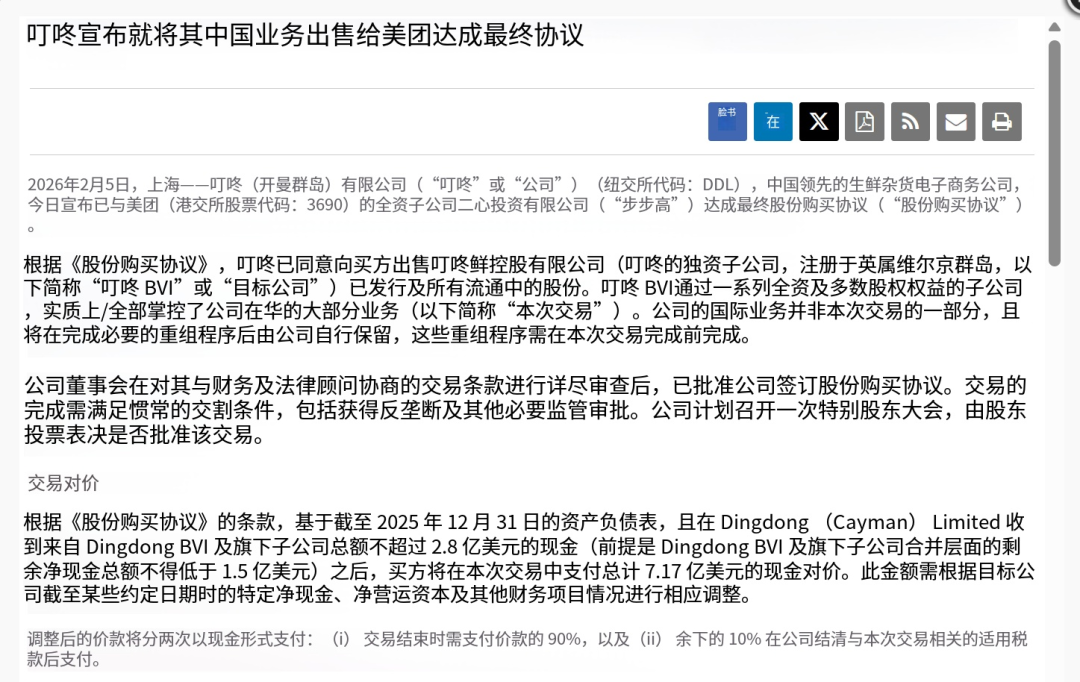
Image source: Dingdong Maicai's official website
This acquisition may seem like a routine development in the fresh produce e-commerce shakeout, but it is a clear signal that the instant retail battle has reached a critical turning point.
Focusing on both sides of the equation, this may be the most rational choice for Dingdong Maicai and Meituan.
Dingdong Maicai, which survived the front-end warehouse wars, has carved out its own path in the fresh produce sector through its supply chain and private brands. Despite achieving profitability, capital remains skeptical about its long-term growth potential.
The fresh produce battlefield is now dominated by giants: JD Seven Fresh is accelerating expansion, Hema is restarting front-end warehouses, and independent platforms face an uphill battle to sustain growth without getting caught in a costly war of attrition—a war Dingdong Maicai cannot afford. Merging with Meituan allows it to preserve its strength, switch tracks, and secure a stable position within a larger ecosystem.
For Meituan, this is a defensive offensive. While Ele.me Supermarket is sizable, its supply chain needs strengthening. The deeper motivation behind the acquisition lies in synergistic reinforcement: Dingdong Maicai can swiftly enhance Meituan's front-end warehouse density and supply chain depth in key consumer regions.
More critically, if a rival had acquired Dingdong Maicai, Meituan would have been left at a significant disadvantage.
Niche independent e-commerce platforms are exiting for a more certain future, while giants are investing heavily to secure ammunition for the instant retail battlefield. This marathon has reached a new pivotal moment.
1. Is Meituan's US$717 Million Acquisition of Dingdong Maicai Worth It?
This acquisition took the outside world slightly by surprise.
According to LatePost, acquisition negotiations began in mid-December last year. During this period, five to six potential buyers, including Alibaba, Meituan, JD, and DHH Capital, submitted bids or conducted due diligence, with rumors about JD acquiring Dingdong Maicai being the most intense.
Meituan was one of the earliest bidders, though its acquisition intent was unclear initially, yet it became the final buyer.
Under the agreement, provided the target group's net cash is no less than US$150 million, the transferor may withdraw up to US$280 million from the target group. Combined with Meituan's US$717 million payment, Dingdong Maicai's shareholders, including founder Liang Changling, will receive US$997 million in returns from this acquisition.
According to Lianxian Insight, the current consensus is that Dingdong Maicai can withdraw US$280 million before closing but must retain US$150 million. Meituan will pay US$717 million to acquire Dingdong Maicai and receive the retained US$150 million. This means Meituan's actual cost for acquiring Dingdong Maicai is US$567 million, while Dingdong Maicai's current market value is US$594 million.
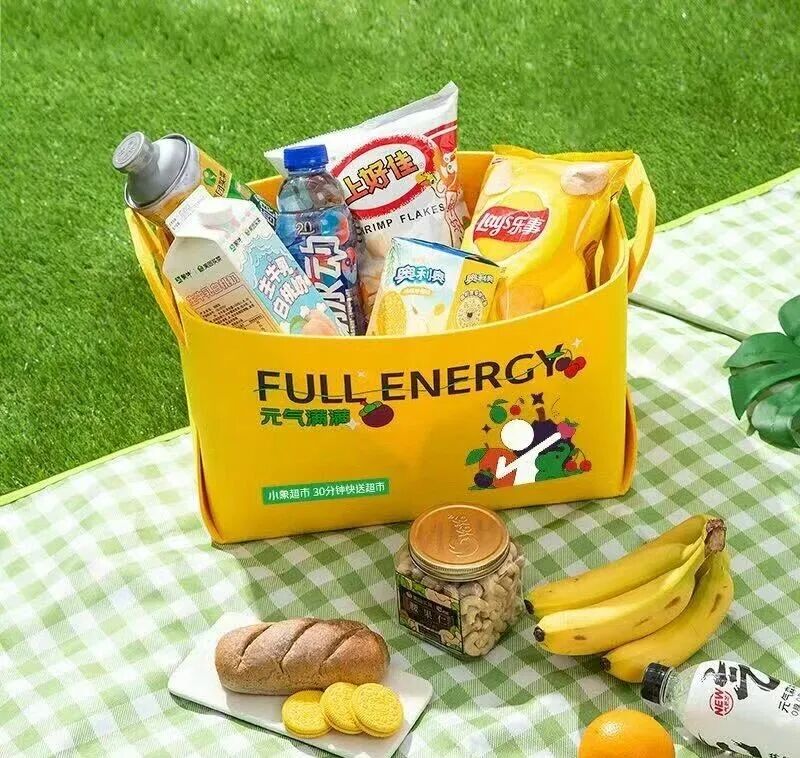
Image source: Ele.me Supermarket's official Weibo
Is this price worth it for Meituan to acquire Dingdong Maicai?
In reality, this transaction is a crucial step for Meituan to deepen its instant retail ecosystem and consolidate its core competitive barriers.
In February last year, Meituan CEO Wang Xing held an internal communication session for directors and above. Besides Meituan's core local commerce business, Wang Xing highlighted three areas he would focus on more as CEO, with grocery retail being one of them.
Grocery retail aligns with Meituan's long-term mission of "helping everyone eat better and live better," covering both self-operated fresh produce retail and platform retail businesses. Previously, businesses like KuaiLv, Ele.me, and Youxuan were consolidated under this sector.
Meituan's approach is to use its instant retail platform, Meituan FlashMart ( Lightning Warehouse ), for categories like daily necessities, while adopting a front-end warehouse model, Ele.me Supermarket, for highly time-sensitive categories like fresh produce.
Compared to FlashMart, Ele.me Supermarket operates in a more challenging sector with high costs, significant waste, and profitability difficulties. The repurchase rate of fresh produce directly determines user dependency on instant delivery platforms, making it a core battleground for Meituan to differentiate itself from other giants.
For Meituan, this acquisition is not a spontaneous capital move but a precise and necessary strategic reinforcement in the fresh produce instant retail sector after strategic trial-and-error and market assessment. While Ele.me Supermarket currently has a decent market size, its advantages in regions like East China are not prominent. Dingdong Maicai's inclusion precisely fills this gap.
Meituan is well aware of the current landscape. Since the food delivery wars began last summer, Meituan's food delivery business has faced surprises from Alibaba and JD, intensifying the instant retail competition. As the defender, Meituan needs more leverage to navigate this battle.
Compared to food delivery, Meituan's advantages in the fresh produce sector are less pronounced. Especially when all players consider front-end warehouses a crucial part of their infrastructure, losing ground in this area would increase Meituan's defensive costs and even leave it vulnerable.
Meituan's acquisition of Dingdong Maicai is both defensive and offensive. Looking back, Meituan's move to acquire Dingdong Maicai is the result of careful deliberation.
Having survived the brutal front-end warehouse wars, Dingdong Maicai is the first player to truly operationalize the front-end warehouse model.
In Q3 2025, Dingdong Maicai achieved RMB 6.66 billion in revenue, its highest quarterly figure to date, with RMB 80 million in net profit, marking seven consecutive quarters of profitability under generally accepted accounting principles (GAAP).
Behind these results, besides focusing on private products, Dingdong Maicai significantly reduced fresh produce waste through end-to-end digitalization and refined operations. In mid-2025, Dingdong Maicai CTO Jiang Xu stated in an interview that the company's overall waste rate was 1.5%, well below the industry average.
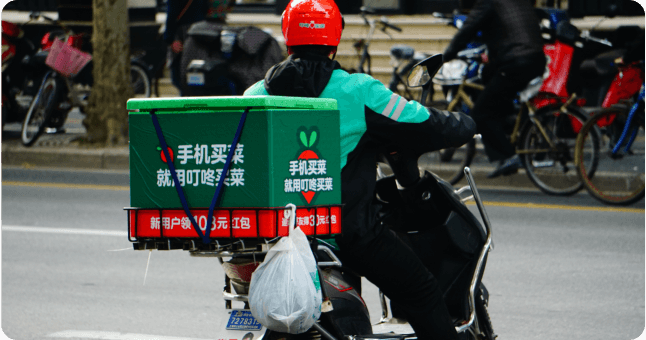
Image source: Dingdong Maicai's official website
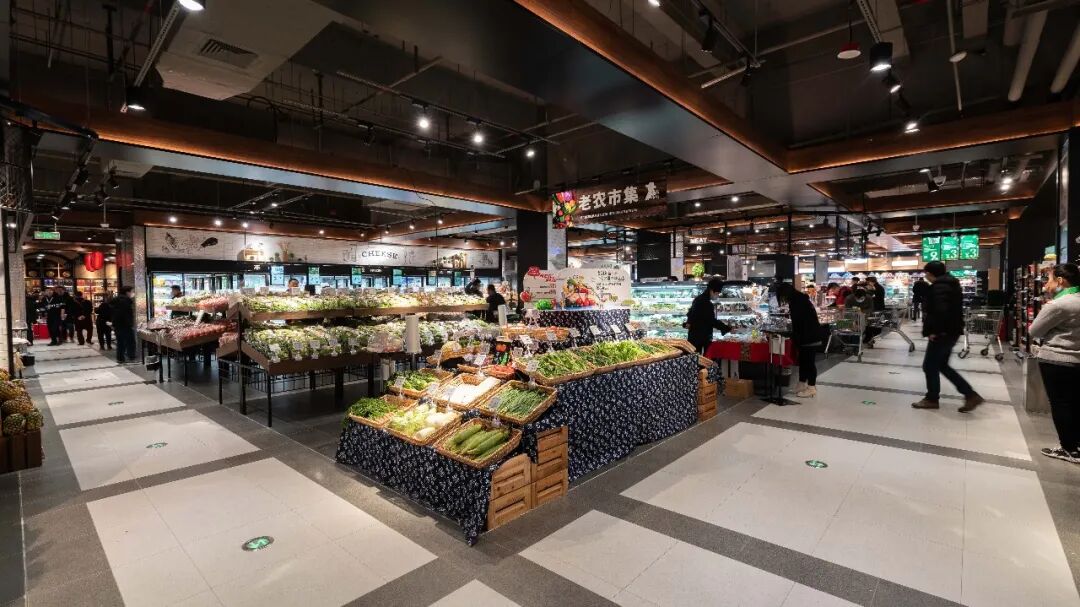
Besides profitability, Dingdong Maicai has "people." As of September 2025, Dingdong Maicai operated over 1,000 front-end warehouses domestically, with over 7 million monthly active users.
This is a mutually beneficial transaction, reflecting Meituan's long-term considerations in deepening its fresh produce instant retail presence. As Dingdong Maicai CEO Liang Changling said, the merger is a far-sighted decision.
2. How Will Meituan and Dingdong Maicai Collaborate in the Fresh Produce Battle?
As the most essential and high-frequency entry point in instant retail, the fresh produce sector is a battleground for Meituan and Dingdong Maicai.
Over the past year, Meituan with Ele.me Supermarket, JD with JD Seven Fresh, and Alibaba with Hema have all made significant moves in the fresh produce sector.
With giants entering the fray, the industry scale has expanded further. According to a report on the instant retail industry by the Chinese Academy of International Trade and Economic Cooperation under the Ministry of Commerce, China's instant retail market will exceed RMB 1 trillion in 2026 and is expected to reach RMB 2 trillion by 2030, with an average annual growth rate of 12.6% during the 15th Five-Year Plan period.
However, market competition is intensifying, and the battlefield is becoming increasingly perilous.
The first to be shaken out was the community group-buying model, with giants retreating and startups disappearing, leaving few players in this sector.
Despite this, several giants that exited community group-buying are unwilling to cede the fresh produce market and are doubling down on fresh produce instant retail.
While these companies have different strategic focuses—JD Seven Fresh emphasizes a hybrid front-end warehouse and physical store model, Hema pursues a dual track of supermarkets and discount supermarkets, and Meituan Ele.me Supermarket focuses primarily on front-end warehouses—they are all vying for the same consumer base, aiming to establish a multi-format presence.
Although Meituan's Ele.me Supermarket has grown rapidly in recent years, it lacks a significant advantage over other players. Now, its intentions to expand rapidly toward a front-end warehouse + store + discount store model are evident.
For example, in December last year, Ele.me Supermarket opened its first offline store in Beijing, covering approximately 4,500 square meters—a large-format store. Meituan's discount supermarket brand, Happy Monkey, opened its first store in August last year. According to multiple media reports in July last year, Happy Monkey had signed leases for around 10 stores, with four under renovation or pending opening, and an initial target of 1,000 stores.
Meituan also needs to expand its front-end warehouse network.
Meituan CEO Wang Xing revealed during the Q3 2025 earnings call, "We have nearly 1,000 Ele.me Supermarkets (front-end warehouses) across 20 cities. We will allocate more resources to expand Ele.me Supermarket and plan to cover all first- and second-tier cities."
The most critical and direct value of acquiring Dingdong Maicai is to supplement Meituan's front-end warehouse layout (layout). Both companies currently have extensive front-end warehouse networks, but their regional overlaps are low.
Ele.me Supermarket is primarily concentrated in Beijing and Shenzhen, which contribute 50% of its order volume. In contrast, Dingdong Maicai has higher penetration in the Yangtze River Delta region, particularly in Shanghai, where it operates 300 front-end warehouses.
Additionally, Ele.me Supermarket, which aims to open large offline stores, requires a robust supply chain. Dingdong Maicai, which began building its supply chain in 2017, has already established a comprehensive system.
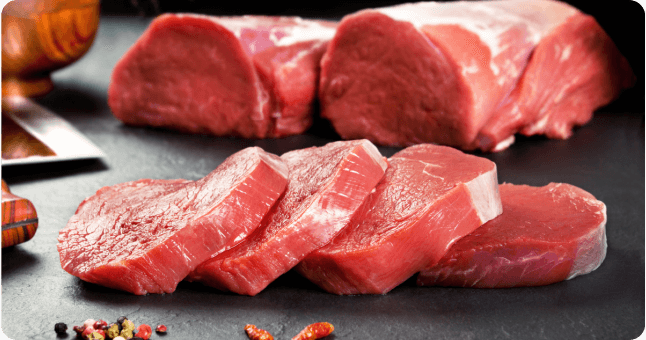
Image source: Dingdong Maicai's official website
According to Dingdong Maicai founder Liang Changling's open letter, "Over the years, Dingdong has built strong supply chain capabilities, with over 85% of fresh produce sourced directly, 12 self-operated factories, and 2 self-operated farms."
He also analyzed the three key competitive strengths of the merged Dingdong and Ele.me Supermarket: "exceptional product strength, Exceeding expectations (beyond expectations) service strength, and ultimate (ultimate) efficiency through our supply chain system will not disappear but will add even greater value on a larger platform."
Given their current development status and future goals, collaboration is more beneficial than competing for each other's market share.
3. Dingdong Maicai's Merger: A Rational Choice
Some may be surprised by Dingdong Maicai's "merger."
This fresh produce e-commerce brand has already survived its most challenging period, achieving profitability since 2022 and delivering 12 consecutive quarters of profitable results.
This success stems from Dingdong Maicai finding a suitable path—abandoning blind expansion and focusing on refined operations.
As early as 2021, Liang Changling proposed the slogan "efficiency first, scale second" during an earnings call. The following year, Dingdong Maicai withdrew from several cities, including Tianjin, Xiamen, and Chengdu, and in the same period in 2023, it closed all stations in Chongqing and Chengdu.
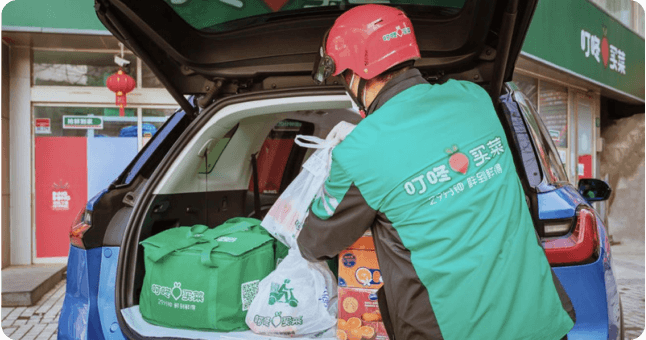
Image source: Dingdong Maicai's official website
Subsequently, Dingdong Maicai downsized while investing heavily in a digital system to improve production and replenishment efficiency and reduce waste.
According to 36Kr, Dingdong Maicai predicts SKU demand for all warehouses every 24 hours and formulates production and replenishment plans based on the "smallest unit" after considering manpower and inventory at both distribution centers and front-end warehouses.
Suppliers receive purchase orders and transport goods to distribution centers, where some products are processed and packaged into standardized items before being allocated to different front-end warehouses.
By the end of 2023, Dingdong Maicai had automated 90% of front-end warehouse procurement. Even under extreme weather conditions, the system maintains over 85% accuracy in demand forecasting, with waste rates consistently controlled at 1%-2%.
In 2025, as internet giants intensified their focus on fresh produce instant retail, Dingdong Maicai remained cautious about expansion. Liang Changling proposed the strategy of "one inch wide, one mile deep."
"Narrow" means focusing on fresh produce, not aiming for 75% satisfaction for everyone but 120% for a select group. "Deep" means continuously participating in the supply chain.
Meanwhile, Dingdong Maicai restructured its organization, establishing 10 independent product development divisions led by core executives to ensure technical support and resource allocation for each category.
Dingdong Maicai's approach of maintaining an SKU count below 3,000 and expanding cautiously differs from other players.
Competitors like Pupu and Ele.me Supermarket, which also rely on front-end warehouses, have expanded their product ranges and warehouse sizes in recent years, growing from 1,000-2,000 fresh produce SKUs to over 10,000 food and general merchandise items.
JD and Hema have also ramped up efforts: JD Seven Fresh develops front-end warehouse operations through its stores, adopting a hybrid warehouse-store model, while Hema restarted its front-end warehouse business in 2025.
These two internet giants continued to expand rapidly in 2025. As of January 2026, JD Seven Fresh operated over 70 stores nationwide, while Hema announced entering 40 new cities last year. As of December 31, 2025, Hema NB had over 400 stores nationwide.
Under these circumstances, it is wise for startups to avoid direct competition with giants and choose a suitable path. However, as the fresh produce sector evolves into a battle among giants, going solo will also be challenging.
In December last year, Liang Changling revealed to management that he believed the domestic fresh produce front-end warehouse business was no longer suitable for startups and that giants would perform better.
Thus, he chose to pivot Dingdong Maicai toward acquisition at this juncture. After all, having finally achieved profitability, Dingdong Maicai cannot afford to revert to a money-burning model. Collaborating with Meituan to leverage complementary strengths may be the more rational choice.
As Liang Changlin said, Meituan and Dingdong Maicai will "lay down their head-to-head competition and turn to side-by-side cooperation." This is not only a turning point in Dingdong Maicai's nearly nine-year entrepreneurial story, but also a landmark event in the instant retail industry as it shifts from a fragmented competition among many players to a contest between industry giants. Amidst the undercurrents, a new ecological battle has already begun.
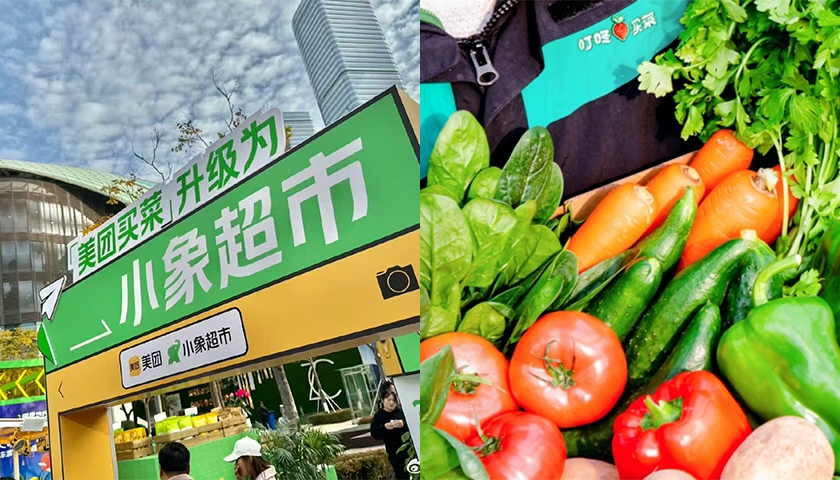
(The header image of this article is sourced from the official Weibo account of Xiaoxiang Supermarket and the official website of Dingdong Maicai.)
-
![]()
Raking in Big Profits Overseas! Chery’s Overseas Revenue Makes Up 70% in H1, with Gross Margin Climbing to 16.1%
-
![]()
Alibaba’s New Fiscal Quarter: 45% Revenue Surge in Alibaba Cloud, Enhanced Profitability in AI Cloud, but Widening Losses in the Application Layer
-
![]()
The AI Version of 'PayPal Mafia' Has Arrived: 20 AI Startups Raise Over $4.6 Billion in Funding
-
![]()
Wang Jian's Vision: Paving a Pathway for Alibaba Through AI
-
![]()
Hyundai Motor Workers Strike Today, Fearing Job Losses to Robots
-
![]()
Embracing 'Light': O-film Unveils Its 'Illuminating the Future' Strategy
-
![]()
SenseTime’s SenseNova U1.5 Lite Goes Open Source: Ushering in a New Era of Predictable AI Image Generation
-
![]()
Collaboration Initiated! Tesla Officially Welcomes Doubao Onboard