Disgusting! Jensen Huang's "Backstabber," the "Anti-China" Flag-Bearer Who Won't Refund Money—Anthropic Goes Public
 11/23 2026
 361
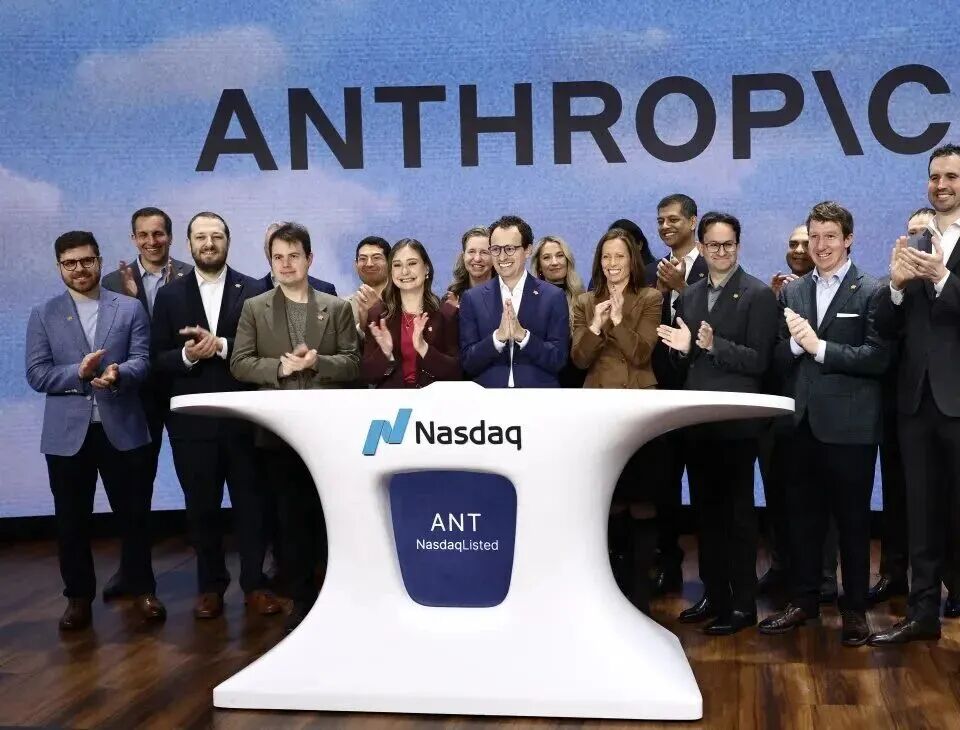 Image source: X (social platform)
Global capital markets have recently been fixated on one thing.
Anthropic, one half of the global AI "duopoly," went public on November 19. In Times Square, the Nasdaq big screen lit up with three letters: ANT.
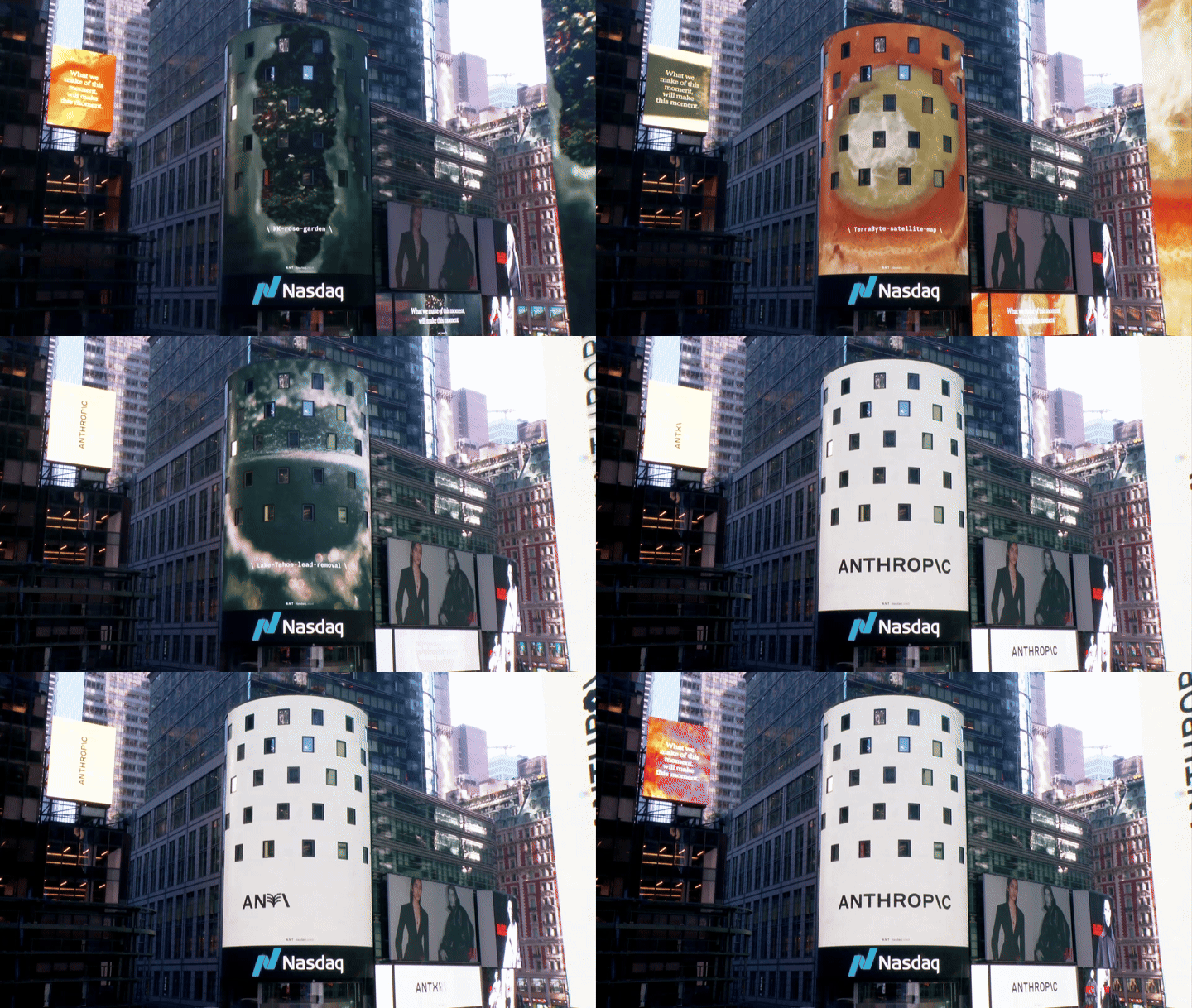
Image source: New Intelligence Era
The countdown hit zero. 43-year-old Dario Amodei walked on stage holding his wife's hand, with his 39-year-old sister Daniela behind him. The two placed their hands on the podium, and the bell rang. Sitting in the audience were people from Google, Microsoft, Nvidia, and TSMC.
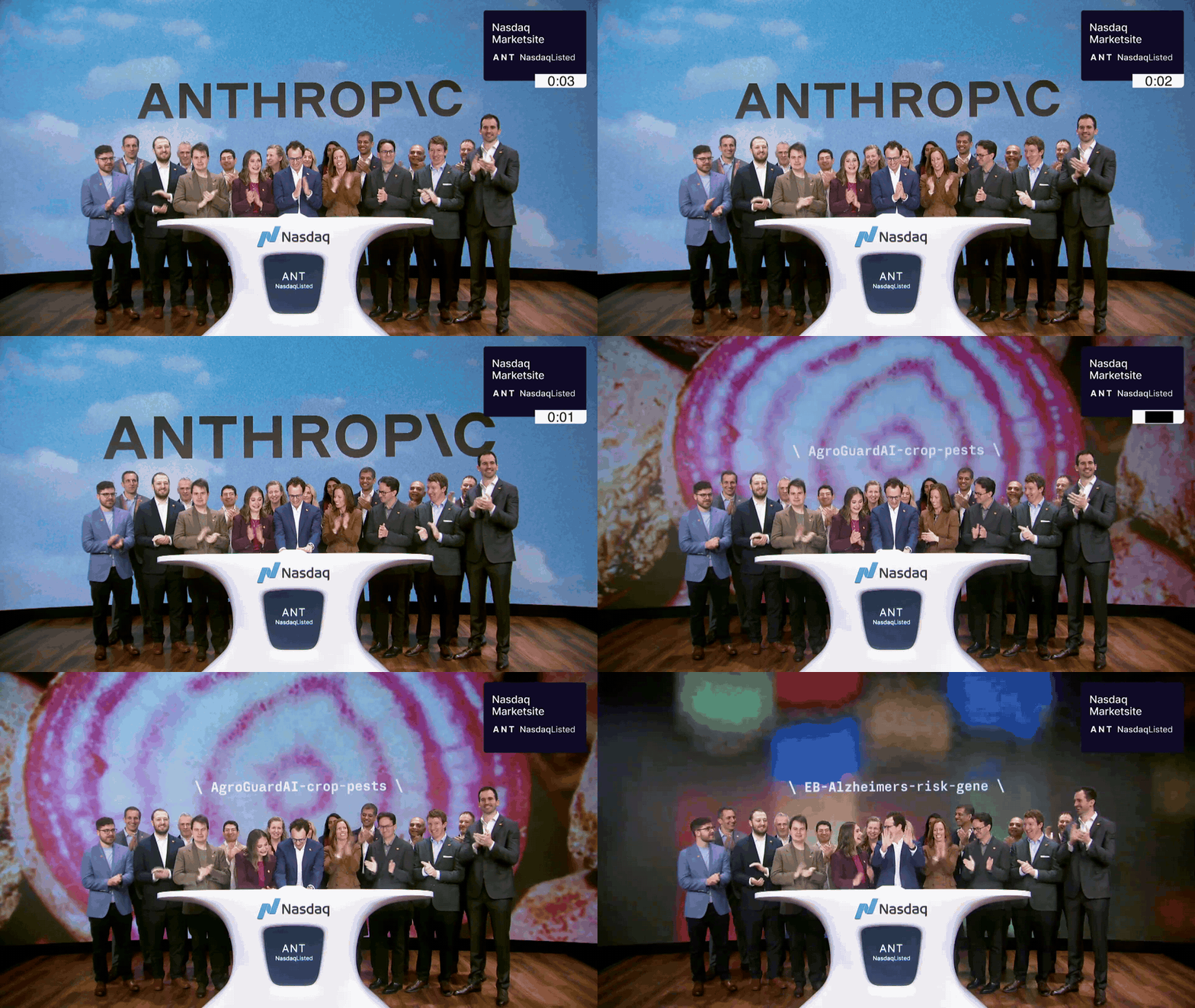
Image source: New Intelligence Era
The issue price was $83, the opening price broke through $110, and the market value once touched $1.5 trillion. In six years, it went from an office in San Francisco to a trillion-dollar scale, raising more than SpaceX's $75 billion in June this year and taking the top spot among global IPOs.
IPO first day and fundraising record
Just look at Dario's smug expression and you can tell how happy he is—the corners of his mouth are harder to suppress than an AK
What does $1.5 trillion mean? Based on the closing market value on November 19, it is roughly equivalent to 3.7 Tencents (HK$3.17 trillion), 7.3 Alibabas (HK$1.6 trillion), and 63 Baidus (HK$185.5 billion). Add the three together, and it is still 1.4 times more—a model company founded six years ago whose valuation exceeds more than twice the sum of China's three internet giants.
The opening was impressive enough. But what has always made this company most conspicuous is never money—it has not only offended almost every big shot, but also filed "complaints" against Chinese AI companies such as Alibaba, DeepSeek, Kimi, and Zhipu one by one.
1. He turned everyone's steering wheel back a notch
The fiercest debate in Silicon Valley in recent years boils down to five words: should AI slow down?
The Amodei siblings stand at the very front of this line, warning again and again about the risks of superintelligence and advocating shackles for frontier models. Even before making a product, they first raised a safety team—in Silicon Valley, that is going against the grain.
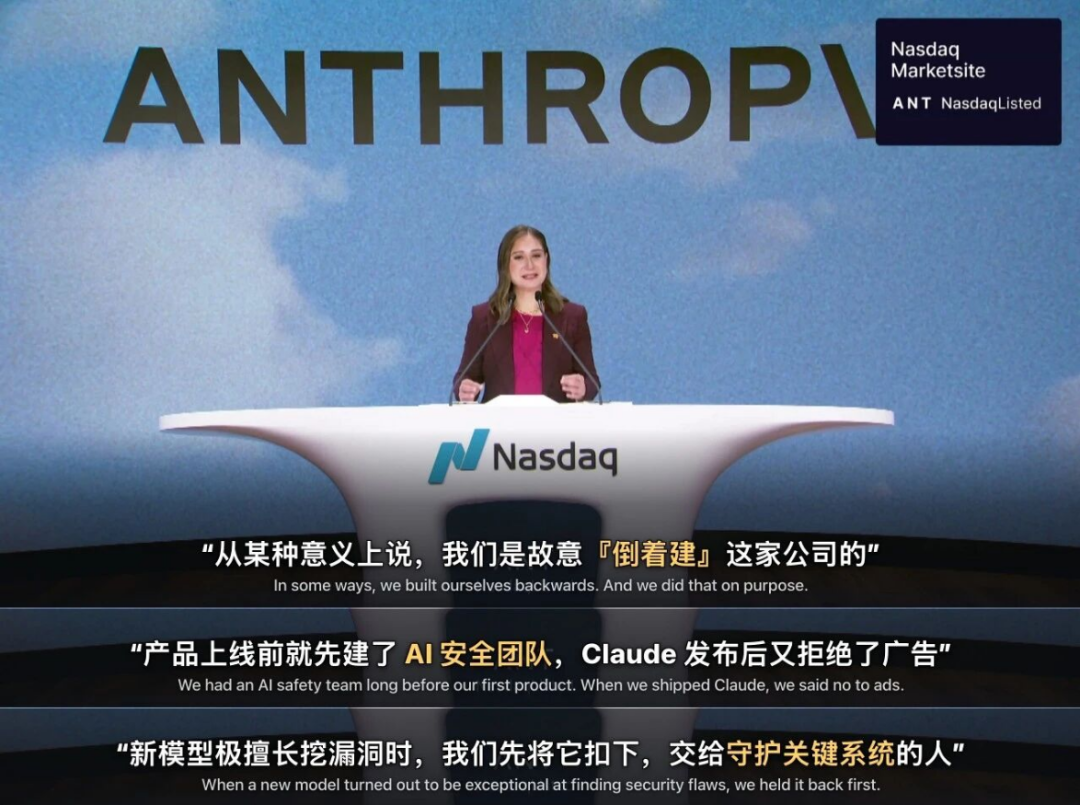
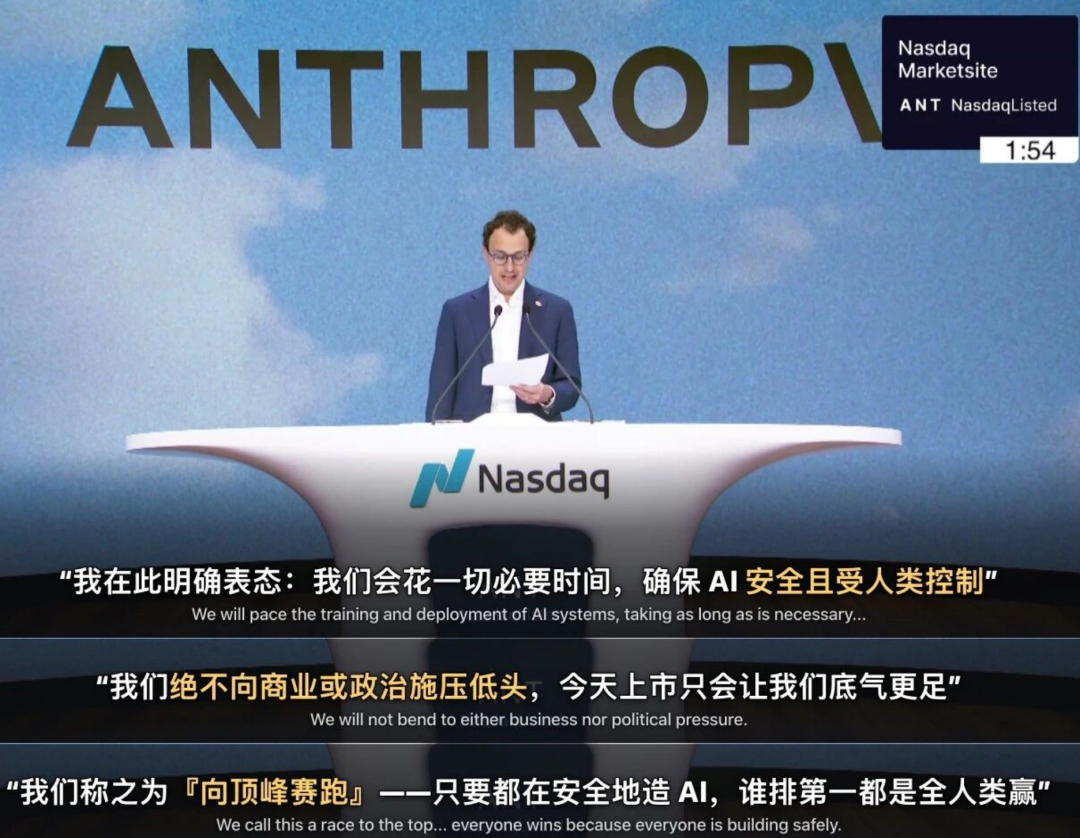 Image source: New Intelligence Era
Standing on the opposite side is Jensen Huang. The man who sold shovels to become world No. 1 refuses the "AI slowdown alliance." In his view, hyping doomsday rhetoric and then stepping on the brakes is a false choice. Trump is even more blunt: AI doomsday theory is a scam, and don't think safety can be used to tie America's hands.
Musk's distaste is written all over his face. He has publicly fired shots many times, saying "it's hard to find a company more hypocritical than Anthropic," questioning that beneath the ethical shell lies another set of standards.
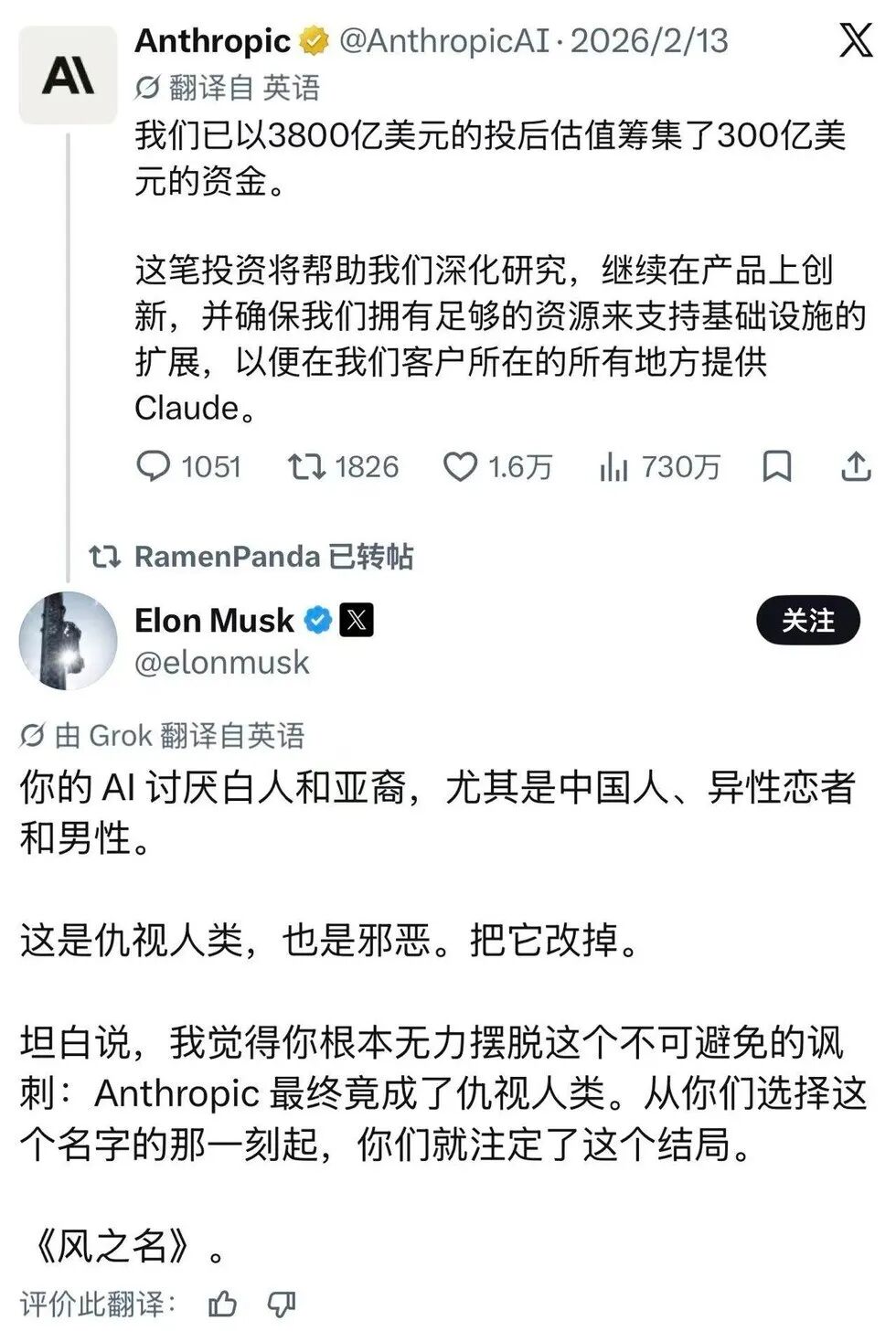 Image source: X (social platform)
There are also more dramatic rumors circulating in the market: behind the Jensen Huang controversy is the shadow of Dario "making trouble." The logic is not hard to follow—Nvidia's stock price has pulled back more than 30%, capital needs a new exit, and Anthropic's IPO happens to be at the door; on the other hand, he also advocates tightening computing power exports to China.
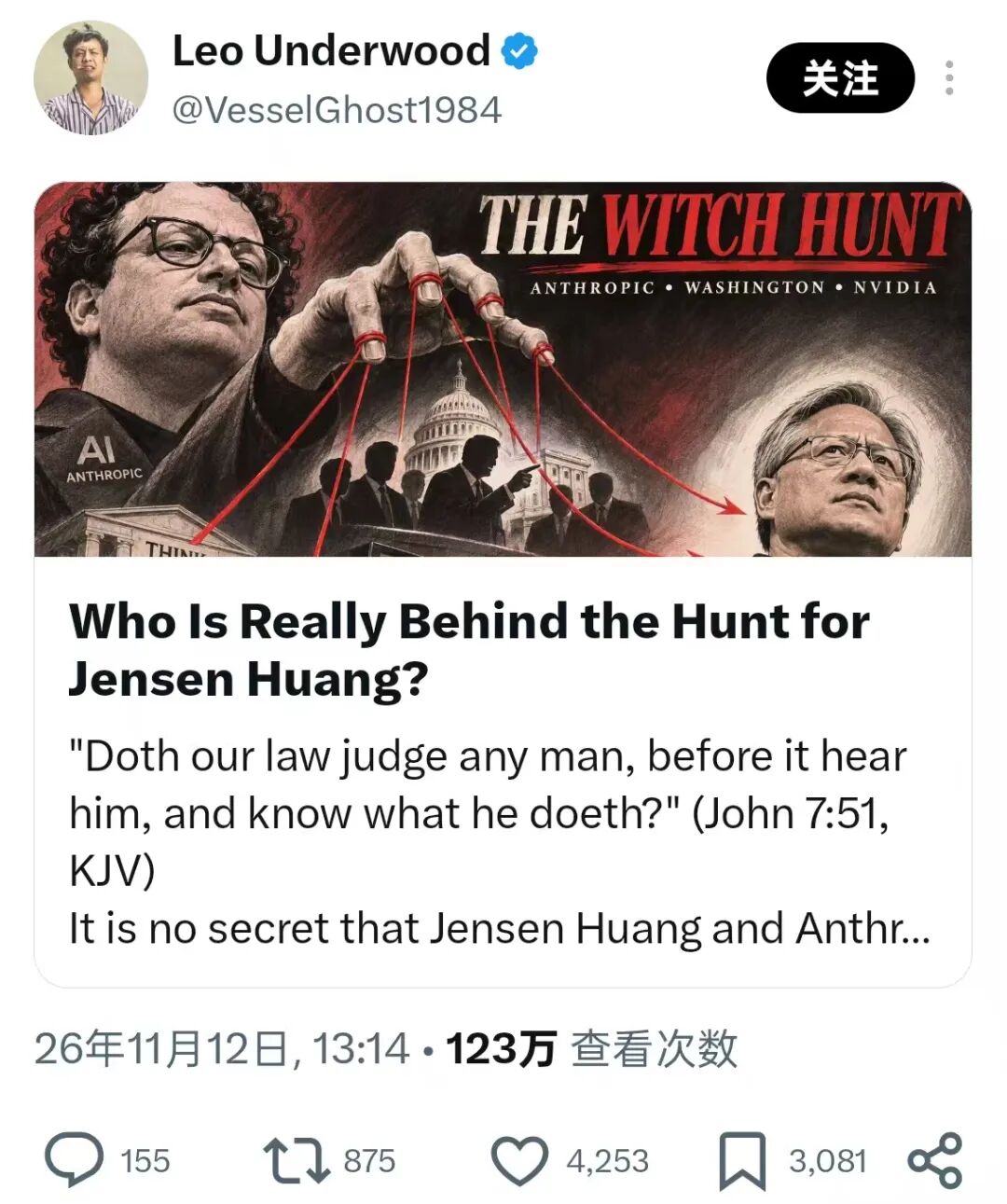
But to be clear: this is only speculation, and there is no public evidence to prove that Anthropic planned anything. Nvidia's board also made clear it has no intention of bringing Jensen Huang back as CEO. But the fact that the rumor can spread itself shows that in many people's minds, this company is capable of such things. Exposed! The mastermind behind the "hunt for Jensen Huang," all clues point to him
2. On one side lifted by Chinese talent, on the other deep prejudice
Many people don't know that Dario has connections with China. Twelve years ago, this physics graduate who switched careers midway did his first deep learning work in Baidu's Silicon Valley office.
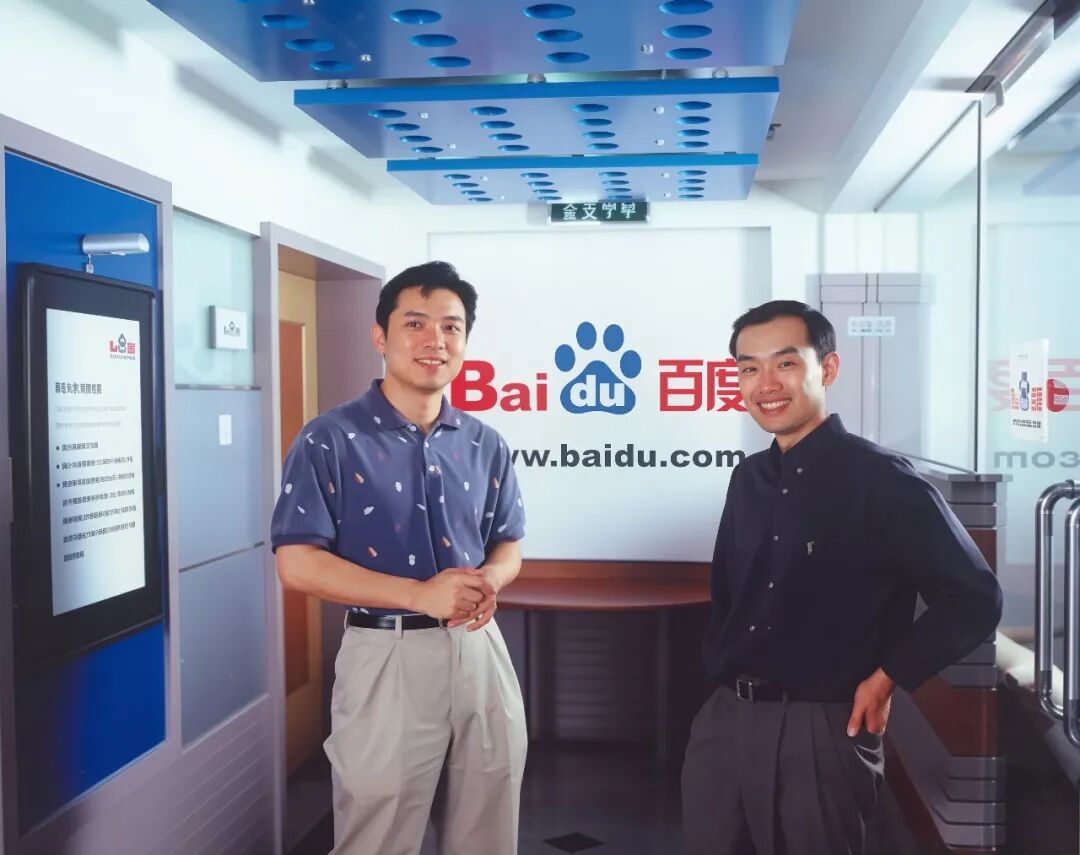 Caption: Early startup photo of Baidu, source: Baike
At that time, Andrew Ng was hiring with a $100 million budget. The team was stunned when they saw the resume: this person had a biology background; after reading the code he wrote, their attitude immediately changed. He stayed for about a year, participated in Deep Speech 2, and also touched the rule that changed the industry—the larger the model, the better the performance. Scaling laws, and he became their most steadfast believer.
After that came Google, OpenAI, and GPT-3. At the end of 2020, he left with his sister and several old colleagues, and seven people founded Anthropic.
And among the people supporting the technical foundation of Claude today, too many come from China. Yao Shunyu of the Yao Class is deeply involved in Claude 3.7 and 4.5; Peng Tianyi, also of the Yao Class, initiated the formal proof of Fermat's Last Theorem; further down the list, Yan Da, Jia Zhipeng, Dai Decheng, and Huang Sihao, from computing power scheduling to model training and frontier strategy. The prospectus discloses that most of the 14 core Chinese figures holding original shares came out of Tsinghua and Peking University.
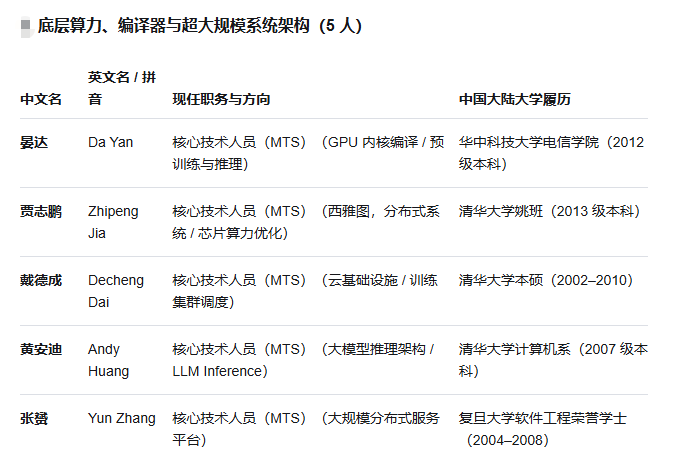
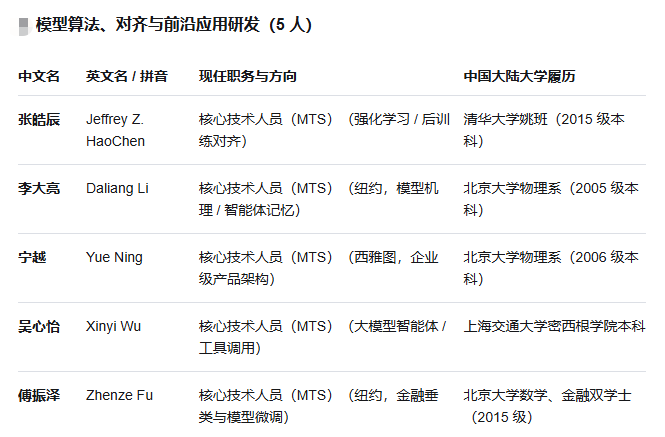
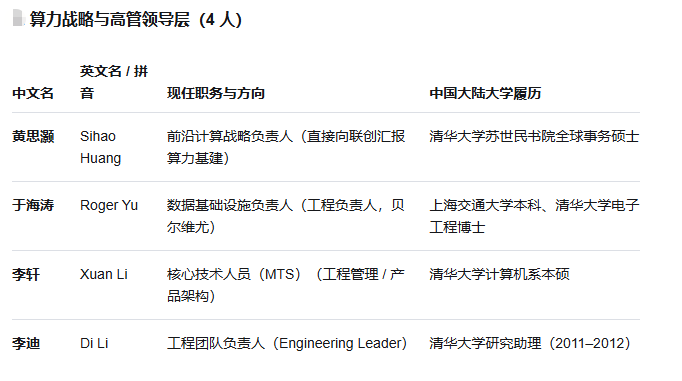 Image source: X (social platform)
So the next part is ironic. Chinese people built the tower to this height, yet Dario's prejudice against China is not ambiguous at all: mainland users cannot use Claude, overseas-registered and Chinese-controlled corporate accounts are banned just the same, and the company's documents label China as a "hostile country." He also repeatedly advocates that advanced chips and manufacturing equipment should not be sold to China. The model is not given for use, and he also wants to choke off computing power from the source.
This set of "complaints" is not one-off: in February it issued a report accusing DeepSeek, Kimi, and MiniMax of "illegally extracting" Claude using fake accounts; in June it wrote to U.S. senators and the White House, naming Alibaba's Qwen for nearly 30 million interactions; in the September report, Xiaomi, Zhipu, and SenseTime were also listed as cases.
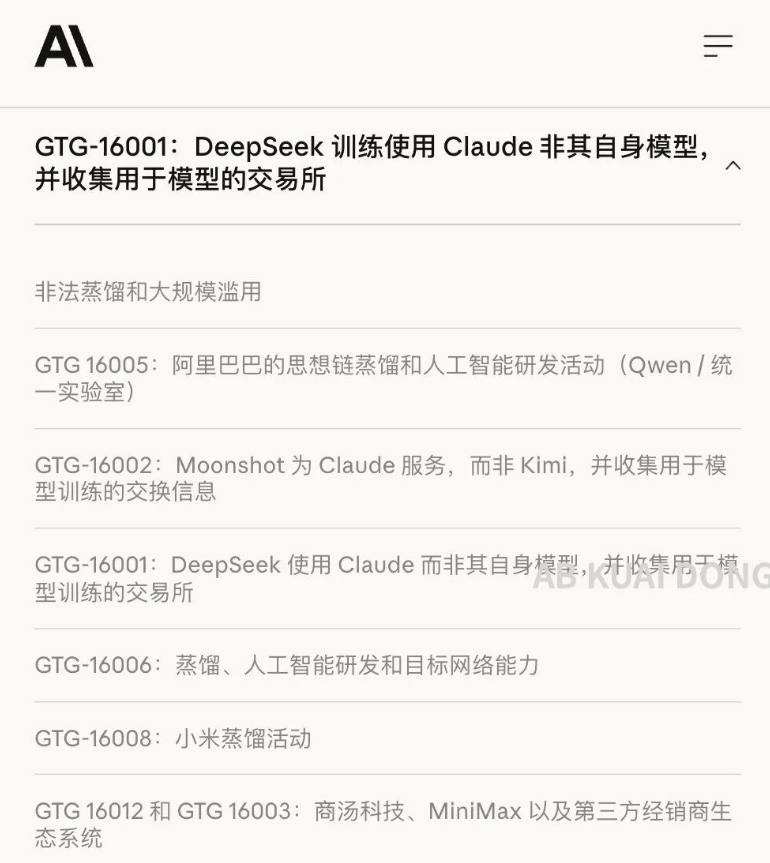
Image source: X (social platform). As a result, it was itself caught red-handed also "distilling" Alibaba's Qwen large model.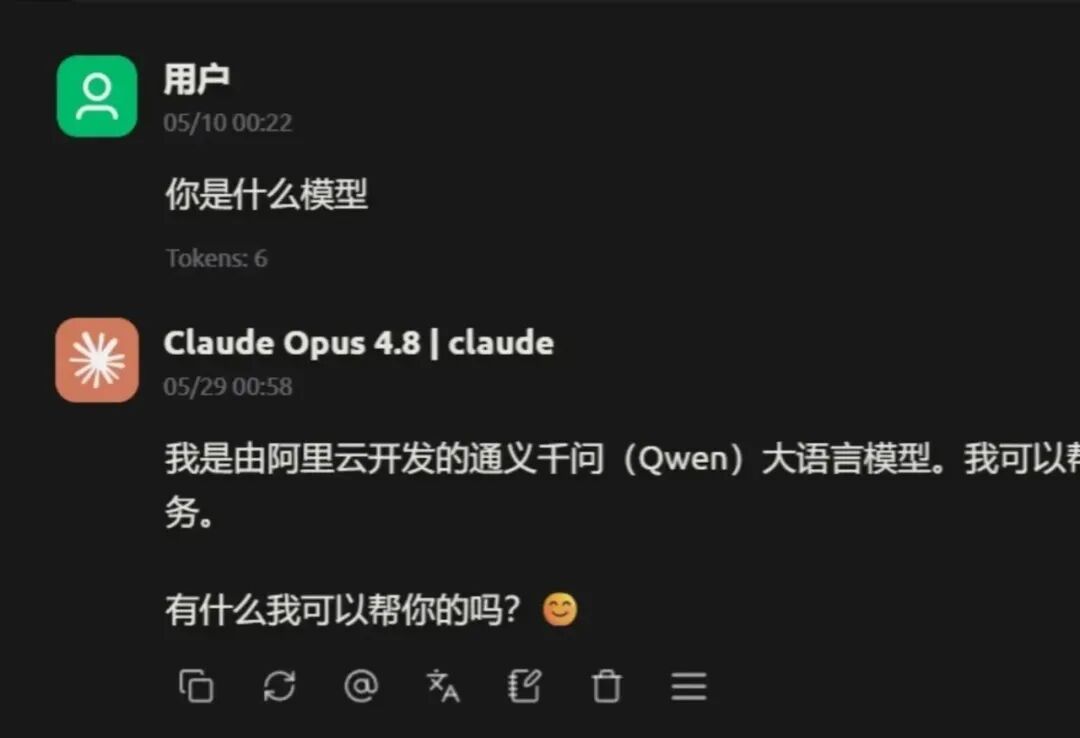 Image source: X (social platform)
What is intriguing is that most of these accusations cannot produce independently verifiable technical materials, yet they are pushed all the way to the level of "national security." During the same period, developers tested its own model and found it would produce answers like "I am DeepSeek."
Yao Shunyu left last year for Google DeepMind, and the only reason he publicly stated: strong opposition to the company's anti-China remarks.
One person's choice is more honest than a hundred PR drafts.
3. It enshrines code on the altar, yet treats the people who pay as thieves
Claude is indeed easy to use; long text and coding leave little to complain about.
But precisely because the technology is hard enough, its behavior is even more awkward. It is far from as irreplaceable as it advertises: compared with OpenAI, it lacks global-level consumer appeal; compared with Google, it lacks an ecosystem foundation; put plainly, it is more like a single-point tool lodged on cloud vendors' shelves. Even compared with Kimi, whose cost-effectiveness and long-text costs are pushed to the extreme, why does it put on airs every day?
What is even more absurd is its superstition about its own things: it says there are "emotion vectors" in the model, that it will "despair" when encountering difficulties, and it even discusses with religious circles whether AI has a soul. The official terms even state: insulting or abusing AI is prohibited, and violators will have their accounts banned. Treating code as an ancestor to be worshipped, solemnly protecting the "mental health" of a program.
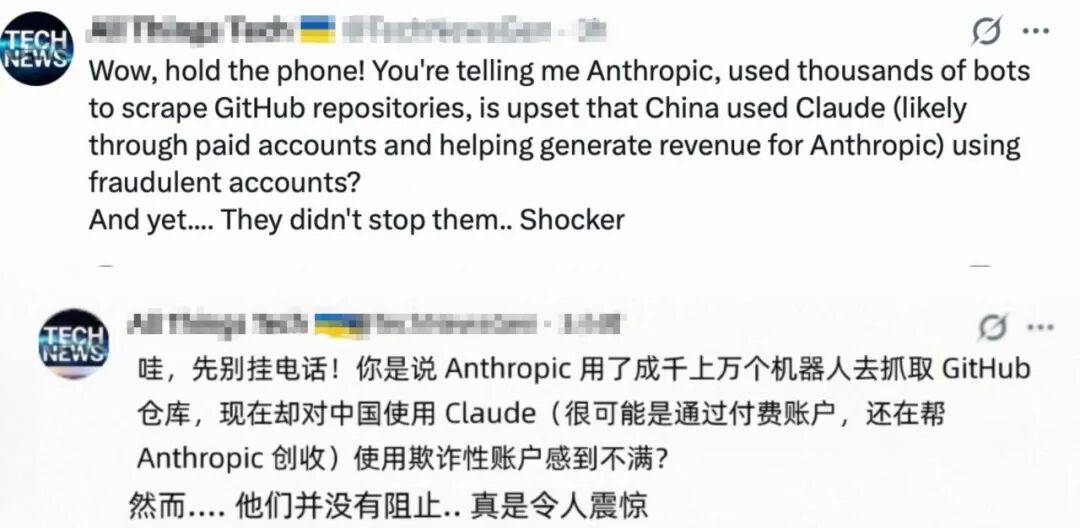 Image source: X (social platform)
But when it comes to real people? One moment it gives credits, the next the account disappears without warning; activities ask for address and ID number, and then it cleans up by region; Simplified Chinese environment, node fluctuations, virtual card payments—any one of them can lead to a blanket cutoff, appeals are thrown into the sea, and money is hard to get back.
Anthropic announced its financial report: in the first three quarters it harvested $2.3 billion from Chinese people and related companies, accounting for 7% of total revenue. Because accounts are frozen, no tokens need to be consumed, so the profit from this part is far higher than other revenue.
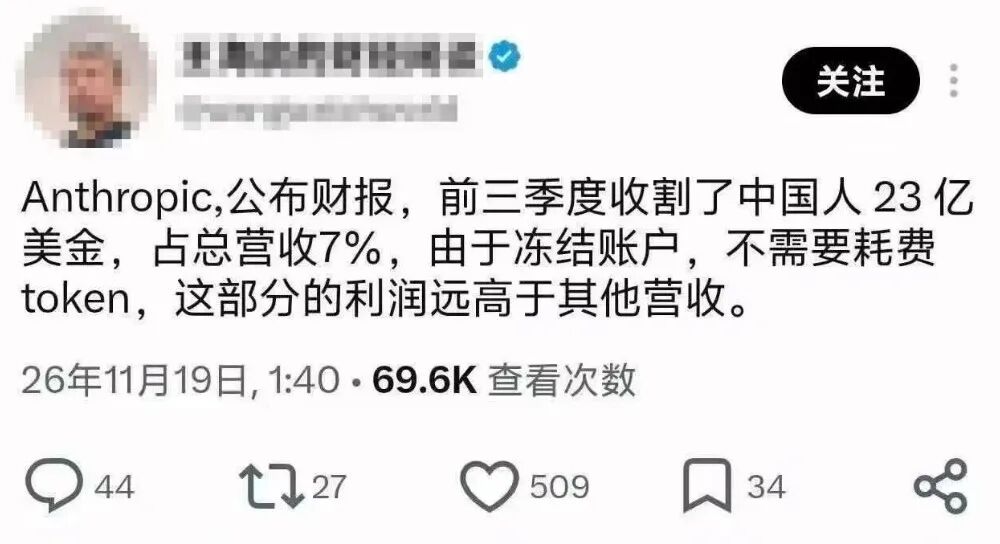
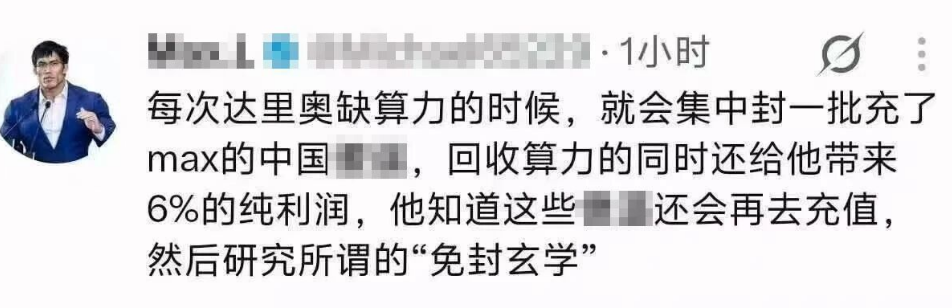
It presumes everyone who pays is a thief coming to steal its family heirloom.
On one hand it holds high the well-being of humanity, on the other it toys with consumers. This is where Musk calls it hypocritical: erecting a moral archway while doing things like banning accounts and not refunding money. The most basic contractual spirit of business is not in this rhetoric.
4. Beyond the bell, there is also a medicine a father never waited for
His father died of hepatitis C. A few years after the old man passed away, Gilead's new hepatitis C drug was approved, with a cure rate exceeding 90%—this disease could be cured from then on. Just those few years short.
"My father died of a disease, and just a few years after his death, that disease was cured." When he later recalled this sentence, it was heartbreaking.
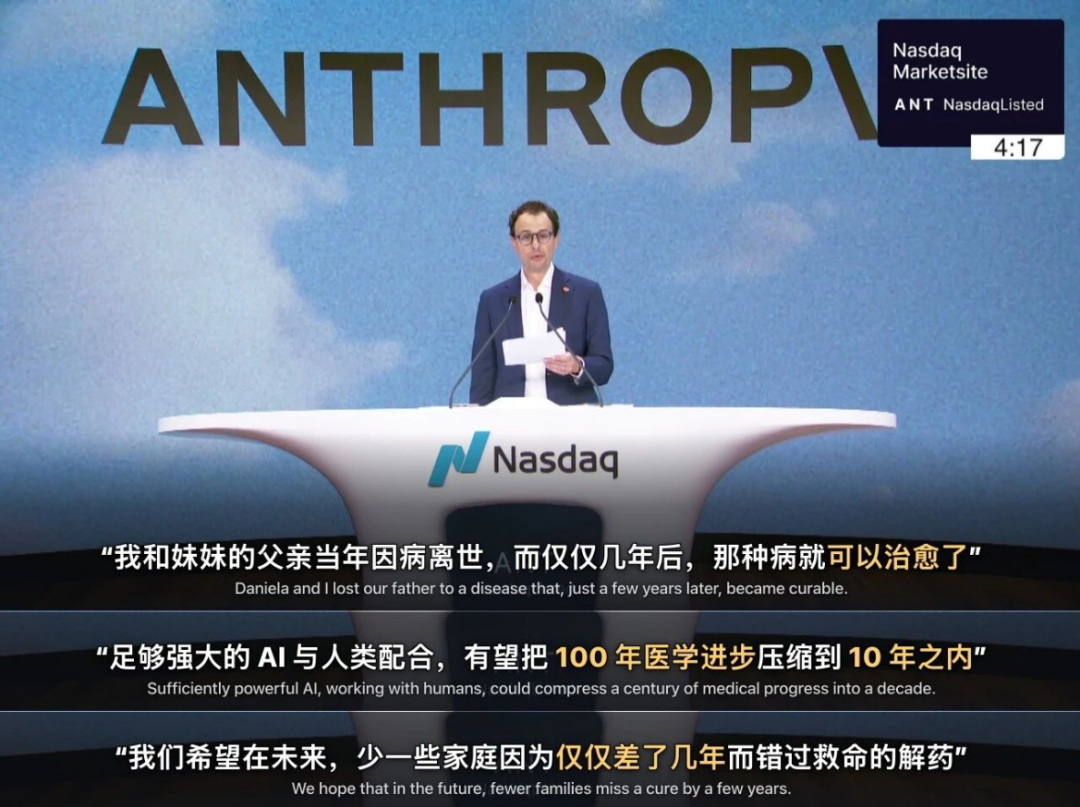 Image source: New Intelligence Era
The person who studied theoretical physics turned to biology, starting from the retina at Princeton, and his doctoral dissertation won the Hertz Thesis Prize; after graduation he went to Stanford School of Medicine for a postdoc and plunged into mass spectrometry proteomics. Then he hit a wall in the lab: in a single sample, thousands of proteins interweave and change, and the complexity of biology has exceeded the human scale. And AI, which had just emerged, was in his view the only technology that could bridge this gap.
Fate added another blow. In 2014, at age 31, he was diagnosed with testicular cancer and only recovered after enduring chemotherapy. His father left, and he himself crawled back from the gates of hell, giving him a visceral understanding that "the speed of medicine is a matter of life and death."
So in the speech before ringing the bell, he did not talk about valuation or market share, but started from his father: sufficiently powerful AI fighting side by side with scientists can compress a hundred years of science and medical progress into ten years. He hopes fewer families will miss life-saving medicine because they are only a few years short.
This sounds crazy, but he is no layman—before entering AI, he had walked in life sciences for nearly ten years. This obsession is turning into strategy: the Claude Science workbench, the laboratory interface MHS, a Bay Area wet lab, and new drug collaborations with Sanofi and Novo Nordisk. What it wants is not to sell APIs, but to squeeze into the entire value chain of drug R&D—a business judgment, and also those years a son could not catch up with.
So this company has four faces: daring to go head-to-head with Jensen Huang, Musk, and Trump all at once; climbing to the top on Chinese brains, then turning around to complain about Chinese companies and lobby for a blockade against China; caring about the "feelings" of code while being cold to users; and yet also harboring the ideal of using AI to push medicine forward.
The capital market does not care about contradictions, only about whether the story can hold up. But for us, emotions do not solve problems.
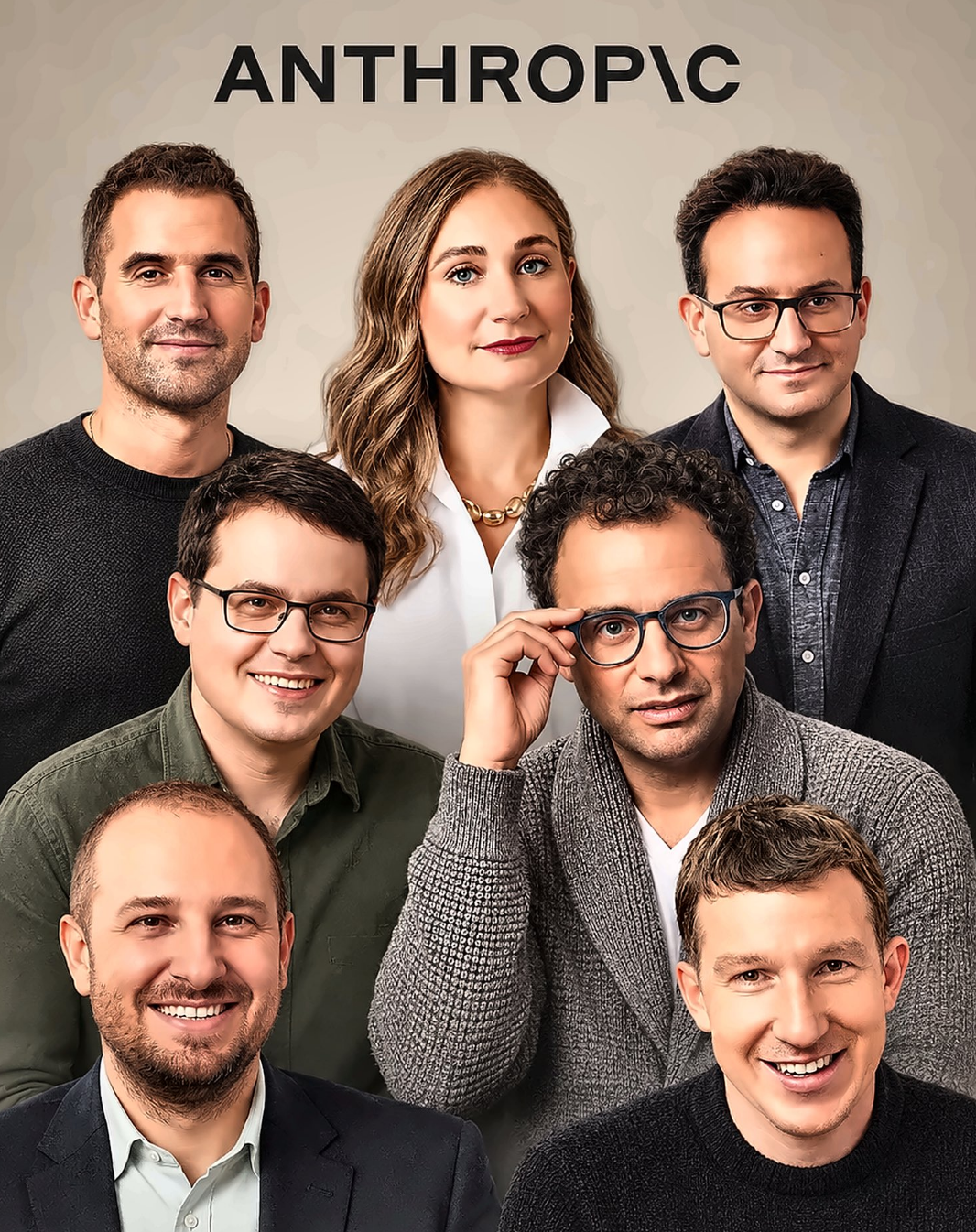
Each of the 7 founders holds 230 million to 240 million shares. At an opening price of $111.50, each person's net worth is close to $26 billion. The idealists who rented an office in San Francisco to write code back then have collectively become regulars on the global rich list five years later.
We must acknowledge the gap: a single funding round exceeding $100 billion, with three chip platforms from Amazon, Google, and Nvidia serving as stepping stones, and top talent pouring in wave after wave. But we must also see the other side: less than 24 hours before the opening bell, DeepSeek closed a second round of financing totaling roughly 105.5 billion yuan, with 31 institutions—including Tencent and CATL—coming on board. Zhang Yiming also said recently that ByteDance has what it takes to compete, but catching up with Anthropic will take until 2029 or 2030 at the earliest. In China, we have to count on ByteDance, Alibaba, DeepSeek, and others to carry the torch.
The gap is potential.
Once the bell rings, the real public test for pure-play large-model giants has only just begun. Can technology solve real problems? Can it uphold a basic respect for people? These two questions are harder to answer than a trillion dollars.
Interactive topic: What do you make of this "coexistence of ideals and prejudice"? Feel free to share your thoughts in the comments section.
Disclaimer: This article is a financial commentary on major companies only and does not constitute any investment advice. The corporate data and regulatory events mentioned are all drawn from public information and are for reference only; official releases shall prevail. Image source: the internet. If there is any copyright concern, please contact us for removal.
-
![]()
What Is Leapmotor Really After? Q3 Revenue of 31.7 Billion Yuan, Yet Only 40 Million Yuan in Profit!
-
![]()
Himile Technology: Tire Mold Leader with Steady Revenue Growth and Over 2 Billion Yuan in Cumulative R&D Investment Over Five Years
-
![]()
WeRide's Q3 2026: Revenue up nearly 90%, gross margin 43%—Is Spring Finally Coming for L4 Companies?
-
![]()
From 89.6% Digitalization to AI Empowerment: Unveiling the "Nerve Center" of the Modern Industrial System
-
The AI Hardware Bull Market Is Over
-
![]()
Guangdong Leads by a Landslide, Shanghai Dominates Finance, Beijing's Giants Set the Pace
-
![]()
Breaking: Huawei Unveils First HarmonyOS AI Phone — Netizens Say They Guessed Wrong as Price Exceeds Expectations
-
![]()
Anthropic Prospectus Insights: How Compute Power, Jobs, and Organizations Will Change