From BOSS Zhipin's Financial Report: How AI Is Opening Up Growth Space for Recruitment Platforms
 11/27 2026
 344

Over the past two years, discussions about AI and employment have largely revolved around a single question: whose jobs will AI replace?
Programmers, designers, customer service representatives, translators—scarcely a week goes by without some occupation being thrust into the spotlight. Yet beyond this debate lies another business proposition that is easily overlooked: as AI reshapes companies' hiring needs and the way talent is allocated, how will the recruitment industry—the bridge connecting hundreds of millions of workers with tens of millions of enterprises—be transformed?
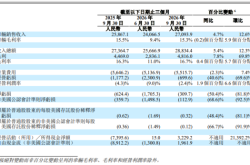
On November 25, BOSS Zhipin released its Q3 2026 financial report. During the reporting period, the company generated revenue of 2.416 billion yuan, up 11.7% year-on-year; adjusted net profit reached 1.065 billion yuan, up 12.3% year-on-year; and the platform's average monthly active users hit 73 million, up 14.4% year-on-year.

At the same time, BOSS Zhipin announced a new share repurchase plan, under which it intends to buy back up to US$500 million worth of shares over the next 12 months. Prior to this, the company's total shareholder returns through repurchases and dividends this year had already exceeded US$530 million, surpassing its full-year adjusted net profit for 2025.
Beyond the financial figures, changes at the business level are more noteworthy. On this year's Q1 earnings call, BOSS Zhipin management disclosed that the company's AI-powered closed-loop recruitment service revenue was approximately 50 million yuan for the quarter, and related revenue continued to grow rapidly quarter-on-quarter in Q2. By Q3, AI applications had further deepened into recruitment stages such as job intention understanding, talent search, candidate screening, and interviews.
For an internet platform that already has a mature business model, the significance of these changes lies in the fact that while user scale continues to expand, technology is transforming the way it delivers services to enterprises.
Looking back at more than 20 years of development in the online recruitment industry—from recruitment information going online to intelligent recommendations and instant communication on mobile—each technological iteration has lowered the cost for enterprises and talent to establish connections.
Now, AI has begun to take part in the work that follows connection-building.
Recruitment platforms can not only help enterprises find candidates but may also take on more recruitment work and earn new service revenue from it.
This may be an important clue for understanding the growth space of the recruitment industry in the next stage.
01 When AI Starts Making Money for Recruitment Platforms
An examination of BOSS Zhipin's financial reports in recent years reveals a striking phenomenon: even as many consumer internet sectors enter stock competition, online recruitment can still gain considerable incremental growth from user growth.
In Q3 this year, BOSS Zhipin's online recruitment service revenue from enterprise customers was 2.401 billion yuan, up 11.8% year-on-year, accounting for 99.4% of total revenue. In the trailing 12 months ended Q3, the number of paying enterprise customers reached 7.2 million, up 5.9% year-on-year.
Where does the growth come from?
A large part comes from markets where online recruitment penetration was relatively low in the past, including blue-collar workers, SMEs, and lower-tier cities.
Take Shangrao, Jiangxi as an example. In the first three quarters of this year, the average monthly number of online job posts there grew rapidly year-on-year. On one hand, the development of emerging manufacturing drove increased demand for positions such as electrical automation and skilled workers; on the other hand, the development of the local consumer market led to simultaneous growth in life service positions such as catering, beauty and hairdressing, and domestic cleaning.
Similar changes are also happening in Meizhou, Guangdong, and Huangshan, Anhui. The former's e-commerce industry brought more operations positions, while the latter's cultural tourism industry released more hiring demand for hotels and tourism services. These hiring needs distributed across different regions and industries constitute an easily underestimated market for the online recruitment industry.
In the past, when a restaurant in a county town hired waiters, it might rely on a recruitment notice posted at the door; when a factory hired workers, it might need to rely on acquaintances' referrals or local intermediaries. With the popularization of mobile internet recruitment services, more and more enterprises and workers have begun to establish connections online.
This penetration is continuing. In Q3, the revenue contribution share of BOSS Zhipin's blue-collar segment increased by 1.5 percentage points year-on-year, and the revenue contribution share from third-tier and lower-tier cities increased by nearly 2 percentage points year-on-year.
Even though BOSS Zhipin already has a considerable user scale, user growth and market penetration improvement remain its core growth engines.
On this basis, AI has brought another growth variable.
In Q1 this year, BOSS Zhipin's AI-powered closed-loop recruitment service revenue was approximately 50 million yuan. In the first half of this year, AI-enabled products for high-end white-collar, gold-collar, and bulk blue-collar recruitment customers achieved substantial growth in indicators such as the scale of served enterprise customers, intended candidate delivery volume, and customer service unit price.
Looking only at the 50 million yuan in revenue, compared with the company's quarterly revenue of more than 2 billion yuan, the scale is not yet large. But when observing the early development of a new business, beyond revenue scale, what matters more is whether customers are willing to pay for new services.
The past growth of recruitment platforms largely depended on more enterprises entering the platform, posting jobs, and seeking talent. As AI participates in deeper recruitment work, the service content that enterprise customers can purchase is increasing.
A company originally used a recruitment platform to acquire candidates; now it can also obtain services such as talent screening, intention communication, and assisted interviews. Even for the same enterprise and the same hiring need, the platform has the opportunity to create more value.
User growth determines how large a market a recruitment platform can serve, while service depth determines how much value it can create in that market.
For BOSS Zhipin, the former remains the basic driving force of current growth, while the latter is gradually forming new business opportunities driven by AI.
02 In the AI Era, the Value of Recruitment Platforms Is Being Re-recognized
For some time, market concerns about the relationship between AI and the recruitment industry have mainly come from two aspects: Will AI reduce enterprises' hiring demand? Will general-purpose Agents bypass recruitment platforms and replace existing recruitment services?
First, look at the employment issue.
Technological progress will change labor demand, but simply interpreting this change as a reduction in jobs obviously underestimates the complexity of economic activity. A technology that lowers the cost of a certain type of work will also bring new products, new businesses, and new market demand, and enterprises will accordingly need to reallocate talent.
BOSS Zhipin data shows that in 2025, AI-related positions in sales, administration, and business grew by 682%, and AI-related positions in professional service fields such as law, consulting, and human resources grew by more than 200%. Even for software engineers, who are widely considered vulnerable to AI disruption, their active job postings from January to April this year still grew by 10.9% year-on-year.
For the recruitment industry, besides the number of jobs, there is another equally important variable: the frequency and complexity of labor market reallocation.
As the skill requirements for positions continue to change, enterprises' existing talent evaluation systems need to be updated, and workers also need to re-find career opportunities suitable for them. In this process, the value of recruitment services becomes more prominent.
Another question is, will general-purpose Agents become replacements for recruitment platforms?
Recruitment appears to be an information-processing job, but in reality, it is built on a continuously changing two-sided market.
A resume can tell AI what a person has done in the past, but it may not necessarily tell it whether this person is truly willing to change jobs now, what salary they would accept, or which cities they are considering; a job description can explain what kind of person an enterprise hopes to hire, but it may not fully reflect the recruiter's actual preferences.
Much key information can only gradually emerge in real recruitment interactions.
In 2025, BOSS Zhipin facilitated 2.27 billion bilateral matches between job seekers and recruiters, up 22.4% year-on-year. According to QuestMobile data, in June this year, BOSS Zhipin's monthly active user scale had exceeded the sum of the second to fourth players in the industry.
A huge two-sided user network means the platform can obtain abundant real-time recruitment demand as well as behavioral feedback such as searches, communications, replies, and matches. This information provides the foundation for models to understand recruitment scenarios and improve matching performance.
BOSS Zhipin's product progress in Q3 provides a more intuitive example. "Zhishanshan," an AI job-seeking assistant for blue-collar workers and workplace newcomers, can further understand job-seeking needs through multi-round communication. Management disclosed that for users of this feature, the bilateral match rate was several percentage points higher than that of non-users.
On the recruiter side, AI search can understand complex hiring needs described in long text. Among recruiters using AI search, about 40% of chats were initiated from AI search scenarios.
What these products have in common is that AI not only processes static information on resumes and job posts but also attempts to understand the real needs continuously clarified by both sides during communication.
In addition, recruitment platforms can better solve problems that general-purpose Agents find difficult to handle independently: Does the recruiting enterprise really exist? Is the job information credible? Are there risks in the communication process?
Recruitment affects workers' income and livelihood, and matching efficiency must be built on the foundation of information authenticity, job-seeking safety, and privacy protection. These governance capabilities, risk control systems, and industry experience that require long-term accumulation also constitute the competitive barriers of recruitment platforms.
BOSS Zhipin is also continuously investing in underlying model research and development. In October this year, its Nanbeige Lab open-sourced the 33B-parameter Nanbeige4.3 model. Management stated on the Q3 earnings call that the model performed prominently in multiple benchmark tests and plans to further distill capabilities into smaller-parameter models to support practical business applications.
As the capabilities of general-purpose models gradually become widespread, the advantage of leading recruitment platforms comes from the combination of model technology and real business scenarios. AI can reduce the cost of processing information, but it cannot create real recruitment supply-demand relationships out of thin air, let alone replicate a mature two-sided network in a short time.
General-purpose Agents may certainly become new recruitment entrances, but platforms with real supply-demand networks, technological accumulation, and security governance capabilities still hold quite critical resources in recruitment services.
For BOSS Zhipin, these accumulations not only help improve existing matching efficiency but also provide a foundation for AI to further participate in the recruitment process.
03 From Matching to Delivery: The New Business of Recruitment Platforms
Recruitment is a time-consuming and labor-intensive task.
From posting jobs and searching for talent to screening resumes, confirming job intentions, and arranging interviews, every time an enterprise hires a person, it is often accompanied by a large amount of repetitive work.
Online recruitment platforms have solved a very important part of this: enabling enterprises and job seekers who would otherwise be difficult to meet to establish connections. But after the connection is established, there is still much work to be done.
The emergence of AI makes it possible to change the cost structure of this work.
As mentioned earlier, the AI job-seeking assistant and AI search mainly improve the efficiency of establishing connections between both sides of recruitment. When AI further enters screening, invitation, evaluation, and interview stages, the services recruitment platforms can provide are no longer limited to matching.
Take campus recruitment as an example. A large enterprise needs to complete a large amount of recruitment work within a relatively concentrated period, and a considerable part of the time is spent on preliminary resume screening, candidate intention confirmation, interview scheduling, and other stages.
Compared with relying on enterprises to expand recruitment teams in the past, AI can now undertake some of the standardized tasks, and recruitment platforms also have the conditions to participate in this business.
In Q1 this year, the revenue of BOSS Zhipin's externally provided "human + AI" campus recruitment service projects grew by more than 50% year-on-year. In its self-built headhunting business, about 20% of the candidate recommendation reports delivered by consultants who frequently use AI came from AI work; in another closed-loop recruitment experiment, the comprehensive human efficiency of "human + Agent" increased by about 4 times.
During the Q3 earnings call, management shared the latest developments regarding the headhunter agent: with AI assistance, the first-interview rate for candidates recommended by headhunting consultants and accepted by clients rose by 50%.
This indicates that AI's role has expanded from simply helping headhunters source talent more quickly to enhancing actual recruitment outcomes after candidates are recommended.
In the field of high-volume blue-collar recruitment, AI has also begun to play a role in more stages of the process.
In collaboration with a client, BOSS Zhipin integrated job posting, AI talent screening, automated invitations, preliminary evaluation, AI interviews, and post-interview summaries into a seamless workflow to deliver qualified candidates to the client, meeting large-scale and time-sensitive hiring needs.
From high-end talent search to high-volume blue-collar recruitment, these seemingly very different scenarios share a similar business logic: enterprises are willing to pay to reduce recruitment workload and secure more suitable candidates.
For a long time, online recruitment platforms, headhunting agencies, and recruitment outsourcing service providers have each taken on different portions of enterprise recruitment budgets. The latter two types of business require substantial manual involvement, carry higher service costs, and face certain thresholds for scalable expansion.
AI offers recruitment platforms opportunities to participate in a broader range of recruitment services. Some in-depth recruitment services that in the past only large enterprises could afford may also enter the recruitment processes of SMEs at lower cost in the future. From this perspective, the business increment AI brings to recruitment platforms comes both from the reallocation of existing recruitment demand and from previously unmet service demand.
Changes in the industry have already left their mark. More than 20 years ago, the internet allowed recruitment information to break through geographical and time constraints; mobile internet and recommendation algorithms made it more efficient for enterprises and talent to establish connections; now, AI has begun to reduce the cost of completing recruitment work itself.
The long-term value of the recruitment industry has always come from enterprises finding suitable people and workers finding suitable jobs. Each round of technological iteration enables the online recruitment industry to solve more problems that were difficult to address in the past and allows recruitment services to cover broader groups of people and enterprises.
For BOSS Zhipin, this is still a business far from finished. And as AI drives services to extend toward the recruitment closed loop, this business has gained another layer of growth space.
-
![]()
Why Is There No "Pinduoduo Narrative" in the AI Era?
-
![]()
Wall Street's "Big Short" Investor Suddenly Boosts Chinese Holdings -
![]()
Memory Price Hikes, Spec Cuts, and Incremental Upgrades: The Smartphone Spec War Hits a Memory Wall
-
AI Is Rewriting the Pricing Logic of Office Software — Kingsoft Software's Bid for the Enterprise Productivity Entry Point
-
![]()
Priced from Over 300,000 Yuan with L3 Architecture: Is the Xiangjie V8 Gunning for the Tengshi D9's Lunch?
-
![]()
How Will Automakers Fight the Final Battle in a Tough 2026?
-
![]()
Automakers Burdened by Collective Debt Double Down on AI Investment
-
![]()
Li Auto to Launch Only 1–2 New Models in 2027