GPS is Vulnerable to Interference, This Startup Aims to Provide a Centimeter-Level Alternative with 258 Satellites
 10/29 2026
 456
GPS is vulnerable to interference and lacks precision. Xona aims to provide centimeter-level, anti-interference positioning and timing using 258 low-Earth orbit satellites, with the first six to be launched by SpaceX this month.
Billions of people worldwide use GPS daily, but it is actually a fragile 'free lunch.' Originating from the U.S. military and now with various countries building their own networks, satellite navigation systems suffer from weak signals, susceptibility to interference, and meter-level accuracy—far from sufficient for agricultural robots and self-driving cars. Xona Space Systems, a startup founded in 2019 by five Stanford aerospace engineering graduate students, plans to launch its first six satellites aboard a SpaceX rocket this month. Instead of offering a free government service, Xona aims to provide a paid, more precise, and interference-resistant positioning and timing service using low-Earth orbit satellites.
Xona's CEO, Brian Manning, recalls his initial reaction to the idea as 'this is so stupid'—why replace something that's free like GPS? But the deeper he dug, the more promising it seemed: while GPS is perceived as a free service, the real market lies in hardware, with billions of devices containing positioning chips sold annually, none of which come free. By offering significantly better performance, Xona sees an enormous market. The engineering challenge lies in maintaining precise timing without expensive atomic clocks; Xona achieves this through an architecture where satellites, being close to Earth, can communicate frequently with ground reference sources. Its signals are strong enough to penetrate urban buildings. A clever move is that its signals can be received by existing GPS receivers with only simple software modifications, instantly tapping into the existing market and bypassing regulatory hurdles for broadcasting navigation signals.
Six Satellites to Launch This Month, Targeting Centimeter-Level Precision
This month, SpaceX will launch six satellites for Xona: four prototypes based on last year's validated technology, hosted on Aerospace Labs' satellite platform; and two fully developed by Xona at its Burlingame, California headquarters, forming the foundation of its 258-satellite operational constellation, 'Pulsar.' Pulsar promises to elevate positioning accuracy from GPS's meter level to centimeter level, with signals strong enough to be received indoors and in urban canyons. Manning also believes its power will deter interference and spoofing attempts. After the satellites enter orbit and pass over mid-latitudes about eight times daily, Xona can conduct beta testing with real customers. Ian Gough, CEO of TimeBeat, an electronic timing company, says the initial pilots will allow his engineers to calibrate clocks on global devices. By 2028, Xona hopes to achieve full coverage in the United States, Europe, Japan, and South Korea.
Since its inception, Xona has secured over $300 million from venture capitalists, including $20 million from the U.S. Space Force. While focusing on commercial services, the government clearly sees value in this technology—as interference and spoofing of satellite navigation become increasingly common in conflicts, a backup system independent of traditional infrastructure becomes a strategic asset. Xona's CTO, Tyler Reid, who authored the original concept and previously worked on autonomous driving at Ford, understands that services like Pulsar are essential for realizing unmanned transportation. Pointing to the approach paths of San Francisco International Airport outside the company's window, Manning says civil aviation sets the gold standard for safety among mass transportation. 'We hope Xona can help a car achieve the same level of reassurance as lying in a passenger seat when you take your hands off the steering wheel,' he says.
No Receiver Replacement, Just Software Modification: Bypassing Regulatory and Cost Barriers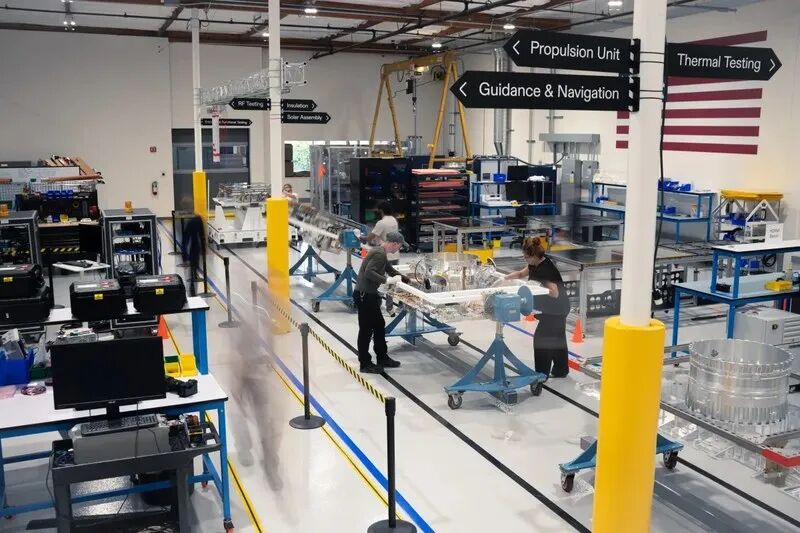
Image Source: TechCrunch
Xona's most ingenious aspect is not 'replacing' GPS but overlaying a paid premium service on billions of existing devices. By enabling existing GPS receivers to receive new signals with only software modifications, it instantly gains market scale and shortcuts the regulatory process for broadcasting navigation signals. In other words, users don't need to replace their phones or car receivers; a single update from manufacturers can provide centimeter-level, anti-interference positioning. This approach of 'not touching existing hardware, only modifying the software stack' is precisely why venture capitalists are betting on it: disrupting government space monopolies may not require another expensive network but rather an enhanced signal layer running on top of the old one.
China Perspective: Beyond Beidou, the Second Path for Commercial Navigation
Shifting focus back to China, the stakes are high. GPS, Galileo, GLONASS, and Beidou—all four systems are government-monopolized and suffer from the same issues of weak signals and vulnerability to interference. China's Beidou has achieved global networking and international service expansion, but it remains essentially state-owned infrastructure. Commercialized, consumer- and industry-oriented enhanced PNT (Positioning, Navigation, Timing) services remain a gap. In recent years, China has also been deploying low-Earth orbit navigation augmentation constellations, following a similar logic to Xona. Notably, Xona's contract with the U.S. Space Force indicates that such 'commercial backup navigation' has been elevated to a national security issue. As unmanned delivery, Robotaxi, and low-altitude economies increasingly rely on precise timing, whoever controls a reliable, low-cost positioning infrastructure will hold the key to the next wave of intelligent mobility.
Today's Golden Quote
'GPS is a free lunch and a single point of failure. Xona bypasses the dual thresholds of hardware replacement and regulation by overlaying an enhanced signal on the old network—proving that the second path for commercial navigation lies not in another expensive network but in smarter software stacks.'
Follow [Degaoxing Zhijinglang] for three hardcore tech analyses daily, understanding the industries and national fortunes behind the technology.
-
![]()
Fuyao Glass Reports 14.97% Drop in Net Profit to 6.006 Billion Yuan for First Three Quarters, While Dimming Glass Yield Soars from 10% to 90%
-
![]()
GPS is Vulnerable to Interference, This Startup Aims to Provide a Centimeter-Level Alternative with 258 Satellites
-
![]()
Desay SV’s Q3 Revenue Hits 9.519 Billion Yuan, Up 23.75%; Overseas Gross Margin at 31.34%, Domestic at 17.58%
-
![]()
Automotive Parts Behemoth Huayu Reports 45.5 Billion Yuan in Q3 Revenue, Net Profit Dips 6.4% to 1.687 Billion Yuan, Yet Stays Robust
-
![]()
Li Auto Shifts Focus: Can Chips, Batteries, and L4 Tech Drive the Next Phase of Competition?
-
Suzhou: Not Just Aiming for Daily Access to Driverless Cars, but Transforming the Entire City into a 'Testing Ground' for Embodied AI
-
![]()
Who Benefits More from the Split of FAW-Audi and SAIC-Audi?
-
40-Year Reversal in Technology Flow: Why Did Volkswagen Transform China from a Factory into a Global Development Hub?