Who Benefits More from the Split of FAW-Audi and SAIC-Audi?
 10/29 2026
 562
On October 26, Audi China issued a joint statement, putting an end to the nearly decade-long ambiguous competition between FAW-Audi and SAIC-Audi. FAW-Audi will fully operate the Four Rings brand, covering both traditional fuel and new energy vehicles. SAIC-Audi will focus on the AUDI brand, dedicated to the new energy market, and will still be allowed to sell Four Rings models until the end of 2027.
On the surface, this is a clear demarcation of 'dual brands, dual partners.' However, demarcation itself does not create advantages; advantages come from who is lighter, faster, and less hindered by old assets afterward.

'Shedding burdens' is not a rhetorical flourish; it is a financial reality
The rapid decline in Audi's profits in China means this split was never an 'active strategic move' from the start. In 2025, Audi delivered 617,500 vehicles in China, a 5% year-on-year decline; financial returns from its Chinese operations fell from €651 million in 2024 to €504 million, a 22.58% drop and the third consecutive year of decline.
In 2026, the situation worsened rapidly: in the first half of the year, approximately 232,000 vehicles were delivered in the Chinese market, a 19.3% year-on-year decline. During the same period, returns from Chinese operations plummeted from €279 million to €73 million, a 74% drop. Industry analysts are blunt in their assessment: previously, both FAW-Audi and SAIC-Audi operated under the Four Rings brand, competing for customers within the same channel, which dispersed resources and directly caused a significant decline in Audi's profits in China. 'Internal friction has seriously slowed down the pace of electrification.'
Previously, SAIC-Audi operated both the Four Rings and AUDI brands, with product lines spanning traditional fuel and pure electric vehicles. While this seemed broad in coverage, in reality, every line directly overlapped with FAW-Audi, and the scale was far from sufficient to support an independent Four Rings dealership network.
For SAIC-Audi, shedding the Four Rings brand is less about 'sacrificing' and more about unloading an existing burden that was neither profitable nor sustainable.
Automobile industry analyst Yang Yongzhe views this adjustment as 'a cost-controllable dual-brand experiment.' His judgment: 'AUDI, using a logo without the Four Rings, gains the freedom in product definition that is unconstrained by global models, something the Four Rings brand cannot achieve.'
SAIC-Audi's 'lightness' comes from isolation at three levels
The advantage SAIC-Audi gains lies not in more resources but in more thorough isolation.
The AUDI brand represents Audi's 'restructuring' in the new energy sector. The explanation provided by SAIC-Audi essentially follows the logic of 'isolation': 'The user profiles for traditional fuel vehicles and electric vehicles are completely different, as are the requirements for products and services. Making choices and focusing more is the necessary path to establishing a luxury new energy brand.'
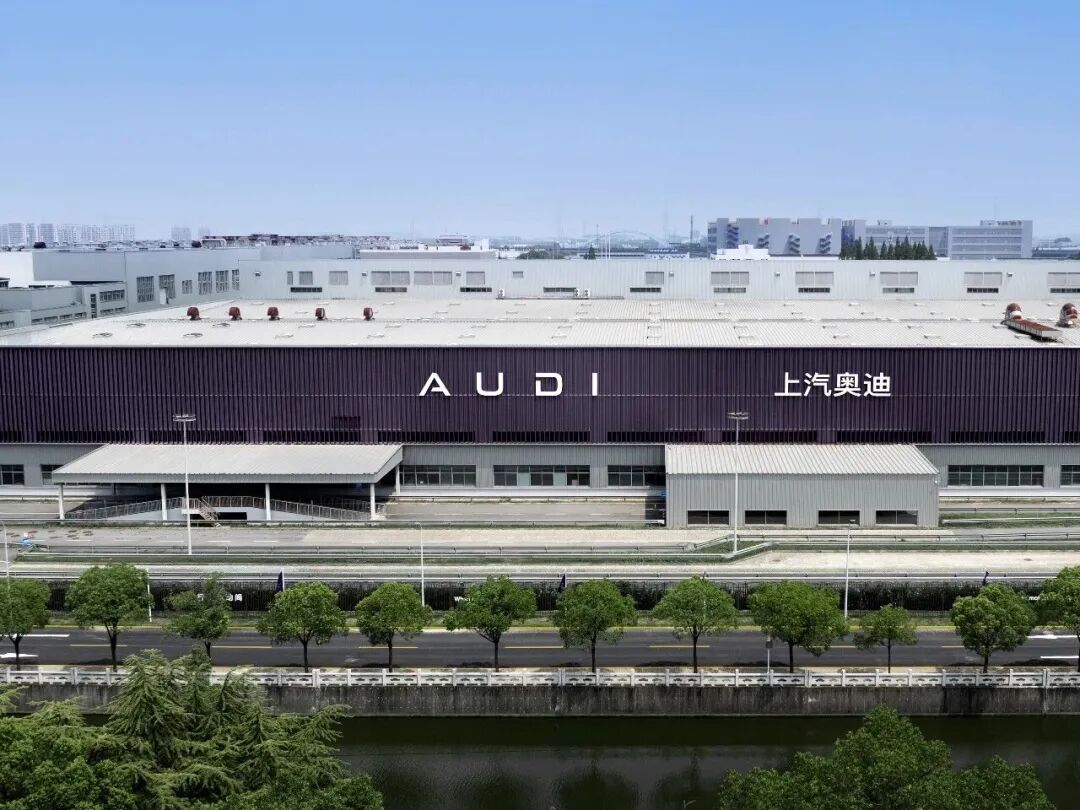
The Audi Innovation and Technology Center (AITC), established in September 2026 and based in Shanghai, is Audi's first full-value-chain R&D entity outside Europe with complete vehicle development capabilities, dedicated to the AUDI brand.
The essential difference of this R&D system is that AUDI is born in China, developed in China, produced in China, and tailors products for the Chinese market. Its product development 'no longer starts from an existing global model and then adds local features in China; instead, from the initial product definition, it revolves around the aesthetics, usage scenarios, and intelligent needs of Chinese consumers.'
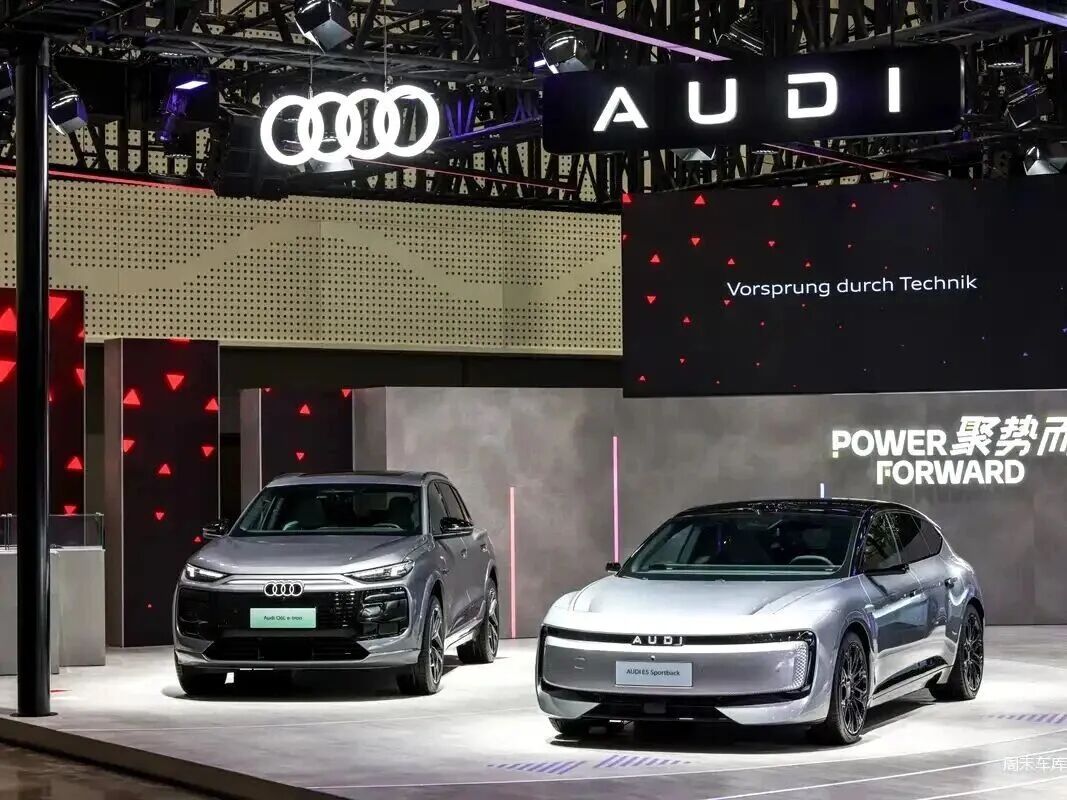
The effects are directly reflected in the pace: the vehicle development cycle has been controlled at 24 months, and the iteration cycle for intelligent driving systems has been compressed to 3 months, while traditional joint venture development cycles generally exceed 48 months.
The AUDI E5 Sportback has preemptively adopted Momenta's solution to embrace Level 3 autonomous driving, and the E7X series comes standard with a 900V high-voltage platform, air suspension, and rear-wheel steering, with pricing and configurations directly competing with new energy rivals. FAW-Audi's Four Rings electric vehicles must adhere to Audi's global technical roadmap and product rhythm, while SAIC-Audi's AUDI only needs to keep pace with competition in the Chinese market.
In terms of channels, FAW-Audi's dealership network is built on the logic of high profits and high rebates from traditional fuel vehicles. Using this network to sell Four Rings new energy models faces a structural contradiction: dealers need electric vehicles to generate profits, but Four Rings electric vehicles lack brand appeal and pricing flexibility at the retail level. The logic of selling fuel vehicles at a loss cannot be replicated for electric vehicles that also fail to sell.
SAIC-Audi does not carry this burden. It has over 200 full-function user centers covering more than 100 cities, making it 'the only luxury brand with a growing network at present.' There is no path dependency on 'fuel vehicle profits subsidizing electric vehicles.'
FAW-Audi's 'heaviness' lies in the negative assets of the Four Rings' transition
The core basis for judging that 'FAW-Audi faces greater resistance in transitioning' lies not in the size of the Four Rings' traditional fuel vehicle base but in the negative asset effects the Four Rings brand has already formed in the new energy sector.
Market researchers note that the Four Rings' new energy product line inherited by FAW-Audi has already undergone a round of 'failed pricing' in consumer perception. An Audi electric vehicle bearing the Four Rings logo cannot convince potential customers of new energy rivals with brand premium in the RMB 300,000 price range, nor can it persuade traditional Audi owners to switch with an intelligent experience.
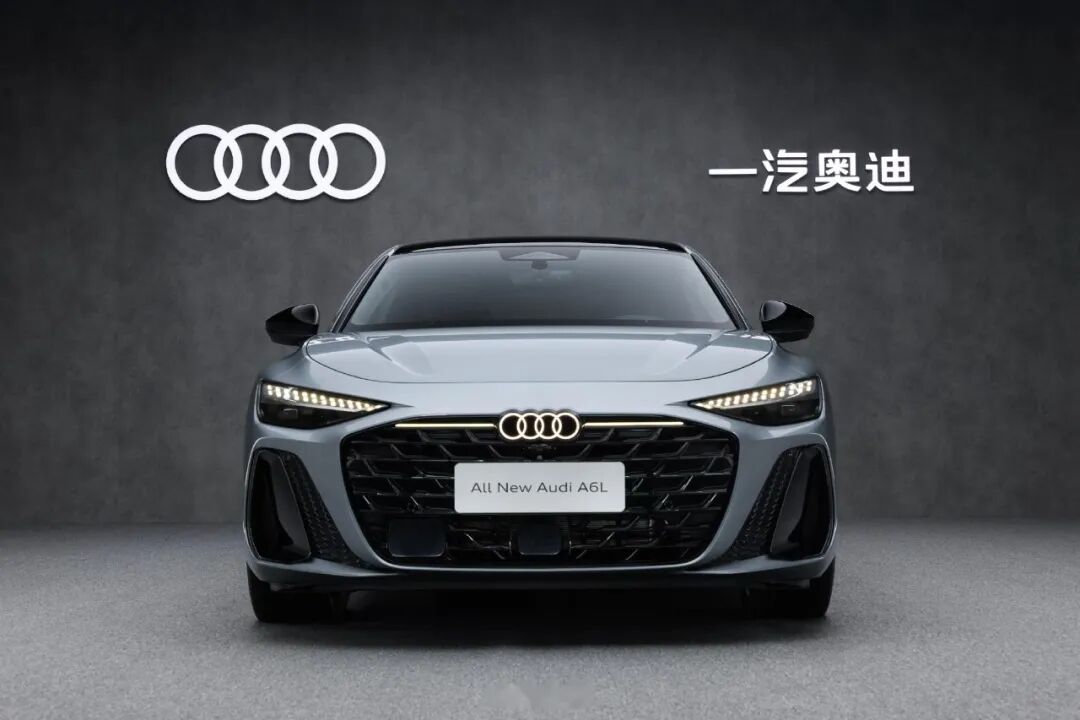
FAW-Audi must simultaneously tell two stories: the continuation of luxury for Four Rings' traditional fuel vehicles and the value reconstruction of Four Rings' electric vehicles. These two stories are difficult to promote in the same showroom, with the same sales pitch, and through the same group of dealers in a short time.
Organizational inertia is a deeper resistance. A FAW-Audi dealer stated that FAW-Audi's current top priority is to stabilize the survival of the traditional fuel vehicle channel rather than aggressively drive electrification. The Four Rings' new energy sector has far less room for trial and error and decision-making freedom than an independent new brand.
The answer to 'who benefits more' is written in the ledger
It must be acknowledged that the risks faced by the AUDI brand are real. Brand recognition for AUDI starts from zero, and early R&D and marketing investments will significantly drag down short-term profitability.
However, 'benefiting' is always a relative concept. SAIC-Audi's costs are explicit, one-time, and can be actively managed through product and pricing strategies: building the brand, launching products, and climbing the sales curve follow a clear path, with new energy rivals providing referential templates.
According to SAIC-Audi's official information, after the launch of the E7X, some of the over 200 dealerships have received more than 100 orders, with some nearing 200. The test drive-to-order conversion rate 'exceeds 70%.' Survey data shows that the AUDI brand's Net Promoter Score (NPS) ranks first among traditional luxury brands. Both sales data and brand recognition indicate a significant upward trend for AUDI.
FAW-Audi's costs, on the other hand, are implicit, structural, and time-sensitive. There is no clear roadmap for repairing the perception of Four Rings' new energy vehicles. The profitability dilemma of the dealership network will not automatically resolve simply by clarifying brand ownership. While traditional fuel vehicles still contributed over 570,000 retail units to FAW-Audi in 2025, 'the shrinking of the traditional fuel base is an irreversible trend.'
Survey data from the All-China Federation of Industry and Commerce Automobile Dealers Chamber of Commerce shows that FAW-Audi dealers' inventory depth has exceeded 2.5, meaning dealers hold inventory equivalent to more than 2.5 months of sales.
Industry insiders state that while FAW-Audi has obtained the 'complete brand assets' of the Four Rings in the split, it is essentially an asset portfolio that requires shrinking traditional fuel profits to 'fund' the new energy transition.
Thus, while both FAW-Audi and SAIC-Audi appear to have received a 'complete brand' on the surface, one starts from zero, and the other starts from a negative position. This is the truest 'accounting' after the split.
-
![]()
Fuyao Glass Reports 14.97% Drop in Net Profit to 6.006 Billion Yuan for First Three Quarters, While Dimming Glass Yield Soars from 10% to 90%
-
![]()
GPS is Vulnerable to Interference, This Startup Aims to Provide a Centimeter-Level Alternative with 258 Satellites
-
![]()
Desay SV’s Q3 Revenue Hits 9.519 Billion Yuan, Up 23.75%; Overseas Gross Margin at 31.34%, Domestic at 17.58%
-
![]()
Automotive Parts Behemoth Huayu Reports 45.5 Billion Yuan in Q3 Revenue, Net Profit Dips 6.4% to 1.687 Billion Yuan, Yet Stays Robust
-
![]()
Li Auto Shifts Focus: Can Chips, Batteries, and L4 Tech Drive the Next Phase of Competition?
-
Suzhou: Not Just Aiming for Daily Access to Driverless Cars, but Transforming the Entire City into a 'Testing Ground' for Embodied AI
-
![]()
Who Benefits More from the Split of FAW-Audi and SAIC-Audi?
-
40-Year Reversal in Technology Flow: Why Did Volkswagen Transform China from a Factory into a Global Development Hub?