Medium-Heavy Trucks and Large Buses: Draft for Approval of Mandatory AEB National Standards Released
 10/29 2026
 518
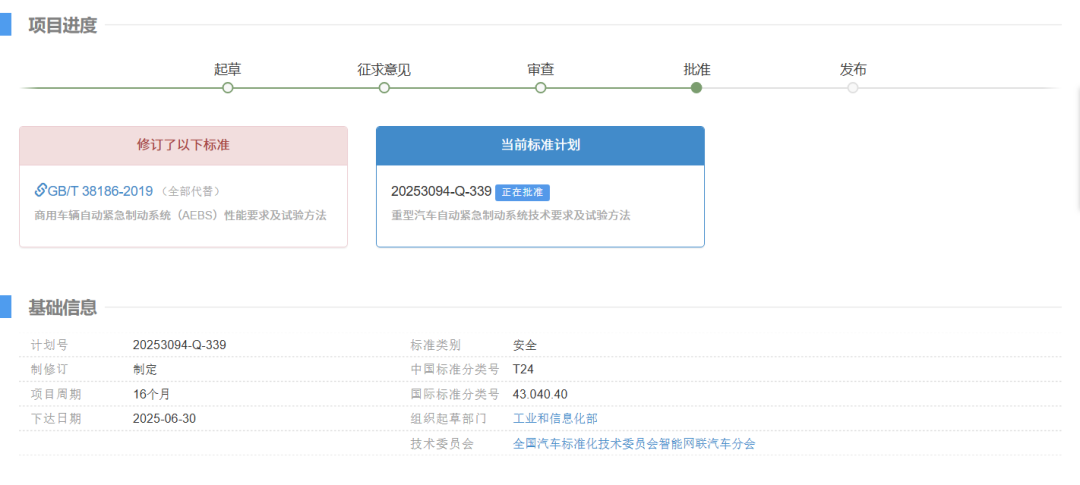
Recently, the Ministry of Industry and Information Technology has overseen the development of a mandatory national standard (currently in draft form for approval), titled Technical Requirements and Test Methods for Automatic Emergency Braking Systems in Heavy-Duty Vehicles. This new standard is set to supersede the previous recommended standard, GB/T 38186—2019. It represents China's inaugural mandatory national standard, establishing comprehensive, verifiable, and internationally harmonized technical benchmarks for Automatic Emergency Braking Systems (AEBS) in M, M, N, and N category heavy-duty vehicles.
This development implies that, in the near future, heavy trucks, large buses, and engineering transport vehicles will not only be required to be fitted with AEB systems but also ensure these systems can brake effectively, avoid unnecessary braking, and provide timely alerts in the event of potential incidents.
From Specific Scenarios to Comprehensive Operational Condition Coverage
The most notable enhancement in this draft is the elevation of AEB from a recommended feature in GB/T 38186-2019 to a compulsory market entry requirement. The vehicles now explicitly covered include M, M, N, and N class heavy-duty vehicles (encompassing minibuses, large buses, medium trucks, heavy trucks, and tractors, but excluding buses with standing areas and special-purpose vehicles).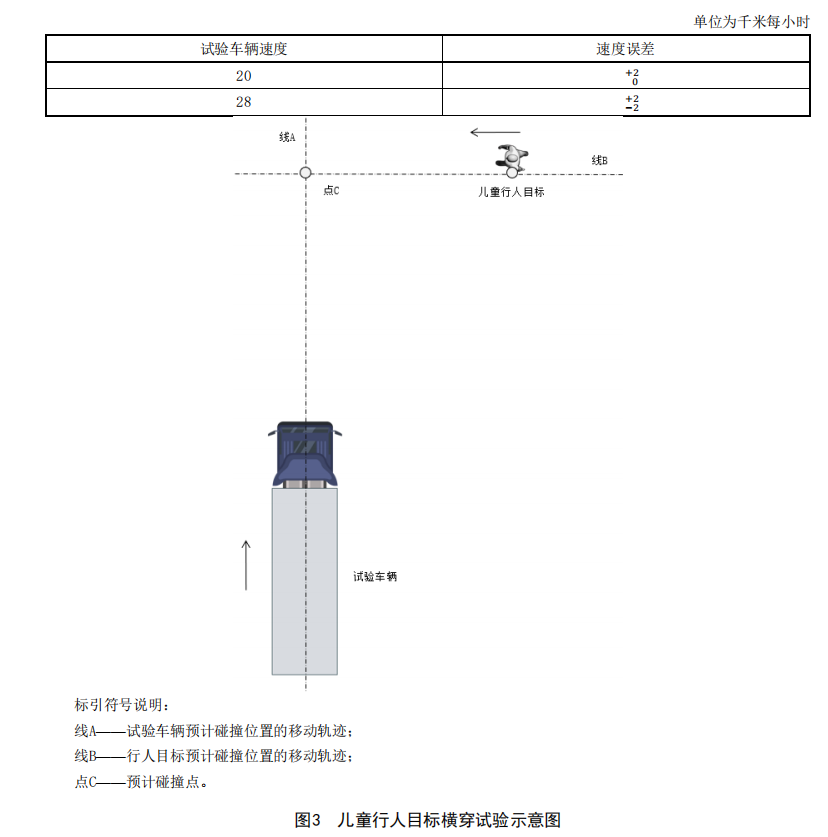
In comparison to the previous standard, the technical framework has undergone a near-total overhaul. The target objects have broadened from merely 'identifying preceding vehicles' to 'vehicles + pedestrians,' with the inclusion of child pedestrian crossing scenarios in mandatory testing for the first time. The system is now mandated to provide warnings and initiate braking at speeds ranging from 20–60 km/h, effectively managing relative collision speeds. The management of false responses addresses industry shortcomings by introducing five new scenarios: following vehicles during right turns, stationary vehicles in adjacent lanes, left turns at intersections, curved roads with guardrails, and lane changes in construction zones. The system must 'brake when necessary and avoid false triggers,' thereby preventing secondary accidents caused by abrupt braking.
At the system management level, the new standard delineates four states: standby, activation, unavailable, and initialization. It necessitates automatic activation upon each power-on, with automatic restoration within a maximum of 15 minutes after manual deactivation, thereby closing loopholes for 'human deactivation.' Warning signals must incorporate a combination of visual, auditory, or tactile cues, with tactile alerts triggered when short-term deceleration exceeds 4 m/s². Most critically, functional safety is included in the appendix with mandatory verification, requiring automakers to submit hazard analyses, safety goals, and system architectures. Verification involves real-vehicle fault injections such as camera obstruction, radar failure, and communication interruptions to test safety exit and warning logic.
New Shifts in R&D, Supply Chains, and Testing for Automakers
Upon implementation, the standard will initially overhaul automakers' R&D approaches. Previously, AEB could be developed as a basic marketing feature, but now it must be restructured in accordance with the mandatory standard: perception fusion algorithms must simultaneously process vehicles, child pedestrians, and complex road conditions; controllers must incorporate fault diagnosis and safety state machines; and vehicle calibration must encompass both loaded and unloaded conditions, as well as low-light scenarios. For platforms currently in development, if outdated architectures are retained, additional functional safety documentation, verification data, and type approval materials will be required, directly affecting project timelines.
At the supply chain level, millimeter-wave radar + camera fusion solutions will emerge as the standard baseline for heavy commercial vehicles, rendering it challenging for single low-performance sensors to pass new standard tests. Tier 1 suppliers will be required to provide not only hardware but also functional safety analysis capabilities and HIL/real-vehicle injection verification support, accelerating supply chain stratification and reshuffling. Testing agencies will also need to augment their capabilities, with 3D target vehicles, child pedestrian dummies, lane-inducing signs, traffic cones, and fault injection rigs becoming standard equipment. Robustness statistics (pass rate ≥90%) will extend testing cycles.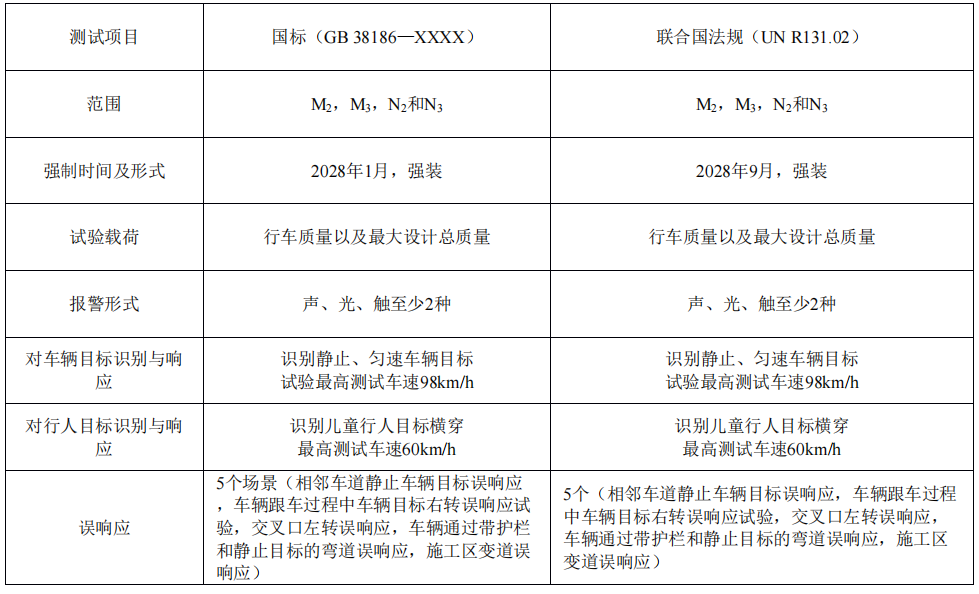
Regarding the implementation timeline, newly applied type-approved vehicle models will directly comply after the standard's enforcement, while already approved models will be granted a 13-month transition period (the draft suggests full implementation around 2028). This timeframe necessitates that companies promptly initiate technical pre-research and announcement transition preparations.
From a public safety standpoint, the implementation of the new standard is poised to significantly reduce heavy-duty vehicle accident rates. Heavy vehicles, owing to their extended braking distances and substantial blind spots, often result in severe consequences in rear-end collisions and pedestrian impacts. By incorporating child pedestrian crossing recognition and false response suppression, the new standard directly addresses high-risk scenarios such as urban intersections and construction zones, potentially averting a substantial number of preventable casualties.
-
![]()
Fuyao Glass Reports 14.97% Drop in Net Profit to 6.006 Billion Yuan for First Three Quarters, While Dimming Glass Yield Soars from 10% to 90%
-
![]()
GPS is Vulnerable to Interference, This Startup Aims to Provide a Centimeter-Level Alternative with 258 Satellites
-
![]()
Desay SV’s Q3 Revenue Hits 9.519 Billion Yuan, Up 23.75%; Overseas Gross Margin at 31.34%, Domestic at 17.58%
-
![]()
Automotive Parts Behemoth Huayu Reports 45.5 Billion Yuan in Q3 Revenue, Net Profit Dips 6.4% to 1.687 Billion Yuan, Yet Stays Robust
-
![]()
Li Auto Shifts Focus: Can Chips, Batteries, and L4 Tech Drive the Next Phase of Competition?
-
Suzhou: Not Just Aiming for Daily Access to Driverless Cars, but Transforming the Entire City into a 'Testing Ground' for Embodied AI
-
![]()
Who Benefits More from the Split of FAW-Audi and SAIC-Audi?
-
40-Year Reversal in Technology Flow: Why Did Volkswagen Transform China from a Factory into a Global Development Hub?