Steadily Ranking First Globally: 4 Key Insights from Fuyao Glass for Chinese Enterprises", "Fuyao Glass, automotive glass, global leadership, market share, vertical integration", "Fuyao Glass maintain
 10/29 2026
 514
1
The Strength of Being 'Number One'
It is not uncommon to find large-scale Chinese enterprises, but only a handful achieve absolute global leadership in a single category. If a category's primary long-term market is not in China and China lacks any inherent elemental advantages, then such global leadership holds even greater value.
Automotive glass is one such category. The global automotive industry has long been centered in Europe, the United States, Japan, and South Korea. Glass is a typical heavy, fragile component requiring strong certification and support attributes, naturally positioned around vehicle manufacturers—whose headquarters are not in China. In this environment, Fuyao Glass has managed to secure and maintain its global leadership, a feat worthy of serious analysis.
In 2025, Fuyao achieved revenue of RMB 45.787 billion, up 16.65% year-on-year; net profit attributable to shareholders of RMB 9.312 billion, up 24.20% year-on-year; and a weighted average return on equity of 25.56%. Revenue from automotive glass reached RMB 41.889 billion with a gross profit margin of 31.32%; revenue from float glass was RMB 6.480 billion with a gross profit margin of 39.64%. The comprehensive gross profit margin for the main business was 36.81%, up 1.19 percentage points year-on-year. Overseas revenue was RMB 20.857 billion, accounting for 46.25% of the total; net cash flow from operating activities was RMB 12.055 billion, up 40.79% year-on-year.
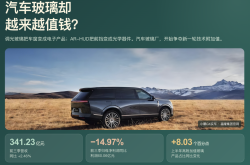
In the first three quarters of 2026, growth noticeably slowed, with revenue of RMB 34.123 billion, up 2.46% year-on-year; net profit attributable to shareholders of RMB 6.006 billion, down 14.97% year-on-year. The primary reason for the profit decline was foreign exchange rates, with exchange losses of RMB 1.067 billion in the first three quarters compared to exchange gains of RMB 481 million in the same period last year. After excluding this impact, total profit increased by 1.18% year-on-year; the sales gross profit margin was 38.56%, still higher than the same period last year. Only by examining both sets of data together can we get a complete picture—Fuyao did not continue to soar unchecked; it encountered real resistance in 2026.
Now, let's look at market share. According to company data, Fuyao's global market share is approximately 35%, meaning one out of every three automotive glass pieces worldwide comes from Fuyao; its domestic market share is around 70% (approximately 68% according to company disclosures). Third-party research estimates are slightly higher, at around 37%, and ranks the top five globally as follows: Fuyao at ~37%, Asahi Glass at ~16%, Saint-Gobain at ~14.5%, Nippon Sheet Glass at ~14%, and Xinyi Glass at ~8%. The top four companies have long dominated over 80% of the global market, making this a typical oligopoly.
More persuasive than static market share is the trend of change. According to third-party research, a decade ago, Japan's Asahi Glass topped the list with a share of ~27.5%, Fuyao at ~21.9%, Nippon Sheet Glass at ~21.1%, and Saint-Gobain at ~17.6%. Over the past decade, nearly all major competitors have seen their shares contract, while only Fuyao has expanded.
Two other figures illustrate the quality of this leadership. One is the customer base, which includes Bentley, Mercedes-Benz, BMW, Audi, General Motors, Toyota, Volkswagen, Ford, Chrysler, Tesla, and BYD—virtually every global mainstream vehicle manufacturer. The other is shareholder returns: according to company disclosures, from 1987 to 2025, Fuyao paid over RMB 36.776 billion in taxes and distributed RMB 40.22 billion in dividends.
2
A Starting Point Without Advantages
In 1976, Cao Dewang drove the establishment of the Gaoshan Special-Shaped Glass Factory in his hometown of Gaoshan Town, Fuqing, producing water meter glass and operating at a loss for years. After policies allowed for contracted management of township enterprises in 1983, he took the initiative to contract the factory, introduced performance-based wages, and achieved a profit of around RMB 220,000 in the first year, despite total factory investment being just over RMB 100,000. The real turning point came around 1985.
According to People's Daily, around 1984, Cao Dewang visited Wuyi Mountain and bought a walking stick for his mother. When he placed it on his shoulder, a driver of a Japanese car warned him, 'Don't break my glass—it costs thousands of yuan a piece.' As a water meter glass manufacturer, Cao knew the cost of glass; automotive glass cost just over RMB 100 to produce, so why did it sell for thousands? After investigating, he found that nearly all automotive glass in China was imported at the time, with prices entirely dictated by sellers since no Chinese companies were among the suppliers.
In 1985, the factory shifted to automotive glass, targeting the repair market, and earned over RMB 700,000 in profit from this business the following year. In 1987, Cao united with more than ten shareholders to raise RMB 6.27 million and established Fuyao Glass Co., Ltd., investing over USD 1 million to import an internationally advanced automatic forming tempering furnace from Finland. The company was approved for public stock issuance in 1991 and listed on the Shanghai Stock Exchange in 1993 as Fujian's earliest listed private enterprise.
An often-overlooked temporal context: in 1990, China's annual automobile production was 509,000 vehicles; it wasn't until 2009 that China's automobile production and sales surpassed 10 million units, making it the world's largest automobile producer and consumer market; by 2025, production and sales reached 34.531 million and 34.40 million units, respectively. In other words, during the first two decades of Fuyao's development and capability accumulation, China's automotive industry was nearly negligible on the global stage. Its initial market was not domestic vehicle manufacturers but the repair parts market for imported vehicles.
This temporal gap is crucial. Many Chinese companies' success narratives are underpinned by the tailwinds of their home country's industrial rise, but Fuyao's was not. It achieved the capability to capture such tailwinds from a position of nearly zero industrial dividends.
That early Excess profit (excess profit) was essentially a gift of market structure, not capability. The same dividends presented to another company might have only resulted in a round of consumption. The sole criterion for judging Fuyao's later strength was whether, after the window for import substitution closed and prices normalized, it possessed unique capabilities.
3
Three Acts of Self-Restraint, One Proactive Strike
The first instance of self-restraint came around 1994.
Around 1993, in addition to its core automotive glass business, Fuyao ventured into real estate, decoration engineering, and securities. The prevailing view among management and employees was that the company should pursue conglomerate-style diversification. Cao Dewang had the company's operating reports assessed by international professionals according to global standards, only to be told that its 'core business was not prominent.' He then went against the consensus, transferring investments in Fuyao Industrial Village and the decoration company in 1994 and withdrawing investments from Southern Securities in 1995, redirecting all funds toward the construction of Fujian Wanda Automotive Glass Co., Ltd.
The difficulty of focus lies not in knowing what to do but in executing it by cutting off profitable businesses still showing earnings on the books. Stopping losses on unprofitable ventures is one thing; strategically abandoning profitable ones is another. Fuyao has not deviated from automotive glass in over three decades—this decision about what 'not to do' was harder than deciding what 'to do.'
The second instance occurred from 1996 to 1999: learning from the strongest competitor without becoming its vassal.
In early 1996, Fuyao signed an agreement with Saint-Gobain, a global leader in automotive glass, forming Wanda Automotive Glass Co., Ltd. with Fuyao contributing USD 14.7 million and Saint-Gobain USD 15.3 million. The French side held a 51% controlling stake, with Cao Dewang as general manager. The three-year collaboration was immensely rewarding: Fuyao employees received training in batches at Saint-Gobain's frontline production facilities in France, gaining firsthand exposure to and practice in industry benchmarks for production processes, design thinking, and technological routes while learning multinational enterprise (multinational) management models and financial concepts. The cost was equally substantial, as Fuyao's operating performance declined noticeably during the cooperation, and disagreements gradually emerged. Saint-Gobain hoped Fuyao would become its Chinese branch, while Fuyao aimed to be a global automotive glass supplier. In 1999, the partnership ended, with Fuyao repurchasing all of Saint-Gobain's shares at a premium and agreeing that Saint-Gobain would not re-enter the Chinese market before July 1, 2004.
This experience is often summarized as 'paying tuition,' but the truly valuable takeaways were two-fold: first, Fuyao learned what world-class standards looked like, and once raised, these standards were irreversible; second, even in its most capital- and technology-constrained phase, Fuyao refused to become anyone's Chinese branch. The purpose of learning is not dependency but more thorough independence.
The third instance took place from 2001 to 2005: reclaiming 'legitimacy.'
In late February 2001, Fuyao learned that PPG Industries, along with two other U.S. glass companies, had filed an anti-dumping complaint against Chinese automotive windshields with the U.S. Department of Commerce. At a meeting the next morning, two opinions emerged: one deemed it irrelevant, noting strong domestic demand and higher profits from domestic sales than exports; the other insisted on responding, arguing that failure to do so would mean abandoning international markets. Cao Dewang later recalled his judgment based on three reasons: the automotive industry is highly globalized, so abandoning international markets would eventually mean exiting the Chinese market as well; the opponent operated under the rule of law, and Fuyao's accounting records were complete and credible; abandoning international markets meant neglecting corporate responsibilities.
What followed was a protracted battle on two fronts. In Canada, on December 18, 2001, PPG Canada filed charges against four Chinese automotive glass companies, with initial rulings briefly imposing high anti-dumping duties on Fuyao (24.09% and 57% according to different sources). During the response, the team uncovered a crucial clue: PPG's automotive glass sold in Canada was actually produced in the U.S., meaning PPG, like Fuyao, was an exporter to Canada and thus ineligible to accuse Fuyao of dumping. On August 30, 2002, the Canadian International Trade Tribunal ruled no injury had occurred—the first victory in an anti-dumping case for China after joining the World Trade Organization.
On the U.S. front, on February 12, 2002, the U.S. Department of Commerce finalized Fuyao's dumping margin at 11.8%, with five other Chinese companies at 8.22%. In April, Fuyao sued the U.S. Department of Commerce in the U.S. Court of International Trade, challenging its ruling on multiple legal grounds. In December 2003, the court supported several of Fuyao's claims and ordered a rehearing. On October 15, 2004, the U.S. Department of Commerce's administrative review finalized Fuyao's dumping rate at 0.13% (below 0.5% is treated as zero), refunding previously paid anti-dumping duties totaling approximately USD 3.9 million (some reports say USD 4 million).
The litigation costs were exorbitant, with reports suggesting the case lasted three to four years, with legal fees ranging from several million USD to around RMB 100 million, and the team accumulating tons of response materials. Yet the benefits far exceeded the case itself: first, this rare public victory reintroduced global vehicle manufacturers to this Chinese supplier; second, the international credibility gained directly translated into financing capabilities, enabling Fuyao to secure unsecured loans from Citibank, BNP Paribas, and Mitsubishi Bank thereafter.
This episode offers the most transferable lesson in the entire story: the cost of going global necessarily includes compliance costs. Transparent accounting and defensible pricing logic are not regulatory burdens in international markets but directly redeemable assets.
A key proactive strike came after 2014: building factories beside customers.
Automotive glass is unsuitable for long-distance transport, and vehicle manufacturers demand just-in-time Supporting delivery (delivery), making globalization in this industry inherently require local production capacity rather than remote supply. In 2014, Fuyao purchased a defunct General Motors plant in Dayton, Ohio, transforming it into an approximately 180,000-square-meter automotive glass facility that began operations in 2016, later establishing an Illinois base with two automotive-grade float glass production lines. Fuyao's total investment in the U.S. has been disclosed at various times as ranging from approximately USD 500 million to over USD 700 million, with an additional USD 650 million infused into its U.S. subsidiary in 2022 and another USD 400 million in March 2025 to build a third automotive-grade float glass production line. This approach of co-locating raw glass and deep processing essentially transplanted China's proven vertical integration model to customers' doorsteps.
This path was not without challenges. The 2019 documentary American Factory, co-produced by the Obamas and winner of the 92nd Academy Award for Best Documentary Feature, documented the clash of two management cultures. In July 2024, Fuyao's U.S. plant was briefly raided by federal agencies, with the company responding that operations resumed normally the same day. The Russian base was signed in 2011 and began operations in 2013; by 2025, the second U.S. plant and Hungarian project were operational, with an Indonesian project initiated. By 2026, Fuyao had established production, sales, and R&D bases in 18 Chinese provinces and 13 countries and regions, including the U.S., Germany, Russia, Japan, and South Korea.
In today's context of rising geopolitical tensions and tariff barriers, completing localized production capacity Layout (layout) a decade early bought not just project capacity but certainty.
4
Three Structural Barriers
Achieving leadership can rely on opportunity, but maintaining it requires structure. Fuyao's unshakable lead is supported by three layers of capability.
The first layer is vertical integration.
According to company disclosures, Fuyao currently owns four high-quality silica sand mines, six float glass production bases, 22 automotive glass production bases, and eight aluminum trim production bases, forming a full-chain supply system from silica sand, float glass, process equipment to glass and aluminum trim. Notably, in equipment: early on, key automotive glass processing equipment was hard to acquire due to technological protections, prompting Fuyao to invest heavily in establishing a machinery manufacturing company for independent R&D. Cao Dewang mentioned in a 2026 public sharing that around 90% of Fuyao's factory equipment is independently developed and manufactured, with the remaining 10% procured externally due to lower costs—and even that could be produced in-house if external supplies ceased. In 2019, Fuyao acquired the assets of Germany's SAM company for EUR 58.8276 million, entering the aluminum bright trim business.
Vertical integration means far more than cost reduction. When raw glass, coating processes, and molding equipment are all in-house, product iteration no longer relies on external schedules. Data confirms this: in 2025, Fuyao's float glass business had a gross profit margin of 39.64%, higher than the automotive glass business's 31.32%, indicating that the internalized upstream segment creates profits rather than merely serving as a cost center.
The second layer is the industry's inherent barriers.",
The route is supported by sustained and high-intensity R&D investment. Over the past decade, Fuyao has invested over RMB 10 billion in R&D cumulatively. In 2025, R&D investment reached RMB 1.913 billion, accounting for 4.18% of operating revenue and representing a year-on-year increase of 14.03%. The company employs over 6,300 R&D personnel, approximately 15% of its total workforce, and operates 10 design centers and 2 R&D centers across China, the United States, Germany, and Japan. By the end of 2025, Fuyao had accumulated 2,045 valid authorized patents and led or participated in the formulation of 66 international, national, and industry standards.
The healthiest growth path for component companies is not to sell more of the same product but to continuously increase the value generated within the same region. This explains why Fuyao's gross profit margin improved even during years of sustained price wars in the complete vehicle market.
5
Four Key Insights
Judging from Fuyao Glass's growth trajectory, it has rebuilt a business that anyone could do from a position with no inherent advantages, relying on long-term consistency. It has exchanged focus for depth of accumulation, vertical integration for certainty in cost and technological evolution, localization for reduced delivery distances and enhanced trust, and transformed every external shock into new organizational capabilities rather than converting them into one-time gains.
Specifically, it offers four important insights for the business community.
First, difficult yet correct endeavors are the true moats.
Several decisions made by Fuyao over the past four decades were not cost-effective at the time: discontinuing profitable real estate and securities investments in 1994; spending years fighting a lawsuit that could have been avoided starting in 2001; purchasing a defunct factory in 2014 in a country with a strong union tradition and entirely different labor laws and work habits; and early on, developing key equipment that others had blocked to avoid being constrained. Their common feature is extremely low or even negative short-term returns, yet they raised the threshold for the entire system in the long run. Competitors can buy similar equipment or poach a few engineers, but few are willing to endure such prolonged, returnless investments.
This principle applies to any latecomer in a mature industry. Surpassing competitors usually does not come from finding shortcuts but from voluntarily bearing the long-term costs that others are unwilling to accept. A moat often means not that you are smarter than others but that you are more resilient.
Second, endowments are not heaven-sent; they can be organized.
When discussing Chinese companies' global expansion, the common explanatory framework is industrial structure determinism. Fuyao's history provides a counterexample. When it started, China's automotive production and global share were negligible, and all glass-making process equipment was imported. However, the cost drivers of this business were clear: self-sufficiency in raw glass, energy and power costs, supply chain proximity, equipment depreciation, and product yield rates. Fuyao systematically brought these factors under its control.
Sand mines, float glass lines, self-developed equipment, process databases, and local factories—none are mysterious individually, but together they create a cost structure and response speed that others find difficult to replicate simultaneously. In manufacturing, "less is more" truly means that resource density determines cognitive depth, which in turn determines how deeply you can dig into the unseen aspects of the business.
Third, the ultimate form of global expansion is not selling out but moving in.
Fuyao's globalization has gone through three stages: exporting products, complying with regulations, and relocating the organization itself. The first stage involved exporting during the strategic contraction of high-energy-consuming industries in the United States in the 1990s. The second stage meant confronting regulations head-on and learning to protect itself using the other side's rules. The third stage involved hiring locally, building factories locally, and establishing local R&D and management support. Looking back, the second stage was a rehearsal for the third, as it forced the development of an operational foundation that could stand in any jurisdiction.
Today, Chinese companies face a more complex environment, with rising pressures from tariffs, scrutiny, and supply chain reconfiguration. In such an environment, the value of completing localization a decade early is significantly amplified. Beyond acquiring production capacity, it buys certainty that customers will still place orders amid uncertainty. Of course, localization also means new risks—cultural conflicts, compliance reviews, and labor regulations will all be present. There is no easy version of going global.
Fourth, the legitimacy of profits determines whether leadership can be sustained.
Many companies fail in globalization not because they are not cheap enough but because their methods of being cheap are unacceptable. Low-price dumping may capture market share in the short term but invites investigations and customer wariness while locking companies out of product upgrades.
Fuyao chose a different path: its similar products are indeed cheaper, but the cost advantages come from structural efficiencies, not exploitation. More importantly, it continuously increases the glass value per vehicle, enabling customers to pay for functionality. In the first half of 2026, even as revenue growth slowed, the gross profit margin of its main business increased by 1.79 percentage points, and the automotive glass gross profit margin rose by 1.55 percentage points, driven by a higher proportion of high-value-added products.
At the same time, it fully safeguards the interests of all stakeholders. From 1987 to 2025, it paid over RMB 36.776 billion in taxes and distributed RMB 40.22 billion in dividends. Cao Dewang once explained "respecting heaven and loving people" in a public sharing: loving people means loving employees, material suppliers, packaging suppliers, and product users, treating them as one would treat one's own parents rather than exploiting or deceiving them.
This advice sounds simple, but in business, it represents a fundamental principle. The "operating license" needed for long-term operations across more than a dozen countries is not granted by approvals but jointly provided by customers, employees, suppliers, shareholders, and local communities. Success through the right path is not moral rhetoric; it is the safest form of long-term risk management.
Although Fuyao remains the industry leader, it is not without pressures. Financial data for the first three quarters of 2026 shows that Fuyao's revenue growth slowed to 2.46%, and net profit attributable to shareholders decreased by 14.97% year-on-year, with foreign exchange losses being the primary drag. This reminds us that when nearly half of a company's revenue comes from overseas, its profit statement becomes inevitably exposed to fluctuations in exchange rates, geopolitics, and supply chain reconfiguration, and scale alone no longer provides protection. Meanwhile, competition in the complete vehicle market is shifting cost pressures upstream, requiring glass companies to continuously increase R&D investment for intelligence. In October 2025, Cao Dewang stepped down as chairman, succeeded by his eldest son, Cao Hui. In 2026, Fuyao marked its 50th anniversary and proposed a "second entrepreneurship" to advance digital and intelligent transformation—all new variables.
The favorable aspects are equally clear: the penetration of high-value-added products continues to accelerate, representing value growth unaffected by cycles. Fuyao maintains its counter-cyclical investment habit: construction of the Fujian Yangxia factory began in August 2024 with an investment of RMB 3.25 billion and turned profitable in the year of its launch in August 2025, while the Hefei factory, with an investment of RMB 5.75 billion, progressed simultaneously. Fifty years of technological accumulation and generational succession give the company a longer time horizon than most peers.
However, scale is no longer a rarity in China; what is rare are companies that, in a field that does not favor them, spend decades systematically playing the cards in their hands. Fuyao's answer is not a specific technology, an opportunity, or even the word "focus" itself.
It proves that being the global leader often does not start from an advantageous position but gradually emerges from a series of seemingly disadvantageous choices: discontinuing profitable businesses, fighting avoidable lawsuits, building factories in the most challenging locations, developing equipment to avoid being constrained, investing in capacity during downturns, distributing profits to shareholders, leaving credibility with customers, and keeping technology for itself.
The common thread in all these choices is that they appear disadvantageous in the short term but prove worthwhile in the long run. This is why Fuyao can be and remain the global leader, and it is also its most valuable business insight for Chinese companies.
-
![]()
Fuyao Glass Reports 14.97% Drop in Net Profit to 6.006 Billion Yuan for First Three Quarters, While Dimming Glass Yield Soars from 10% to 90%
-
![]()
GPS is Vulnerable to Interference, This Startup Aims to Provide a Centimeter-Level Alternative with 258 Satellites
-
![]()
Desay SV’s Q3 Revenue Hits 9.519 Billion Yuan, Up 23.75%; Overseas Gross Margin at 31.34%, Domestic at 17.58%
-
![]()
Automotive Parts Behemoth Huayu Reports 45.5 Billion Yuan in Q3 Revenue, Net Profit Dips 6.4% to 1.687 Billion Yuan, Yet Stays Robust
-
![]()
Li Auto Shifts Focus: Can Chips, Batteries, and L4 Tech Drive the Next Phase of Competition?
-
Suzhou: Not Just Aiming for Daily Access to Driverless Cars, but Transforming the Entire City into a 'Testing Ground' for Embodied AI
-
![]()
Who Benefits More from the Split of FAW-Audi and SAIC-Audi?
-
40-Year Reversal in Technology Flow: Why Did Volkswagen Transform China from a Factory into a Global Development Hub?