BYD's Two Bodies
 11/23 2026
 344
Produced by I XiaHai fallsea
Written by I Hu Buzhi
On October 9, 2025, in Camaçari, Brazil, BYD's 14 millionth new energy vehicle rolled off the production line, with President Lula in attendance. Chen Xuefeng, the park's general manager, stared at the line and knew full well that this was no ordinary milestone.
For this particular vehicle, a batch of components—body, interior, wiring harness—were all sourced locally, and the battery pack was assembled locally too. But the battery cells were still mainly imported from China. Management wanted far more than this.
In November 2026, BYD raised its overseas sales target from 1.3 million to 1.8 million vehicles. Over half a year, 1.3 million, 1.5 million, 1.8 million—revised three times, an upward adjustment of nearly 40%.
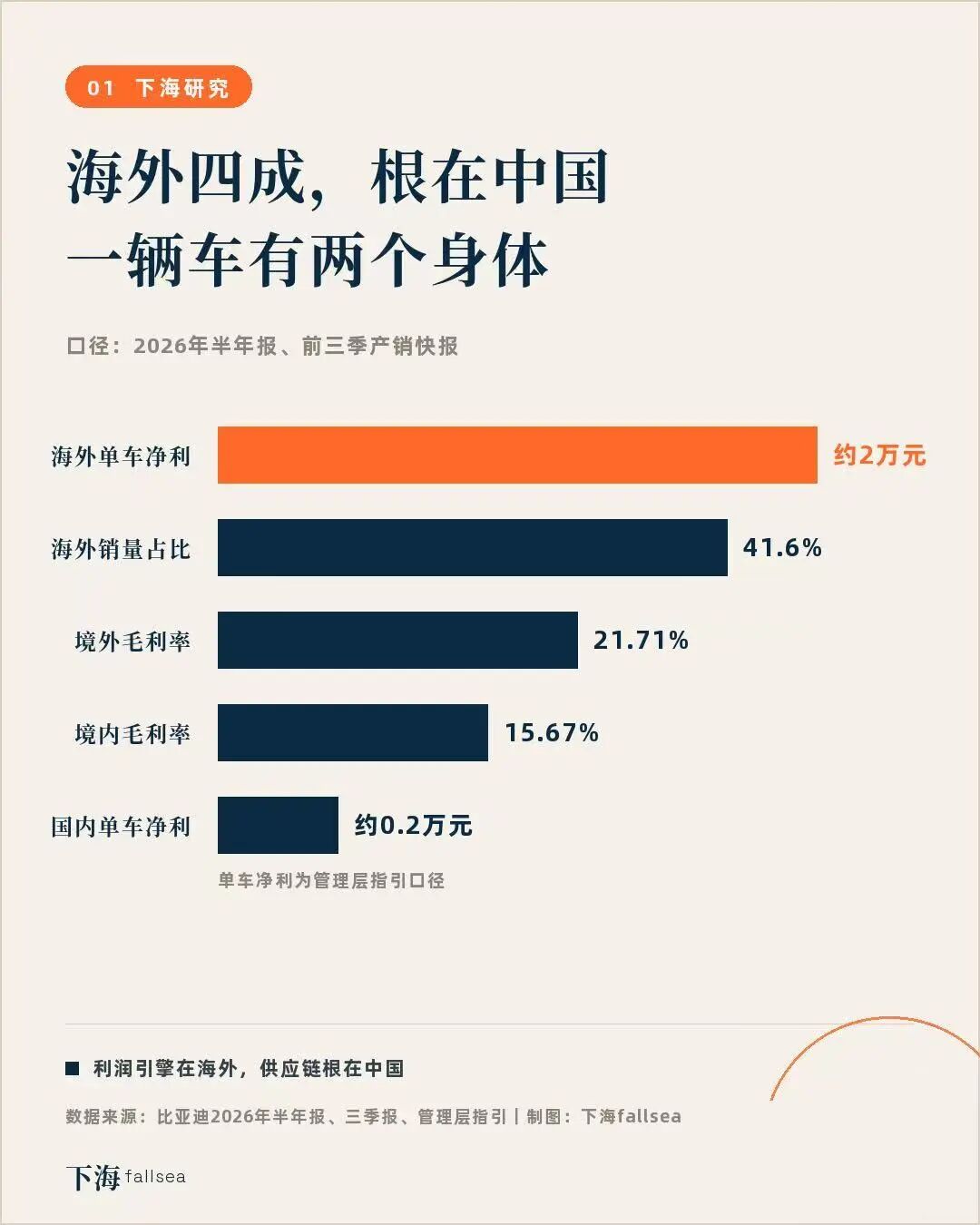
41.6%—that is the overseas share of BYD passenger vehicle sales in the first 10 months of 2026, with 1,507,400 vehicles sold abroad, and an even higher 52.57% by revenue. Outsiders read this figure as a "successful replication of the Chinese playbook," but the data point in the opposite direction.
In the first 10 months of 2026, BYD's cumulative sales totaled 3,621,700 vehicles, with 1.51 million overseas, a year-on-year increase of 92%. For every 10 vehicles sold, 4 go abroad; overseas has gone from a minor share to the major one.
The profit engine is overseas, but the supply chain and organization are in China—one vehicle has two bodies. One head has crossed the sea, the other remains in China. The sales table doesn't show this, but the financial statements do—and it cannot be rushed.
Overseas is indeed more profitable. According to the 2026 semi-annual report, under the company-wide regional breakdown, overseas gross margin was 21.71%, domestic 15.67%.
Calculated according to the automotive business breakdown estimated by Orient Securities, overseas stands at 28.40% and domestic at 17.00%—both breakdowns point to the same conclusion. Reading the high overseas share as a "successful replication of the Chinese playbook" misses two things.
First, part of the high gross margin comes from localization that is not yet complete: the local content rate at the Rayong plant in Thailand is about 50%, but local supporting facilities are concentrated in body, interior, and wiring harness; batteries involve only pack assembly, and battery cells are still mainly imported from China. Most of the 266 local suppliers are concentrated in low-value segments, and this bill will eventually come due.
Second, part of the high gross margin comes from pricing room under tariff protection: Thailand's EV3.5 rules, effective July 1, 2026, count imported battery cells as zero in the localization ratio. The policy has already blocked the road; battery cells must be localized. So this is not replication; it is reconstruction. Replication is opening the same mold again; reconstruction is changing the mold, the materials, the workers, and the management all over again.
Every percentage point BYD raises its localization rate overseas, the further it moves from its cheapest self.
This is not a loss; it is an identity transformation. What sustains such a high overseas share? One answer is that overseas is more profitable.
According to management guidance, net profit per vehicle overseas is about 20,000 yuan, versus about 2,000 yuan domestically—a difference of seven to ten times. But exchange rates take a cut first.
In the first half of 2026, exchange losses were 4.703 billion yuan, while in the same period of 2025 there was a gain of 3.160 billion yuan—a positive-to-negative swing of 7.863 billion yuan. At a net profit of 20,000 yuan per vehicle, 4.703 billion yuan is equivalent to the net profit of 235,000 vehicles. What exchange rates devour is the fattest chunk of overseas profit.
Can the supply chain and organization be moved? To unpack this bill, one must go to Rayong, Thailand. This plant, only two years into production, has delivered a localization rate of about 50%. The number sounds not low, but unpacked, it must be halved.
Local supporting facilities are concentrated in body and interior; high-value components still flow across borders. The 50% localization occurs in low-value segments. The localization rate of motors and electronic controls is even lower. Thais can do this math themselves.
Nawa, vice chairman of the Federation of Thai Industries (FTI), inspected the Rayong plant. He hopes Chinese automakers will "further open their supply chain systems and let Thai companies participate more."
Thailand's EV3.5 rules are even more direct: starting July 1, 2026, imported battery cells count as zero in the localization ratio. The policy has already blocked the road; battery cells must be localized. It is like taking your own recipes to open a restaurant abroad.
The recipes, complete vehicle technology, and production system can be taken along, but ingredients and local supporting facilities must be bought locally, and suppliers must be found and re-certified.
Negotiated one by one, verified time and again, the localization rate is traded for with time. And Thailand's "ingredients" are not cheap; Nawa himself said Thailand's production costs are slightly higher.
BYD's cost advantage is not rooted in its Shenzhen headquarters building, but in the supply chain density of hundreds of suppliers packed within a 4-hour logistics radius.
Around the factories in Shenzhen, Xi'an, and Changsha are industrial clusters of batteries, motors, electronic controls, and structural parts. Hundreds of battery cell, structural part, and wiring harness companies are packed within a 4-hour logistics radius; one phone call can deliver samples to the production line.
What is around the Rayong plant? Sugarcane, beaches, and local supporting facilities still catching up.
Density is not in the financial statements; it is on the map. The production system has left its "breathing zone." The more hidden cost slowly emerges on the shop floor.
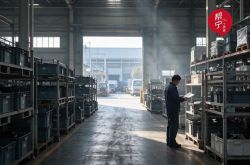
Chinese factories dare to use "people + fixtures" combinations because the supply chain is within a 4-hour logistics radius; fixture adjustments can immediately find the corresponding parts. One call from a master in Shenzhen, and the parts can be delivered to the production line that same night; arriving half a day late is only an accident, and work resumes the next day.
Overseas, parts come across the sea, and every fixture adjustment must wait; the automation rate is forced up, and fixed costs rise accordingly.
Over 90% of the Rayong plant's employees are local. The people changed, but the supply chain density did not change with them. The fixtures are still the same fixtures, but parts must come across the sea. Waiting for parts has become a new cost, and the formula for calculating production efficiency has been rewritten.
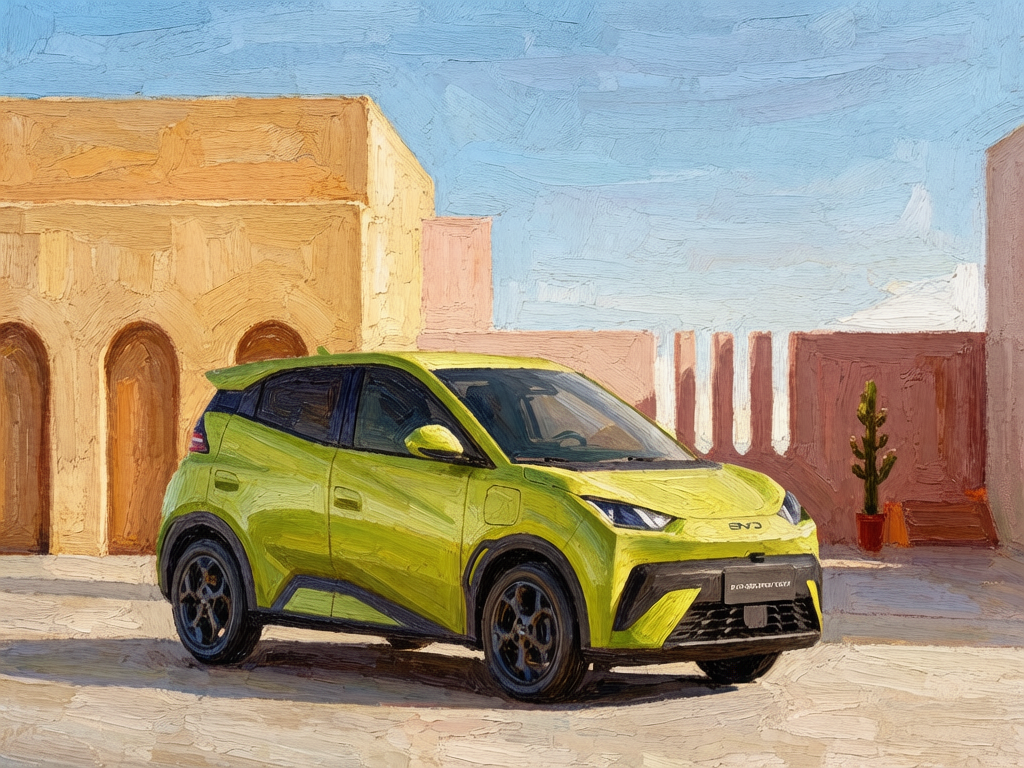
Thai employees at the Thailand plant have reached 92%, but battery cells are still in China—this is the cost of reconstruction. Szeged, Hungary, is another, more expensive piece of evidence.
4 billion euros, 300 hectares, originally scheduled for mass production in Q2 2026, but actually launched only in October, about a year later than planned. The money was spent, but the time was not saved.
Executive Vice President Li Ke told Reuters that Hungary is BYD's "first priority." Szeged quality engineer Tamás Molnár was sent to China twice for training to understand this system.
The first time for 3 months, the second for 1.5 months, to Shenzhen headquarters and two factories, learning quality processes and also the production system. The people went to Europe, but the batteries remained in China.
In the initial phase, the Szeged plant imports battery cells from China and assembles them locally into battery modules and packs. BYD does not yet have a battery cell plant in Europe. It is in talks with Portugal.
Near Porto, a former refinery site of about 240 hectares is on the negotiating table. The core vertical integration assets are still growing on the Chinese body; Europe's batteries must be shipped from China. Brazil's story is more complex and more expensive.
In July 2025, the first vehicle rolled off the line in Camaçari; in October, the plant officially opened, and the 14 millionth vehicle rolled off the line, with Lula in attendance. Chen Xuefeng calculated two accounts. One is the capacity account: total capacity after full construction will be 600,000 vehicles.
The other is the supply chain account: Brazil imposes high tariffs on imported complete vehicles; the higher the local content, the lower the tax rate. Camaçari only began testing stamping, welding, and painting in November 2026, and only in January 2027 will it dare to discuss 50% localization.
This is a milestone, and also tuition. In December 2024, Brazil's Federal Labor Prosecution Office (MPT) sued BYD's contractor.
The case involved 163 Chinese workers, alleging restriction of personal freedom, poor living conditions, and withholding of wages. In December 2025, BYD, as guarantor, facilitated a settlement, paying 40 million reais, about 7.5 million US dollars.
This money bought a lesson. On April 7, 2026, BYD was included in Brazil's forced labor employer registry; on April 13, it was removed.
Between entering and leaving the list was a public health check of organizational capability. Those who bore the cost in the case were Chinese workers, not local Brazilian workers. What it proves is not a "China-Brazil cultural conflict," but that "even Chinese workers cannot be managed well."
Rayong, Thailand, is not just a right-hand-drive base for Southeast Asia. In August 2025, left-hand-drive DOLPHINs produced in Rayong were exported to the UK, Germany, and Belgium.
One flexible line supplies both Southeast Asia and Europe. The Turkey project has been suspended; the pace of overseas expansion is being repriced by the supply chain.
In Thailand, BYD has already tasted the sweetness of localization. In the first half of 2026, Chinese brands accounted for about 90% of Thailand's pure electric vehicle registrations. But the higher the share, the greater the localization pressure; every percentage point increase in the localization rate drains another point of China's cost advantage.
This is a climb with no way back; one step back, and it becomes what the Thailand plant is today. Toyota exported its first vehicles to Europe in 1963, and only in 1992 did it start its first wholly owned European complete vehicle plant—nearly 30 years from export to localization.
Hyundai drove the Excel into the US in 1986, and only in 2005 completed its Alabama plant—a gap of 19 years. During those 19 years, Hyundai traded warranty promises for reputation. BYD went overseas in 2021, and by 2026 its overseas sales share had reached 41.6%, in only 5 years. Completing in 5 years what others took 30 years to do means the pain is not skipped, but compressed.
Factories can be moved, but supply chain density cannot. Back in Camaçari, Veles said, "Currently we produce an average of 400 vehicles per shift." Four hundred is the rhythm, the boundary, and the scale of the localization climb.
Ingrid said, "No matter which link it is, whenever difficulties arise, Chinese colleagues always promptly offer help and support" (same as above). The notes simultaneously record both the assistance and the dependence on Chinese colleagues. Localization rate and cost advantage are like a seesaw: when one end rises, the other sinks.
Of 1.02 million employees, only 60,000 are overseas. The muscles of one body are still in China; the other body has already stood in overseas workshops.
In the Camaçari park, Chinese restaurants sit side by side with Brazilian restaurants. The "BYD Cup" football match has just finished, the employee band is rehearsing, and Portuguese and Chinese classes are held at the same time.
Wei Xing watched the 14 millionth vehicle roll off the line. In 2013, he started with 10 employees in a 20-square-meter office in São Paulo. Twelve years later, he stood beside this production line.
Going overseas is not moving house; it is growing a new body.
A BYD that does not look like BYD.
-
![]()
Toyota's October Sales in China: A Breakdown of the Two Joint Ventures
-
![]()
BYD's Two Bodies
-
![]()
IM Motors October Sales: 7,846 Vehicles, LS6 Accounts for 66% — Where Is the Second Mainstay Model?
-
![]()
The AI Bubble You Can't Escape
-
Token Economy: Top 10 Companies with the Fastest Growth and Strongest Profitability
-
![]()
Alibaba's AI Spending Is Starting to Pay Off
-
![]()
From Benchmark Tables to Interactive Screens: How Qwen4-Max Reflects the Second Half of Domestic Large Models' "Scenario Breakthrough"
-
![]()
60-Day Payment Terms a Year and a Half On: Automakers Turn the Invoice Date Into a Loophole