The "Vibe" of the Guangzhou Auto Show Has Shifted Again
 11/27 2026
 425
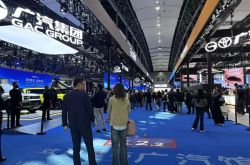
Every year in late November, the Guangzhou Auto Show serves as the grand finale of the domestic auto market. But today's auto show is no longer merely a stage for new cars to be unveiled en masse—it has also become a window into the direction of the auto market. The presence and absence of different brands, and the shifting proportion of fuel vehicles versus new energy models on display, all reflect the profound changes the domestic auto market is undergoing.
According to official information, the scale of this year's exhibition remains consistent with last year, utilizing the indoor exhibition halls in Areas A and D of the Canton Fair Complex, the outdoor exhibition areas of the North and South Squares, and the Canton Fair Hall, with a total area of 220,000 square meters.
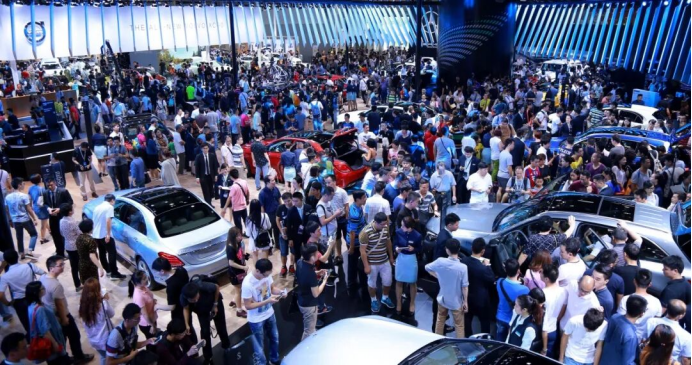
What is different, however, is that the total number of vehicles on display increased from last year's 1,085 to 1,106; the number of new debut models also grew from last year's 93 to 115; and the number of new energy vehicles on display rose from last year's 629 to 707, accounting for more than 60%. Both the number of debut models and new energy vehicles on display continue to climb.
These exhibition stand figures also echo the real direction of the current domestic auto market: new energy models have firmly established a dominant position in the market. Data from the China Passenger Car Association shows that from November 1 to November 15, the retail penetration rate of new energy vehicles in the national passenger car market reached 73.2%, while the wholesale penetration rate of new energy vehicles among national passenger car manufacturers during the same period was 82%. New energy is no longer a "highlight" on the exhibition stand, but is gradually becoming the norm of the market.
What is even more thought-provoking is the change in the players on the exhibition floor plan. Ultra-luxury brands such as Rolls-Royce, Bentley, Ferrari, and Lamborghini continue to be absent. In fact, over the past two years at A-level auto shows, the exhibition stands of ultra-luxury brands have been continuously shrinking. At the Shanghai Auto Show in April 2025, neither Lamborghini nor Rolls-Royce set up independent booths; Bentley almost single-handedly held up the ultra-luxury camp, and Porsche exhibited in the same hall as AITO. At the Guangzhou Auto Show in November of the same year, the absent list further expanded, with Rolls-Royce, Bentley, Porsche, Lamborghini, Ferrari, and Jaguar Land Rover all absent, and the previous dedicated ultra-luxury hall faded out.
By the Beijing Auto Show in April 2026, Bentley, Ferrari, Lamborghini, and Rolls-Royce still had no independent booths, and Rolls-Royce was only merged into the BMW Group exhibition area in a joint form.
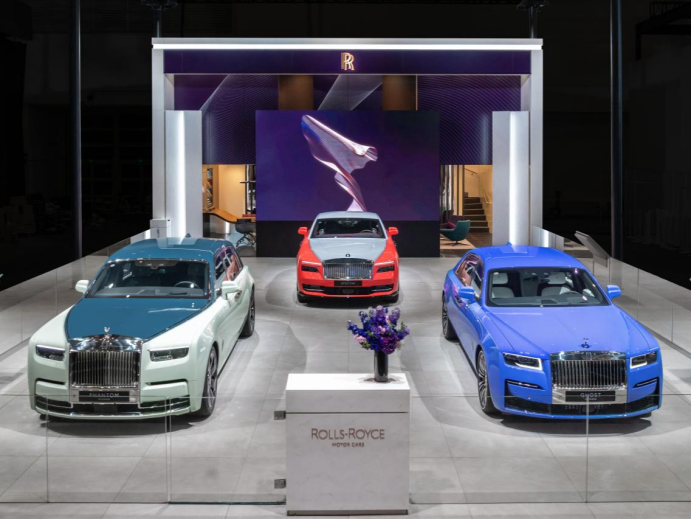
Their continued withdrawal has also allowed the core exhibition areas vacated at this year's Guangzhou Auto Show to be quickly filled by domestic high-end new energy brands. At this year's exhibition, BYD and GAC Group still adopted the hall-booking participation model, with multiple brands under each group exhibiting together. Independent groups such as Geely, Chery, and Great Wall were all present, and new forces such as NIO, XPeng, Li Auto, and Xiaomi also all appeared, with products covering various price ranges from household commuting to million-yuan-level high-end flagships.
Just as independent new energy brands are advancing triumphantly, traditional overseas automakers that had previously faced continuous pressure in market performance also gathered at this year's Guangzhou Auto Show. BMW, Mercedes-Benz, Volkswagen, Audi, Porsche, Toyota, Honda, Nissan, Volvo, and others all presented their products, focusing on electrification and localized transformation, and launching multiple new energy models and intelligent solutions for the Chinese market.
Among them, BMW's Neue Klasse products became one of the important highlights of this year's exhibition.
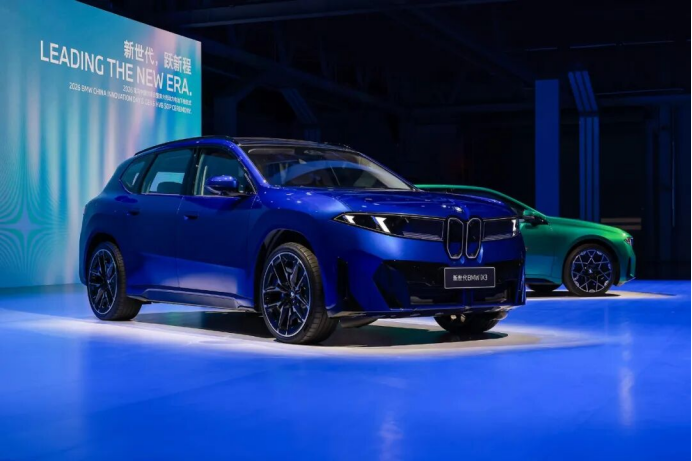
According to the plan announced by BMW, the Neue Klasse BMW i3 will be officially launched at the Guangzhou Auto Show on November 27, while the Neue Klasse BMW iX3 is scheduled to be launched earlier on November 25 and begin deliveries. As BMW's new-generation products for the electrification era, Neue Klasse models have undergone systematic upgrades in electric drive, electronic and electrical architecture, and intelligence.
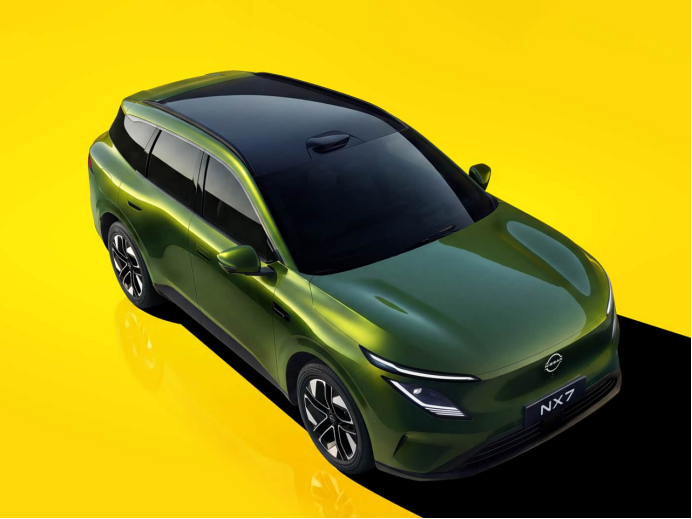
Dongfeng Nissan also regards the Guangzhou Auto Show as an important node for new car launches. On November 13, the Dongfeng Nissan NX7 officially opened pre-sales with a pre-sale price starting at 129,900 yuan, and is scheduled to be officially launched at the Guangzhou Auto Show on November 27. This plug-in hybrid SUV not only enters the highly competitive mainstream market of Chinese brands in terms of price, but also further reflects the product transformation of Japanese joint venture brands in the new energy vehicle field—that is, creating more competitive products through cooperation with local technology companies.
It is not difficult to see that the focus of overseas brands at this exhibition is no longer traditional fuel vehicles, but a comprehensive shift toward electrification and localization. Multiple new energy models, intelligent cockpits, and intelligent driving solutions developed specifically for the Chinese market are concentrated on stage, attempting to regain market share in the domestic new energy track.
On one side, ultra-luxury brands are gradually withdrawing from independent exhibition areas; on the other side, overseas brands are collectively betting on this auto show. Looking at these two completely opposite choices together, the answer is actually very clear. Whether automakers choose to participate or not is a pragmatic decision under fierce market competition.
In earlier years, A-level auto shows were still exposure platforms that automakers had to compete for. No matter how expensive the investment, they had to seize exhibition stands to gain media attention. But now that competition in the auto market has entered a white-hot stage, when automakers allocate exhibition budgets, the first consideration is whether terminal orders can be converted. If it is difficult to bring in orders, brands will reduce exhibition stand investment and transfer the saved money to store operations and online short video marketing. This is also a key reason why major traditional auto shows around the world have continued to cool down in recent years.
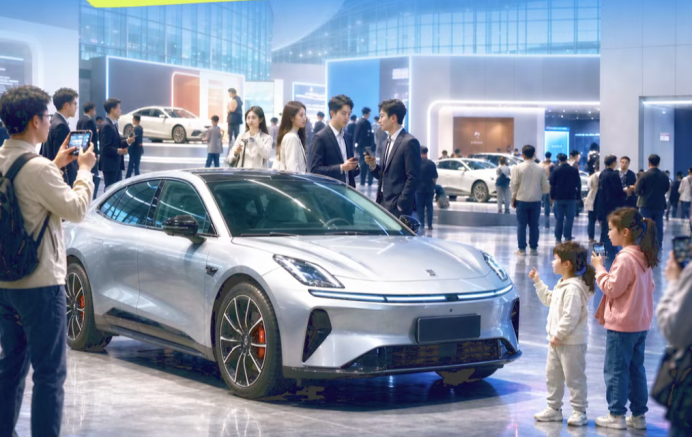
In the final analysis, today's auto show is no longer just a launch platform for new cars. It is more like a comprehensive platform integrating annual sales and technology display, rather than merely a stage for brand display halo. The departure of ultra-luxury brands does not mean giving up the Chinese market, but rather maintaining customers in another way. Brands that choose to stay need to continuously prove their value between foot traffic and orders. After the opening on November 27, who can deliver solid results in this year-end major test will soon have an answer.
(Images are from the internet and will be deleted if infringing)
-
![]()
Why Is There No "Pinduoduo Narrative" in the AI Era?
-
![]()
Wall Street's "Big Short" Investor Suddenly Boosts Chinese Holdings -
![]()
Memory Price Hikes, Spec Cuts, and Incremental Upgrades: The Smartphone Spec War Hits a Memory Wall
-
AI Is Rewriting the Pricing Logic of Office Software — Kingsoft Software's Bid for the Enterprise Productivity Entry Point
-
![]()
Priced from Over 300,000 Yuan with L3 Architecture: Is the Xiangjie V8 Gunning for the Tengshi D9's Lunch?
-
![]()
How Will Automakers Fight the Final Battle in a Tough 2026?
-
![]()
Automakers Burdened by Collective Debt Double Down on AI Investment
-
![]()
Li Auto to Launch Only 1–2 New Models in 2027