Is the Guangzhou Auto Show the "Last Chance to Secure a Spot"? What Is There to Panic About?
 11/27 2026
 382
In any case, independent brands cannot wipe out joint venture brands, and electric vehicles cannot wipe out fuel vehicles either.
Trump is still frequently reminiscing about his trip to China, wildly posting pictures of Shenzhen on social media, and the release of Tesla FSD V15 has once again touched a nerve among domestic intelligent driving manufacturers. These lively events, together with Jensen Huang's "return of the favored concubine" just 11 days after his departure, opened the prelude to the Guangzhou Auto Show.
The most eye-catching thing in this prelude is a set of highly contradictory numbers.
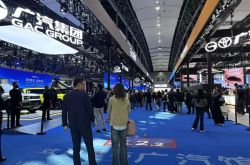
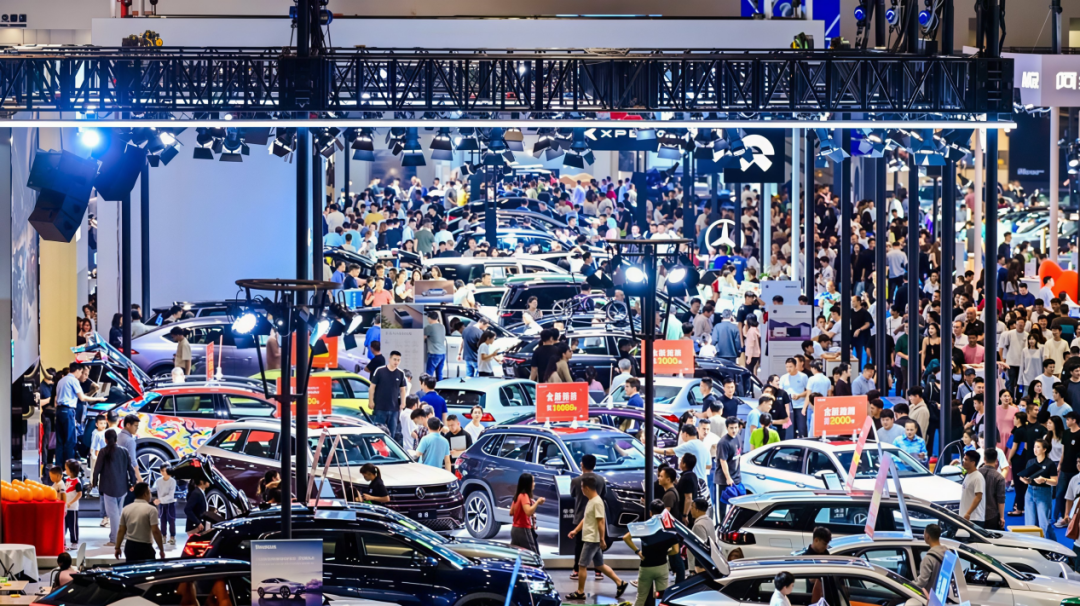
On one hand, the total number of vehicles on display at the Guangzhou Auto Show is 1,106, including 115 new model debuts and 707 new energy vehicles, accounting for over 60 percent.
You could call it "a thousand cars racing forth." Among them, the number of new model debuts at the Guangzhou Auto Show crossed the 100 mark for the first time, hitting a new high in recent years and breaking away from the "off-peak scheduling" of previous years.
On the other hand, sales data for the first half of November just released by the China Passenger Car Association shows that retail sales of passenger vehicles were 611,000 units, down 25% year-on-year, and cumulative retail sales since the beginning of the year remain in a year-on-year downward channel.
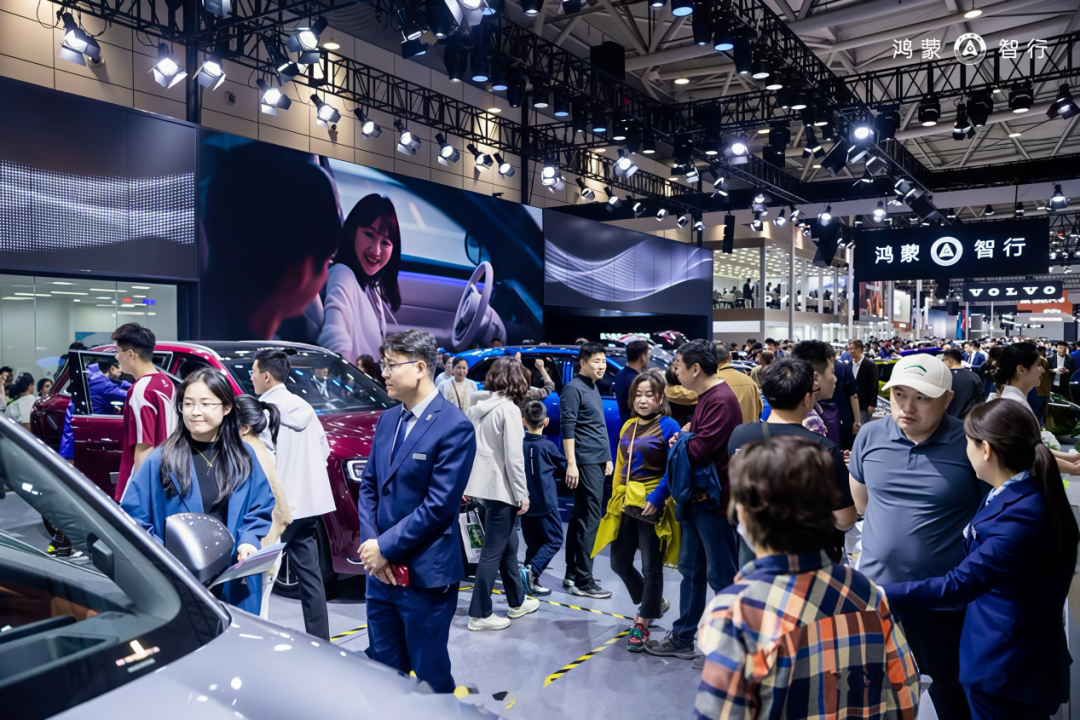
Behind the declining data hides another contradiction: "the number of display vehicles is rising, but exhibiting brands are retreating." Not only did ultra-luxury brands fail to show up as expected, but more than a dozen joint venture brands also no longer appear on this stage that was originally meant for "accepting grades."
The magnitude of the decline and the vacated exhibition spaces are the most real wounds in today's auto industry.
A year ago, He Xiaopeng said, "Automakers are all trembling with fear; the only certainty is that competition in the 2026 auto market will be even more brutal and bloody," and it has become reality.
Standing at the end of the year, everyone is more certain of one thing: there is no turning back, and the only choice is to abandon illusions.
"Prepare to fight, keep fighting."
"No One Can Kill Anyone Else"
The situation at the auto show has changed, and yet it hasn't.
What hasn't changed is that Chinese auto brands remain the absolute protagonists of the auto show, and joint venture brands are once again striving to reclaim their ground.
What has changed is that, with domestic passenger vehicle retail sales falling 22.3% year-on-year from January to October, NIO's Li Bin's warning that "the entire industry may face a 15%-20% sales plunge" has matched word for word.
Whether they are holding the fort or trying to find one, everyone is "a bit panicked," because the auto market hasn't just entered autumn—the chill has penetrated to the bone.
"How to survive"?
This is still a question many must think about. Whether it's BYD, Geely Chery, or Volkswagen and other brands, they have all invariably chosen a "group army" approach.
In SAIC Volkswagen's words, "We are not only eating what's in our bowl, but also keeping our eyes on what's in the pot and in the field." This time, at the Guangzhou Auto Show, SAIC Volkswagen and FAW-Volkswagen once again formed the Volkswagen matrix and staged a rival show with Geely Galaxy.
In 2026, SAIC Volkswagen adopted a top-down layout, from showcasing technology with the flagship ID.ERA 9X to assembling the ID.ERA 8X, 5S, and 5X, completing the "985" lineup with full coverage from sedans to SUVs, from A-class to C-class, and from extended-range to hybrid to pure electric.
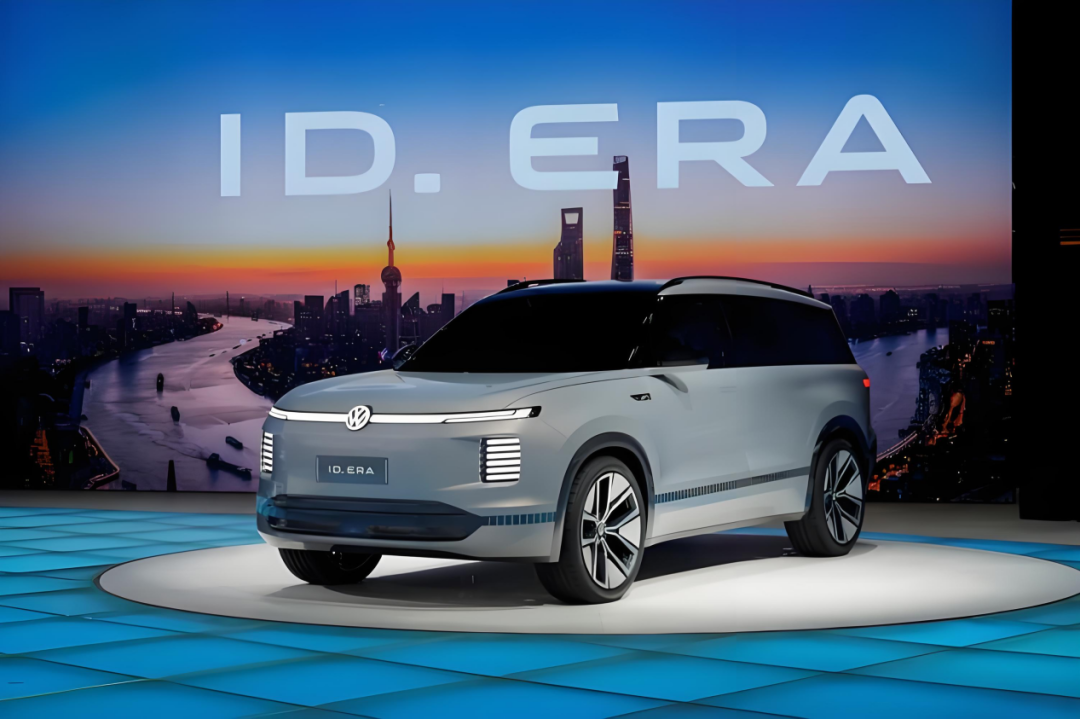
From "flooding troops" to "group armies," "the current priority is to seize market share as quickly as possible; market share means everything." SAIC Volkswagen's statement landed with resolute determination.
"Group warfare" and "close-quarters combat" have become a major label of this year's Guangzhou Auto Show.
In addition to BYD once again booking an entire hall as usual, GAC Group, fighting on its home turf, also brought its brands including Trumpchi, Aion Hyper, GAC Honda, GAC Toyota, and Qijing to appear collectively, intending to find room to maneuver in this life-or-death race it cannot afford to lose.
Coincidentally, Chery Group's Jetour Zongheng, Jetour, and Chery brands all gathered to hold the fort, and the narrative in this camp comes relatively more easily. One vehicle is sold overseas every 23 seconds, and 17 domestic models were launched this year. "With dual-line efforts, Chery is one of the brands with the least suspense over completing its annual target."
Of course, Chery has its own troubles: "In the domestic market, it is not as acclaimed and popular as in overseas markets." Behind this trouble reflects a real current situation: although ten years is enough for fortunes to reverse, the current reality is that "no one can rest easy, which also means no one can kill anyone else."
Independent brands can't kill joint venture brands, and electric vehicles can't kill fuel vehicles either. This can be glimpsed from the competitive landscape of segmented markets.
From the competitive landscape of models by price range, the market below 100,000 yuan is basically occupied by pure electric models; the 100,000-150,000 yuan market has become a division among fuel, plug-in hybrid, and pure electric; in the 150,000-200,000 yuan market, fuel vehicles are retreating while hybrids and plug-in hybrids are rapidly "following up."
In the 200,000-300,000 yuan market, pure electric accounts for over 40 percent, becoming the main track for growth in new energy penetration. In the luxury car market above 300,000 yuan, it belongs to "multi-party contention," where traditional luxury fuel vehicles still retain a certain volume, and plug-in hybrids, extended-range, and pure electric compete on the same stage.
From the perspective of brand territory, in the 50,000-150,000 yuan market, independent brands hold an absolute advantage, and the traditional strongholds of joint venture brands have basically been eroded away. The 150,000-200,000 yuan segment is the core battlefield where independent and joint venture brands "capture the minds of the new younger generation." BYD is the main force, and XPeng is also trying every possible means to compete for young people's "choice."
Not long ago, at XPeng's launch event, a post-2000s product manager used "old geezer" to criticize traditional car design, saying "how could old geezers understand what young people want," which trended on social media and sparked public discussion.
Behind the "old geezer" controversy is a deeper issue: XPeng desperately hopes that the MONA L05 model starting at 144,800 yuan can become a new sales pillar. Nearly half of its sales rest on the MONA M03, and XPeng urgently wants to move upward, so it must solve this structural problem.
This process of solving the problem may become the gap through which joint venture brands "regain control of the market." Joint venture tiers such as Toyota, Volkswagen, GM, and Nissan have their pure electric models clustered around the 150,000 yuan market, attempting to reclaim share.
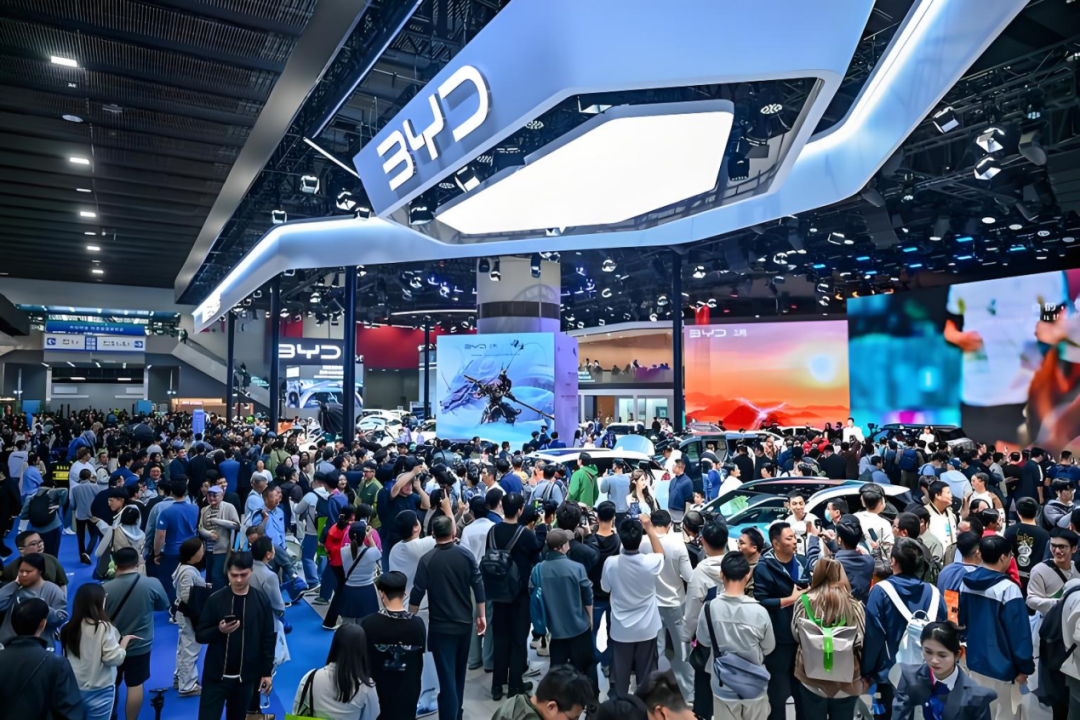
The 200,000-300,000 yuan market has already completed the stage Li Bin once described as "the final decisive battle must be in the 200,000-300,000 yuan market," and new forces have become the main players. In the market above 400,000 yuan, the share of luxury brands sees one rise after another, often playing out on stage.
This time, traditional luxury brands that once seemed passive in terms of voice have instead shown a "determined to win" momentum.
Mercedes-Benz put on a grand display of 26 models, BMW dense launched the new-generation iX3 and i3 long-wheelbase versions, Lexus brought for the first time the pure electric three-row SUV TZ, and even after lying low in China for two years, the Jeep brand chose on the eve of the Guangzhou Auto Show to advance its "third domestic production" and brand rebirth strategy in the Chinese market...
All are betting on an outcome.
"Who will win" has no conclusion yet. Ten years east of the river, who knows what ten years west of the river will look like? Writer Yu Hua once said, "Nothing is more persuasive than time, because time can change everything without notifying us."
No one wants to lose.
What Is There to Panic About?
These past few days, the hottest song on video platforms is Uncle Benshan's "What's the Panic About." The core message is one sentence: "What's the panic about? Take it easy—when the sun goes down, the moon climbs up."
Who is the sun going down? Who is the moon climbing up?
Behind this group-warfare Guangzhou Auto Show lurks another anxiety, which is what He Xiaopeng said: China's auto industry knockout round will last at least another five years, and currently no company has obtained a "ticket to board."
The way to get a ticket is brutal. When someone emerges, someone else exits.
The list of those exiting is still not surprising. More than a dozen foreign brands, including Chevrolet, Peugeot, Citroën, Jetta, Kia, smart, and Dongfeng Fengshen, were absent from this Guangzhou Auto Show. In addition, ultra-luxury brands such as Rolls-Royce, Bentley, Lamborghini, and Ferrari have become "accustomed" to being absent.
Some say that no matter how uninteresting auto shows become, they are still the most honest health check report in the industry. Whether healthy or not is clear at a glance. Those willing to exhibit mean they have a new story to tell. Those unwilling to come mean they have done the math.
"Exhibition investment cannot bring back sales or voice."
The reason joint venture brands don't come is a timely stop-loss of "retreating in the face of difficulty." The ground under fuel vehicles is sinking inch by inch. Transformation? Too difficult, and too expensive. Turning too slowly, brand premium is disappearing, and "the sun going down" has become a result.
For ultra-luxury brands, "just getting by" has become the norm. They did the math: for brands priced above one million yuan, the "broad traffic" of auto shows no longer connects with their "target customer groups." It is better to save that money and do targeted circle-based operations that reach customers directly.
The names that once propped up the auto show's "luxury car hall" can no longer be found in the venue. A Lamborghini executive said in a public interview that auto shows have too many brands and a crowded environment, making it difficult to communicate deeply with media and customers. The Chinese market is the last region globally where the brand will withdraw from auto shows, and thereafter it will replace them with exclusive previews and brand events.
Where did the saved auto show budget go? The answer points to refined operations of experiential marketing. The exact words of BMW's experiential marketing manager for North America were, "BMW is now partly an experience company."
The Chinese auto market in 2026 has long left the savage era of opportunities everywhere. No longer engaging in grand narratives, "just getting by" has become the doctrine.
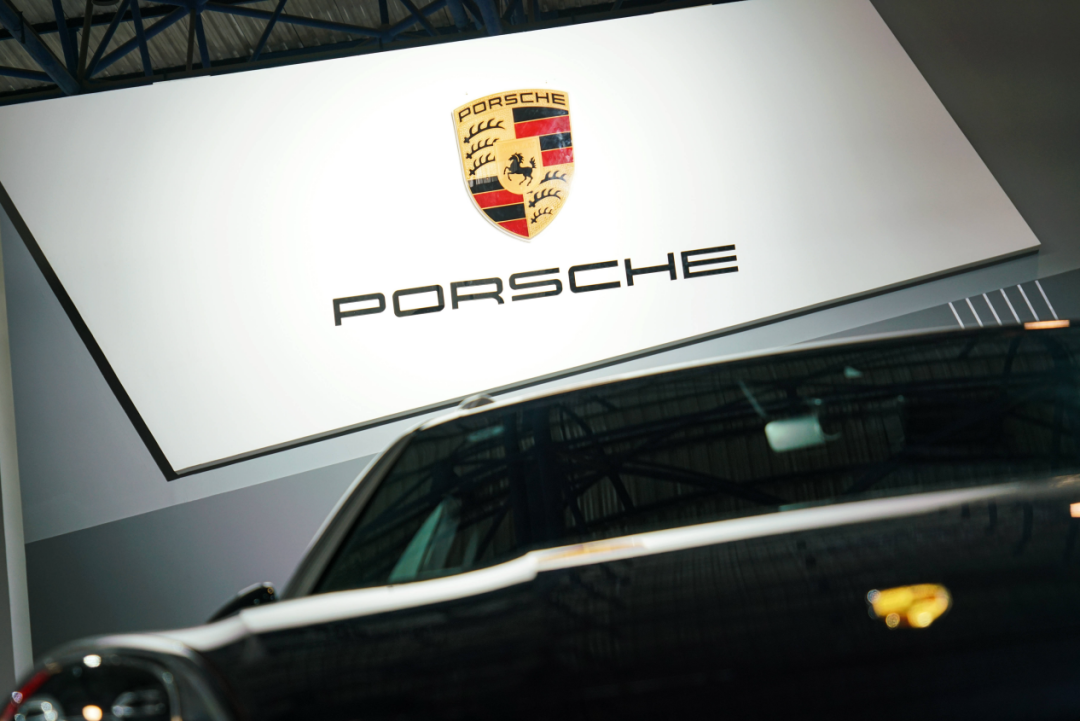
Porsche, which had previously been absent from auto shows, has once again had a "moon climbing up" moment. Having done the math and learned to get by, Porsche decided to fight at auto shows again, filling in a piece of the ultra-luxury camp's puzzle, attempting to reconnect with the rhythm of the Chinese market through new platforms, hybrid supplementation, and local cooperation.
The world changes fast. Porsche, once the hard currency of value retention in the auto circle, has had to lower its posture. It plans to continue reducing stores within a year. In October this year, the Porsche store in Yancheng, Jiangsu, quietly changed ownership, and the red Porsche logo has left no trace.
According to incomplete statistics, nearly 60 luxury brand stores nationwide have been rebranded as NIO. Stores rebranded as Huawei's HIMA are even more common.
The times remain noisy, and someone is still laying down coordinates.
Jensen Huang returned to Nvidia amid cheers and told employees, "This is my first day at work. I don't have a computer, so the IT department has to give me a new PC. I will work hard to come back." However, an independent investigation is still ongoing. Jensen Huang is back, but can Nvidia go back?
As for how Nvidia's subsequent story will be written? Jensen Huang promised that his second stint as CEO "will be done better." However, some also believe that "Jensen Huang might as well not have returned," because "though I would buy osmanthus and carry wine with me as of old, in the end it is not like the travels of my youth."
Can Porsche, returning to the auto show, once again drink osmanthus wine and return to the days of "riding a horse by the slanted bridge, with red sleeves beckoning from every tower"? There is no answer. Or rather, finding the answer is very difficult.
But, "what's the panic about"?
High-end series such as Hongqi Jin Kui Hua, Yangwang, Tank, and WEY are all present at the Guangzhou Auto Show, and the coordinates of the era's "new luxury" have already been laid down.
The Last Charge?
Wall Street welcomed Jensen Huang back with a surge, and new energy vehicle makers have entered the Huarong Dao, but the auto market is unlikely to see a year-end uptick and may close with a "flat tail" or even a "weak tail."
"There was no 'tail uptick' in the fourth quarter of last year; this year should be better year-on-year," Li Bin said before.
In the fourth quarter of this year, no one dares slack off. The Guangzhou Auto Show has also lost some of the relaxed mood of previous "finales."
Because, judging from target completion rates, this final battle has not gone satisfactorily. Data shows that among some domestic automakers' sales from January to October 2026, the completion rates of the 13 listed automakers range from 56.4% to 78.2%.
Among them, Chery leads with a target completion rate of 78.2%, leaving a gap of approximately 700,000 vehicles against its full-year target of 3.2 million. Leapmotor follows closely at 77.3%, with cumulative sales of 772,700 vehicles against an annual target of 1 million.
Geely, BYD, and SAIC Group take third through fifth place with completion rates of 73.8%, 72.4%, and 71.5%, respectively. Li Auto ranks sixth at 67.2%, followed closely by GAC Group, XPeng, and Xiaomi Auto at 64.2%, 60.8%, and 60.0%, respectively.
Everyone is waiting for a "tail-end surge" in the fourth quarter, but alas, the "Golden September and Silver October" never materialized. Sales figures may not be the only benchmark, but they can still provide the final verdict in this battle for survival.
Many see 2026 as the last "positioning battle" before the knockout round. NIO has said that "90% of new energy brands may be eliminated within four years." The pie is no longer growing rapidly, yet the number of automakers competing to claim a slice keeps rising—and NIO certainly does not want to be among the "eliminated."
"The market has entered a knockout round; if you don't perform, you're out. Before being eliminated, everyone may still make one more push. We predict competition will not escalate further, but intensity will remain consistently high." SAIC Volkswagen has essentially staked its claim.
Industry consensus holds that of the more than 100 automakers operating today, only about 15 can survive; some assessments are even more severe, putting the number at just five or six.
Roland Berger also noted in its "Foresee 2026" report that the reshuffling of the auto industry in 2026 will further entrench the "pyramid" structure of "a few head automakers, several mid-tier automakers, and a large number of tail-end automakers."
A large number of tail-end enterprises means "being eliminated." Over the next two or three years, a large batch of small brands will exit outright—not because they don't want to fight a price war, but because they no longer have the capital to fight one.
Li Bin called this year "the toughest year yet," because the real great elimination is about to begin. Yu Chengdong also said bluntly that the great reshuffling of the auto industry has arrived in full force, and that without sufficient investment intensity, companies cannot sustain themselves.
Reality bears this out.
Since the beginning of this year, the pace of elimination among automakers lacking core technologies has been accelerating. BYD's monthly sales are approaching 500,000 units, Leapmotor has repeatedly surpassed 100,000 units, and Xiaomi and XPeng have firmly established themselves at monthly sales of 50,000 units. Leading automakers are accelerating their absorption of the market share left behind by those exiting the market.
However, as the profit margin in automobile manufacturing has slid from 7.8% in 2017 to 3.8% in the first half of this year, and net profit per vehicle in the complete vehicle manufacturing segment stands at only about 1.5%, players on all sides are determined to prove they have not fallen behind and can continue to compete.
"Winning market share, but failing to win profit"—this is the opportunity of "the sun goes down, the moon climbs up." At this moment, who is the sun, and who is the moon?
The answer may be written in 2027.
Cui Dongshu, Secretary-General of the China Passenger Car Association, once pointed out that domestic passenger car retail sales are expected to grow by 0% to 5% in 2027, with the average forecast from manufacturers at around 2%. In other words, 2026 will face pressure and bottom out, while 2027 will see a mild and weak recovery.
From this perspective, the Guangzhou Auto Show does indeed carry the sense of "the eve."
Note: Some images are sourced from the internet. If there is any infringement, please contact us for removal.
-END-
-
![]()
Why Is There No "Pinduoduo Narrative" in the AI Era?
-
![]()
Wall Street's "Big Short" Investor Suddenly Boosts Chinese Holdings -
![]()
Memory Price Hikes, Spec Cuts, and Incremental Upgrades: The Smartphone Spec War Hits a Memory Wall
-
AI Is Rewriting the Pricing Logic of Office Software — Kingsoft Software's Bid for the Enterprise Productivity Entry Point
-
![]()
Priced from Over 300,000 Yuan with L3 Architecture: Is the Xiangjie V8 Gunning for the Tengshi D9's Lunch?
-
![]()
How Will Automakers Fight the Final Battle in a Tough 2026?
-
![]()
Automakers Burdened by Collective Debt Double Down on AI Investment
-
![]()
Li Auto to Launch Only 1–2 New Models in 2027