Independent Brands Struggle to Find Highlights | 2026 Guangzhou Auto Show
 11/27 2026
 342
"Three major reasons: new car demand pulled forward in the first half, rectification of 'rushed cars,' and overall sales plunge"
"At the 2026 Guangzhou Auto Show, independent automakers have almost no highlights." Before this year's Guangzhou Auto Show even opened, many people expressed similar views online.
The so-called highlights are mainly blockbuster new cars. Why are there not many highlights at this auto show? On the day before the opening, when asked about this question, an automaker representative gave two reasons:
First, new cars were launched in clusters in the first half of this year, and many brands had already rolled out their main products, so they now have no all-new models to push. Second, the industry is rectifying "rushed cars," and automakers' testing standards have noticeably tightened; winter and summer tests must cover enough mileage, and new car development cycles have been lengthened.
This means that, compared with the first half of the year, the pace of new car launches has changed. The weather seemed to echo this change as well, with a cold front arriving in Guangzhou before the opening. Outside the exhibition halls in Pazhou, the wind carried a distinct chill.
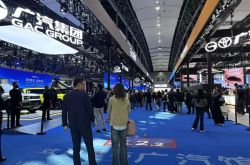
This Guangzhou Auto Show was not short of cars. Public information shows that on November 27, the 24th Guangzhou International Automobile Exhibition opened to the media, with 1,106 complete vehicles on display, including 707 new energy vehicles, accounting for 63.9%; 115 new cars made their debuts. This was more impressive than the previous edition. The 23rd edition in 2025 featured 1,085 vehicles, including 629 new energy vehicles and 93 global debut new cars.
According to data monitored by research firm Wilson, SUVs accounted for more than half of this auto show, concentrated in the C-segment and D-segment medium-to-large size classes; in terms of the number of models exhibited, independent brands were the most numerous, followed by German brands.
But what may have been missing this year were products with memorability, a name memorable enough to be repeatedly mentioned throughout the entire auto show.
Based on available information, at this auto show, most independent brands' centerpiece models were upgraded products, either another generation, another large five-seat SUV, or another large six-seat SUV. Body dimensions were increasing and configurations were piling up, yet it was hard to make people's eyes light up.
The underlying tone of this Guangzhou Auto Show was heavy dark clouds. Data shows that in the first 10 months of this year, domestic passenger car retail sales were 14.978 million units, down 22.3% year on year; October retail sales were 1.643 million units, down 27.1%. In the first half of this year, more than 1,800 authorized dealers closed or withdrew from the network.
The lights on the auto show stage were brighter than before; the accounts off stage were harder to calculate than before.
▍01 Lack of Highlight New Cars
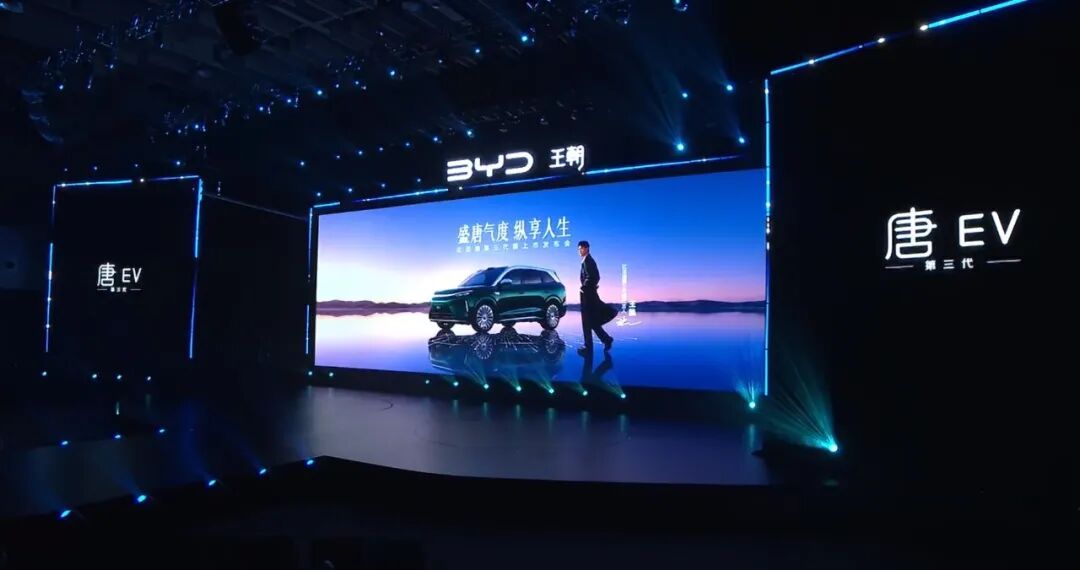
As a hometown automaker, BYD booked the entire Hall 2.1. Denza, Fangchengbao, Yangwang, and BYD, these 4 brands in the same hall, with the all-new Han, third-generation Tang, Fangchengbao Tai 9, Yangwang Dingyao, Yangwang U9 Xtreme, and the Ocean Network's first flagship MPV making their global debuts.
BYD also set aside a separate area in the hall to display the God's Eye and Xuanji A3 chips. It is rare at large auto shows for a complete vehicle manufacturer to set up a dedicated booth for its own chips.
Other mainstream automakers, although arranged differently, had a similar rhythm. Geely spanned two halls, with Galaxy, Lynk & Co, and Zeekr each occupying an area. Chery concentrated 5 brands into Hall 3.1. GAC booked an entire floor in Hall 2.2, with 6 brands in the same hall, during which it would hold press conferences, technology sharing sessions, and the debut of its technology park. Changan, Dongfeng, SAIC, FAW, BAIC, and JAC each had new cars landing.
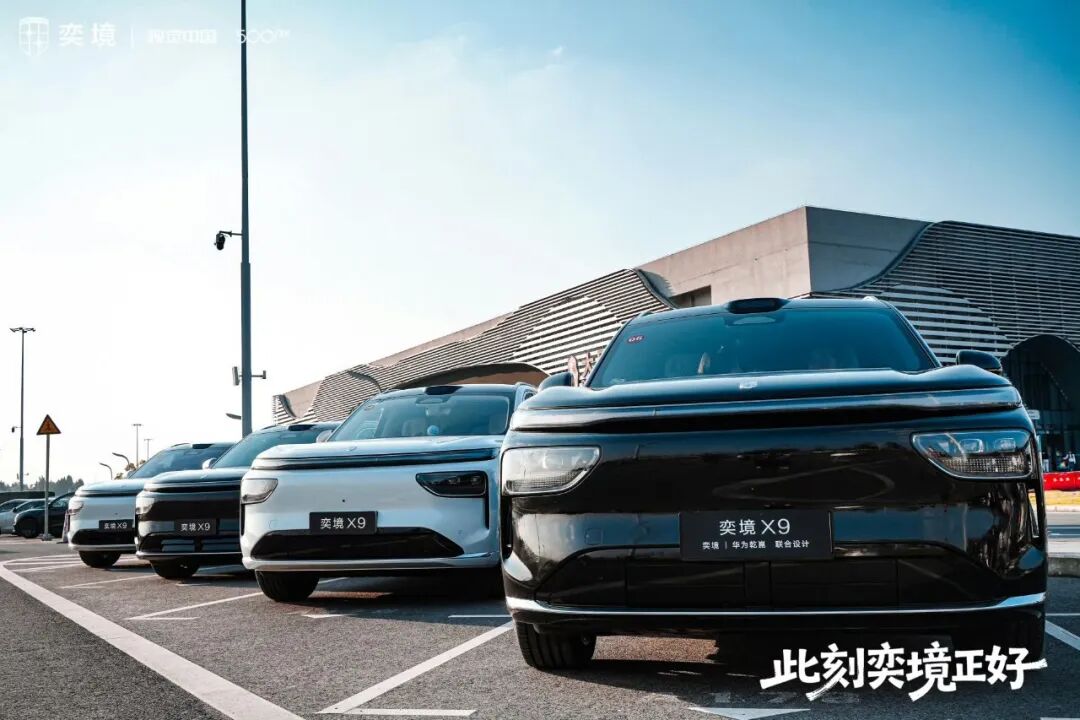
Among them, Dongfeng Motor's focus was on brands: its Yijing brand had just landed, and the first model, the X9 pure electric version, would go on sale on the first day of the auto show; models exhibited by Voyah, Mengshi, Yipai, Nami, and Fengshen covered mainstream price ranges from 100,000 to 500,000 yuan.
Overall, the new cars in the independent segment can be roughly divided into 3 categories.
The first category, such as BYD's Han, Tang, and Tai 9, are true replacement products, including new platforms, new batteries, and new architectures. The second category, such as the Lynk & Co 900L and Chery Zongheng R700, cuts another slice in an existing market, and the cut is precise, with the blade still aimed at the original market; for example, the Lynk & Co 900L adopts a 2+2+3 layout, the second-row seats can rotate 180 degrees, and the room utilization rate reaches 89.5%. The third category is mostly annual facelifts and derivative versions.
Compared with the previous Guangzhou Auto Show, the visual gap for new forces was the most intuitive.
At the previous edition, XPeng launched the X9 super extended-range version, which broke the X9's historical full-day order record within 1 hour of launch; NIO brought the third-generation ES8, a car that later gave NIO sales a considerable boost; Leapmotor debuted the A10—all 3 indeed landed on "new."
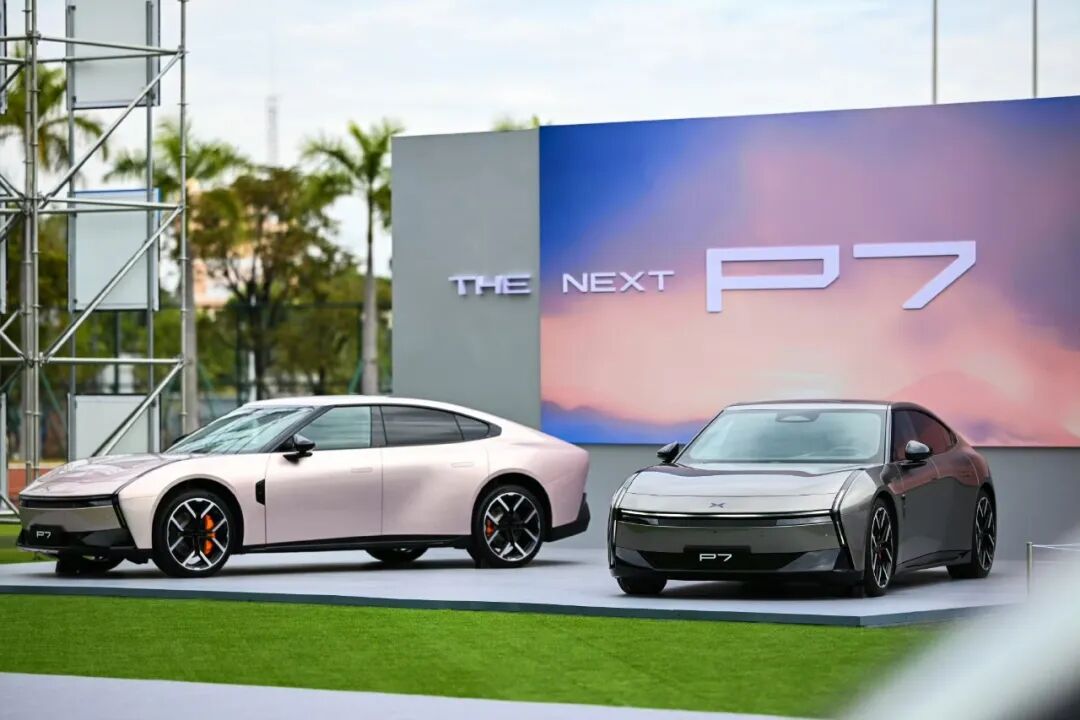
At this auto show, however, NIO only held a joint brand press conference; XPeng placed its bets on a tech day held before the auto show, bringing upgraded products from the previous tech day; Xiaomi Auto had no new car release; Leapmotor brought only an anniversary edition model.
Only one year separated grabbing headlines from not holding dedicated press conferences.
From the information already announced, at this Guangzhou Auto Show, most of what independent brands called "new" was refilling within existing categories; no new body designs appeared, nor were more innovative and practical scenarios defined.
At the previous Guangzhou Auto Show, some automakers redefined products with new technologies; at this edition, many automakers coincidentally chose to make an issue of the interior, subtracting from interior layout.
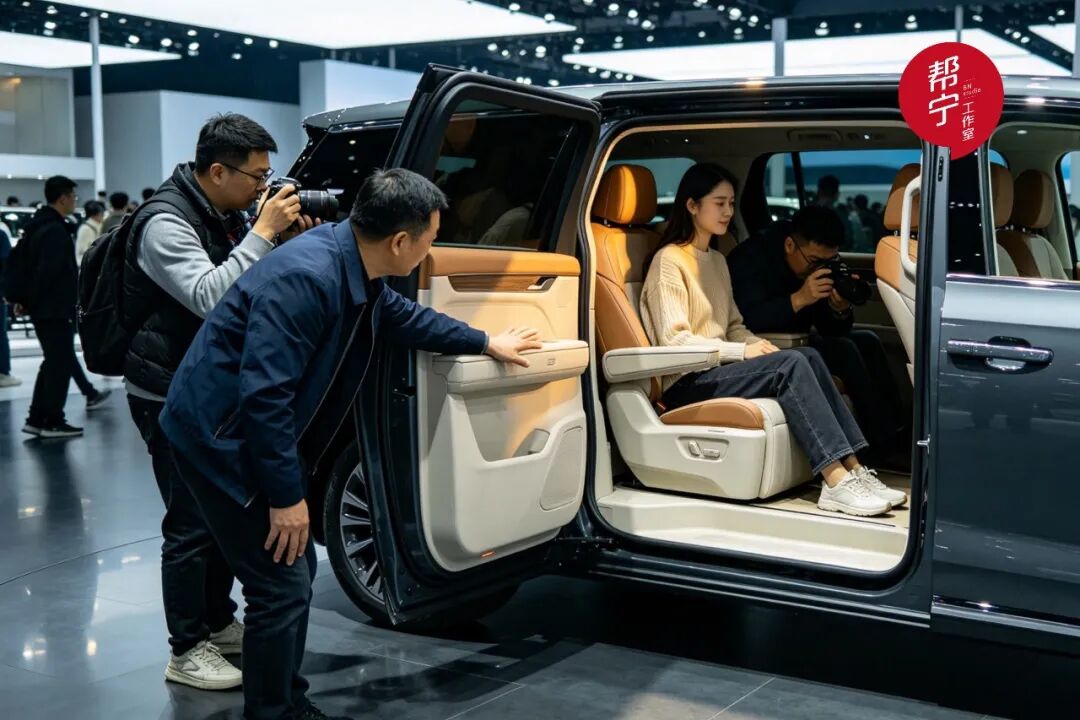
For example, the third-generation Tang is more than 5 meters long but offers five seats across the entire lineup; the Galaxy M8 is exactly the same size as its own six-seat flagship M9, with the change being the removal of the third row; the Qijing GX7 likewise abandoned the third row, with a 5.1-meter-long body designed with only two rows, returning space to the first two rows.
This is a typical manifestation of automakers shifting from parameter competition to scenario competition, and it is also a relatively substantive move at this auto show. However, this is only redistributing space within an existing car to make riding more spacious, not an all-new car, which precisely shows that this year's auto show had no highlights.
Perhaps, in an environment of market downturn and tighter validation, subtraction is more responsible than telling new stories.
▍02 Where Are the Highlights
So where did independent automakers lose the highlights?
From a technical perspective, at this year's Guangzhou Auto Show, 800V high-voltage platforms, ultra-fast-charging batteries, and CTB body integration technology are moving down from flagships to mainstream models.
At the same time, super suppliers such as Huawei Qiankun, Momenta, and CATL will be repeatedly mentioned by many automakers at press conferences. When the same solution can be installed in dozens or even hundreds of models, it no longer constitutes differentiation but becomes an entry ticket for new cars to enter the market. When technology cannot tell differences, automakers turn to experience upgrades.
Another path is stacking screens inside the car, as with the Fangchengbao Tai 9's integrated screen, rear screen, and Devialet audio. Another category stacks a sense of ceremony; the Yangwang Dingyao's opposing doors and the Chery Zongheng R700's tank turn follow the same idea.
The philosophy behind these moves is to treat the car as a house to be decorated. But the threshold is certainly lower than building a car, so the speed of replication is naturally faster.
Beyond technology and experience, the pace of automakers releasing new cars has clearly slowed.
On November 3, the 413th batch of the "Road Motor Vehicle Manufacturing Enterprises and Products Announcement" published by the Ministry of Industry and Information Technology showed that this batch had 475 automotive products in total, 212 fewer than the 412th batch published 18 days earlier, and 58 fewer new energy models.
Among them, more than 20 new passenger car models were declared, and after excluding facelifts, added configurations, and derivatives, only 5 were truly all-new. Yet the 409th batch announcement 5 months earlier was close to 100.
Such a large decline reflects that institutional constraints have landed.
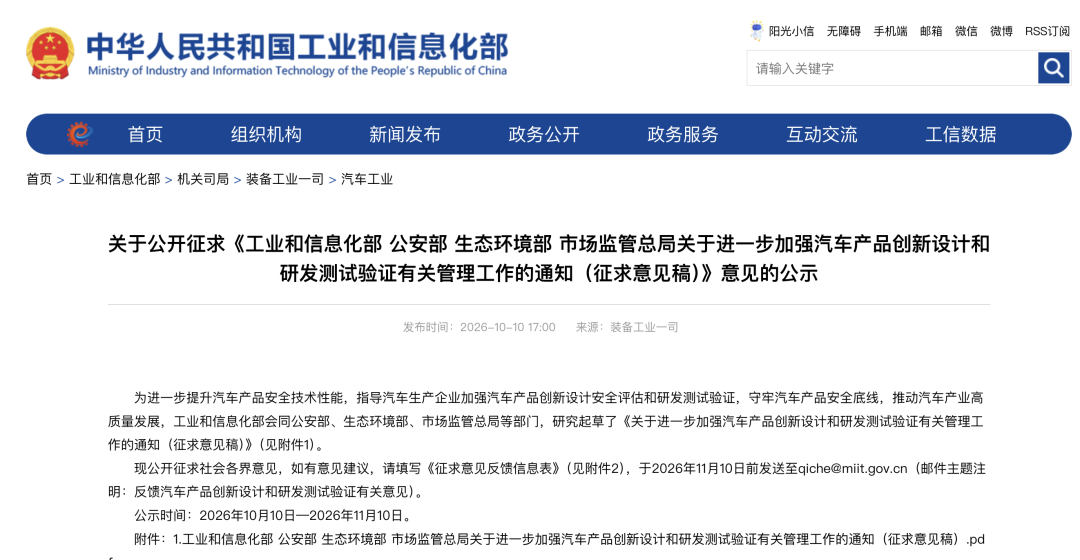
On October 10, the Ministry of Industry and Information Technology and three other departments publicly solicited opinions on the "Notice on Further Strengthening the Management of Innovative Design and R&D Test Validation of Automotive Products," clarifying that the environmental adaptability validation cycle for newly declared products shall be no less than 1 year, must include "two winters and one summer" testing, and the reliability validation mileage shall be no less than 30,000 kilometers.
Cui Dongshu, head of the Passenger Car Association, once said that the pace of new car declarations has been adjusted mainly to further standardize R&D system process management and ensure high-quality growth of new cars.
When the path of compressing validation and rapidly launching new products is blocked by the system, automakers' blockbuster new products should be postponed. This is also one of the important reasons why many automakers did not, as in previous years, bring blockbuster products planned for next year to the Guangzhou Auto Show ahead of time.
"Even by 2027, it will be difficult for our brand to launch a newly defined model, let alone a highlight car," an independent automaker representative told Bangning Studio.
Who else is qualified to create highlights? Judging from the actions of automakers at this year's Guangzhou Auto Show, the answer points to 3 prerequisites: technology others cannot make, prices others dare not set, and validation others have not yet finished. Only with all 3 can one have the confidence to talk about highlights.
(Cover image created with AI)
-
![]()
Why Is There No "Pinduoduo Narrative" in the AI Era?
-
![]()
Wall Street's "Big Short" Investor Suddenly Boosts Chinese Holdings -
![]()
Memory Price Hikes, Spec Cuts, and Incremental Upgrades: The Smartphone Spec War Hits a Memory Wall
-
AI Is Rewriting the Pricing Logic of Office Software — Kingsoft Software's Bid for the Enterprise Productivity Entry Point
-
![]()
Priced from Over 300,000 Yuan with L3 Architecture: Is the Xiangjie V8 Gunning for the Tengshi D9's Lunch?
-
![]()
How Will Automakers Fight the Final Battle in a Tough 2026?
-
![]()
Automakers Burdened by Collective Debt Double Down on AI Investment
-
![]()
Li Auto to Launch Only 1–2 New Models in 2027