The Next Bottleneck for AI May Not Be Chips
 10/26 2026
 532
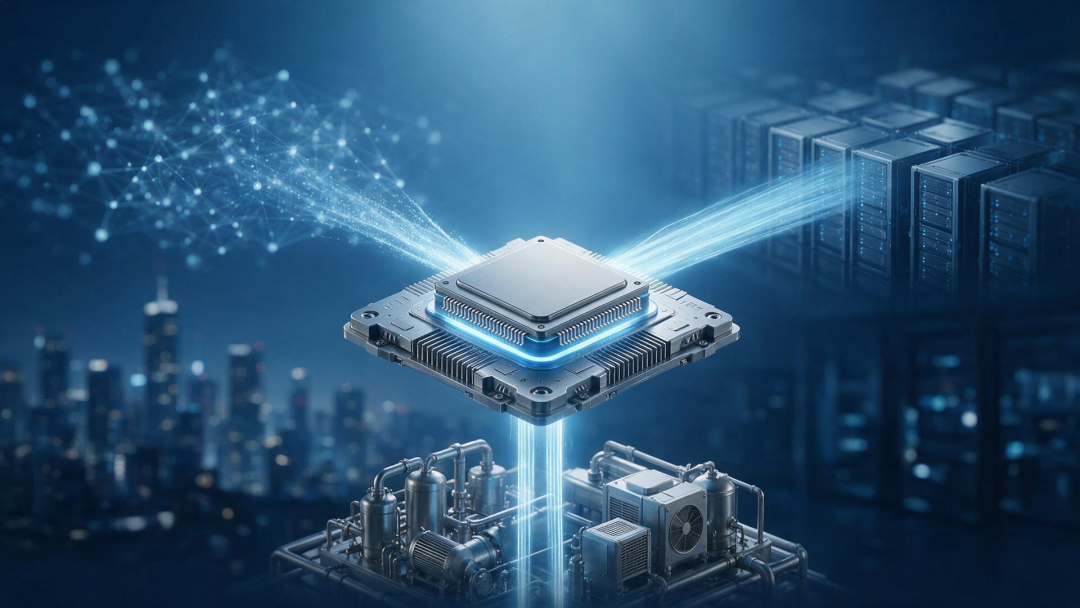
In the overseas tech circle in October, three pieces of news take on a different flavor when viewed together.
One is MiniMax quietly launching M3.1Flash, which nearly triples inference speed while cutting costs by 70%. Another is Google creating a 'dedicated runtime environment' for AI agents in the cloud, reducing pause-resume latency to under 500 milliseconds. The third is Bloom Energy more than doubling its Q3 revenue year-over-year, with product revenue surpassing $1 billion in a single quarter for the first time.
Model price cuts, intelligent agents moving to the cloud, and a surge in on-site power generation orders—on the surface, these are three separate stories. But beneath the surface, they point to the same trend: The AI industry is shifting from 'capability demonstration' to 'system delivery.' For the past two years, the focus has been on chips and parameters. Going forward, the real bottlenecks may be inference costs, intelligent agent runtime, and power delivery cycles.
I. Model Competition: Now About 'Real Traffic' and 'Unit Costs'
Let’s start with the model side.
MiniMax’s M3.1Flash has a detail more noteworthy than its '3x speed boost and 70% cost reduction': This model previously processed over 200T tokens of real traffic under the anonymous codename 'SpaceBunny,' showing significant improvements in Agentic tasks, programming, and ComputerUse capabilities. A higher-intelligence Pro version will follow.
Running anonymously on real traffic shows a shift in how model makers evaluate performance. Benchmark scores still matter, but stability under real workloads, task completion rates, and cost per token increasingly determine whether a model stays in the game. A 70% cost reduction is no small matter—every price cut broadens the commercialization potential for intelligent agents, programming assistants, and enterprise automation.
On the Kimi side, KimiK3.1 was teased via the KimiCode interface, maintaining programming and million-token long-context capabilities while expanding inference intensity to four tiers. However, the release date and pricing remain undisclosed.
The four-tier inference intensity approach is pragmatic: Not all tasks require full-power inference. Simple tasks use lower tiers, complex ones scale up. This is essentially 'on-demand compute allocation' at the product level, aligning with the same direction as model price cuts—inference economics.
But let’s stay grounded. The Pro version of M3.1Flash isn’t out yet, and KimiK3.1’s pricing hasn’t landed. Model price cuts are a double-edged sword: They drive adoption but squeeze margins, testing iterative and commercialization capabilities. Whether a 70% cut is sustainable depends on whether it’s driven by engineering-led unit cost reductions or temporary market share grabs. These are not the same.
II. Intelligent Agents and Video Models: Mastering 'Engineering'
The second signal comes from application infrastructure.
Volcano Engine released Seedance 2.5, a 4K video model with upgraded 10-bit color depth and micro-expression rendering. It supports low-cost 480P sample validation and 4K final delivery, currently in trial with select enterprise clients.

This design matters more than just showing off 4K. Film and ad production isn’t a one-click process—it requires trial, review, and revision. Validating creatives and storyboards at 480P before delivering 4K finals integrates generation capabilities into existing production workflows. Video model competition is shifting from 'can it generate?' to 'can it be used in industrial workflows?'
Google’s ACE is even more direct. Its Agent Compute Engine assigns hardware-isolated microVMs to each intelligent agent, supporting multi-step tasks and sub-second suspension/resumption with latency under 500 milliseconds.
Why do agents need this? Unlike one-off dialogues, agents execute continuous tasks with state, waiting periods, and bursts. Traditional containers or serverless architectures may not fully adaptation (fit) this workload. Hardware isolation addresses security, sub-second wake-up improves resource utilization, and 500ms resumption latency ensures task continuity. Cloud competition is evolving from selling compute/storage to selling 'intelligent agent runtime.'
Of course, ACE is early-stage. Impressive metrics are one thing; cost, observability, and ecosystem migration at scale are another. Seedance is also in select enterprise trials. The direction is clear, but scaling (scale) validation takes time.
III. BloomEnergy’s Strong Earnings: It’s Not Just About Power Costs
The third signal may be the most underappreciated: Power.
BloomEnergy reported Q3 2026 revenue of $1.236 billion, up 138.1% YoY and ~16% QoQ. Product revenue hit $1.074 billion, up ~179% YoY, surpassing $1 billion in a single quarter for the first time (87% of total revenue). Service revenue grew 15% to $67.6 million; installation revenue rose 29% to $84.9 million.
Profitability is improving: Non-GAAP gross margin was 34.5%, up 412 bps YoY; product gross margin was 38.4%; service gross margin was 21.4%, exceeding 20% for the second straight quarter. Non-GAAP diluted EPS was $0.94, vs. $0.15 YoY.
But the most intriguing part isn’t the growth rate.
Research highlights a industry shift: AI data centers’ power demand is moving from traditional grid supply to on-site generation complementing the grid. Hyperscalers are leading this shift for a practical reason—AI data centers need massive, highly reliable power on short notice, which traditional grids struggle to deliver for concentrated new loads.
BloomEnergy delivered power to Oracle’s Utah project in under two months; Nebius’ New Jersey project received planning approval three months after signing, then prepared its first power modules in two months.
This is its core competitiveness (competitive edge): not the lowest generation cost, but shorten (shortening) the time from data center construction to usable power. AI compute assets depreciate rapidly—delaying power by months can cost more than electricity bills, risking compute orders and model iteration windows. On-site generation is essentially 'arbitraging power delivery time.'
Capacity is also noteworthy. The company’s cell stack production line output rose from 100MW/year to 1GW/year with ~600 employees; scaling to 5GW is expected to maintain this headcount. Preparations for >5GW/year are underway, but the company emphasizes gradual expansion based on actual demand to avoid overcapacity.
However, growth quality hinges on cash flow. Q3 operating cash flow was a net outflow of $27 million, driven by higher inventory, contract assets, and receivables; capex was $153 million, resulting in a free cash flow outflow of $181 million. While YTD free cash flow remains positive at $42 million and cash stands at $2.5 billion, collections and project execution during expansion cannot be ignored.
For the full year, the company expects $4.4–4.6 billion in revenue (midpoint +~122% YoY) and maintains ~34% Non-GAAP gross margin. Key focuses in the coming quarters: whether capacity expansion and equipment delivery match orders; if the 38.4% product gross margin can improve further; and if inventory, contract assets, and receivables convert to operating cash flow. Beyond AI data centers, AEP’s 700MW carbon capture project with Google and Nebius’ 300MW power project offer windows into demand breadth.
IV. The Market Is Already Voting With Its Feet
The divergence in overseas AI-related stocks also tells a story.
For the week ending October 23, Zscaler rose 23.04%, CrowdStrike 13.27%, Innodata 12.44%, Palo Alto Networks 11.27%, C3.ai 10.07%, Cloudflare 9.93%, MongoDB 9.93%, and DataDog 9.12%. On the flip side, Google fell 5.98%, Meta 9.4%, NVIDIA 1.48%, and AMD 2.26%.
Cybersecurity, cloud services, and data infrastructure are active, while large model giants and some chip stocks face pressure. A single week’s performance doesn’t define the trend, but it reflects a sentiment shift: AI trading is moving from 'buying the track ( track , track here means 'sector')' to 'seeing delivery.' Enterprise AI adoption requires security, data, and cloud infrastructure—these segments benefit first. Meanwhile, the market is scrutinizing capital spending and profitability pressures at large model companies.
V. AI’s Next Battle: System Efficiency
Connecting the dots, the judgment is straightforward.
On the model side, the focus is on inference economics; on the cloud side, it’s intelligent agent runtime; on the energy side, it’s power delivery speed. These three areas seem disparate but are all compressing the same thing: the time from technological investment to actual output.
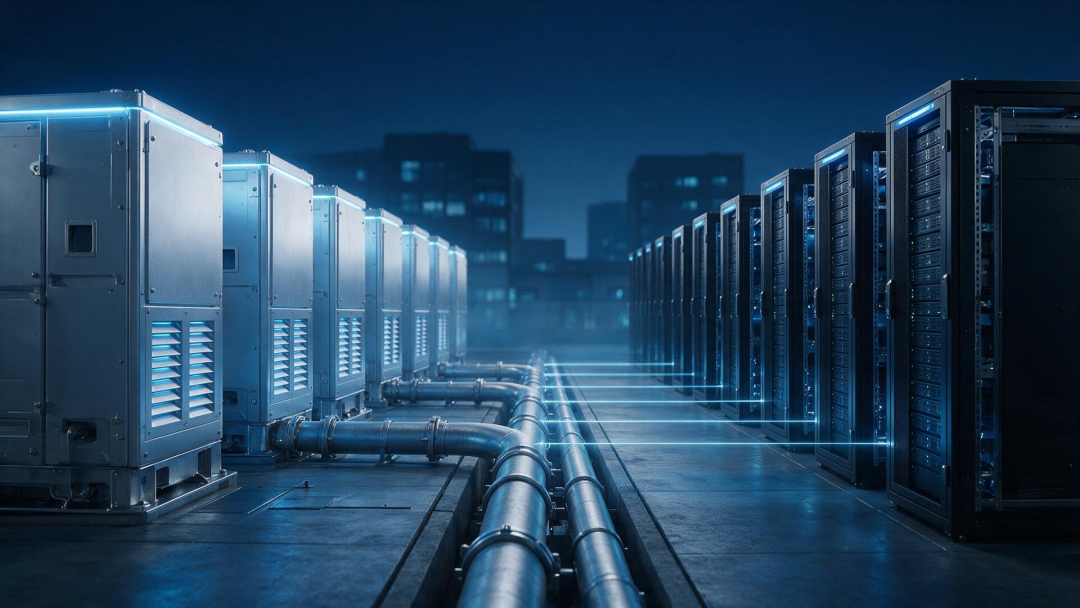
Model price cuts compress application trial costs; sub-second agent wake-up compresses task wait times; on-site power generation compresses data center construction-to-operation cycles. AI assets depreciate and iterate rapidly—time itself is a cost.
But the path isn’t smooth. Model price cuts could trigger wars; intelligent agent runtime is still early-stage commercialization; on-site power generation depends on approvals, site readiness, and long-term O&M. BloomEnergy’s operating cash flow also needs sustained improvement. Risks like chip yield rates, U.S.-China tech policies, and smartphone sales—highlighted in research—cannot be ignored.
For the past two years, AI narratives centered on 'compute scarcity.' Going forward, bottlenecks will become more fragmented: affordability of inference, manageability of intelligent agents, and availability of power. Whoever solves these engineering challenges is better positioned to turn AI capabilities into sustainable businesses.
AI’s next battle isn’t in parameters—it’s in implementation.
-
![]()
Alibaba Cloud and Volcano Engine Compete in Automotive Cloud Market
-
![]()
“After Testing K3.1 Pro Overnight, It Seems Kimi Is Truly Advancing Towards Embodied AI”, “K3.1 Pro, Speed, Task Execution, Allowance, Embodied AI”
-
![]()
BYD Registers Decline in Six Models, Xiaomi Undergoes Leadership Shuffle! Comprehensive Review of BEV Sales Rankings from January to September
-
![]()
DeepSeek’s Product Department Entrusted to a Quantitative Trader
-
![]()
After Two Decades of Anticipation, Wuhan and YMTC Face a Cooling A-Share Market
-
![]()
Why Are Automakers Pivoting to Battery Swapping Amid Rapid Advances in Ultra-Fast Charging?
-
![]()
From Lucent to NVIDIA: When History Echoes
-
![]()
Thermal Effects on Femtosecond Filamentation and Supercontinuum Generation in YAG Crystals: Insights from Ultrafast Nonlinear Optics Study No. 105