Why Are Automakers Pivoting to Battery Swapping Amid Rapid Advances in Ultra-Fast Charging?
 10/26 2026
 559
Author | Anonymous
In the realm of China's new energy vehicle (NEV) sector, battery swapping has traditionally been seen as a niche solution. However, it has recently emerged as a key focus for major industry players.
On October 19, 2026, Huawei Yinwang, CATL, and Times Electric Service entered into the 'Intelligent Energy Replenishment Ecosystem Strategic Cooperation Agreement.' The three entities will intensify their collaboration in battery swapping and network infrastructure, aiming to construct an intelligent battery swap ecosystem alongside ecosystem partners. In the future, NEV models equipped with Huawei's intelligent driving solutions will be capable of autonomous battery swapping.
On October 22, BAIC Group and CATL signed a comprehensive agreement to deepen their cooperation in battery swapping. Several BAIC brands' compatible models will be integrated into CATL's Chocolate Battery Swap Ecosystem. The two parties will jointly establish a nationwide, highly interconnected public energy replenishment network.
The question arises: with the rapid advancements in ultra-fast charging technology and the increasing prevalence of ultra-fast charging stations, the charging time for NEVs continues to decrease, narrowing the gap in replenishment time compared to battery swapping. Why are many automakers now intensifying their efforts in battery swapping?
01 Ultra-Fast Charging Gains Momentum, Battery Swapping Gains Traction
Although automakers like BAIC and NIO began investing in battery swap technology early in the NEV era, it has never become a mainstream energy replenishment method. The reason lies in its operational complexity. Since the battery is detached from the vehicle, the operational chain for battery swapping is more intricate than that of fast charging.
On one hand, automakers cannot operate in isolation but must design vehicles, batteries, and swap stations in a holistic manner. With rapid advancements in battery technology and a proliferation of battery models and specifications, battery swapping can somewhat restrict automakers' technological innovation.
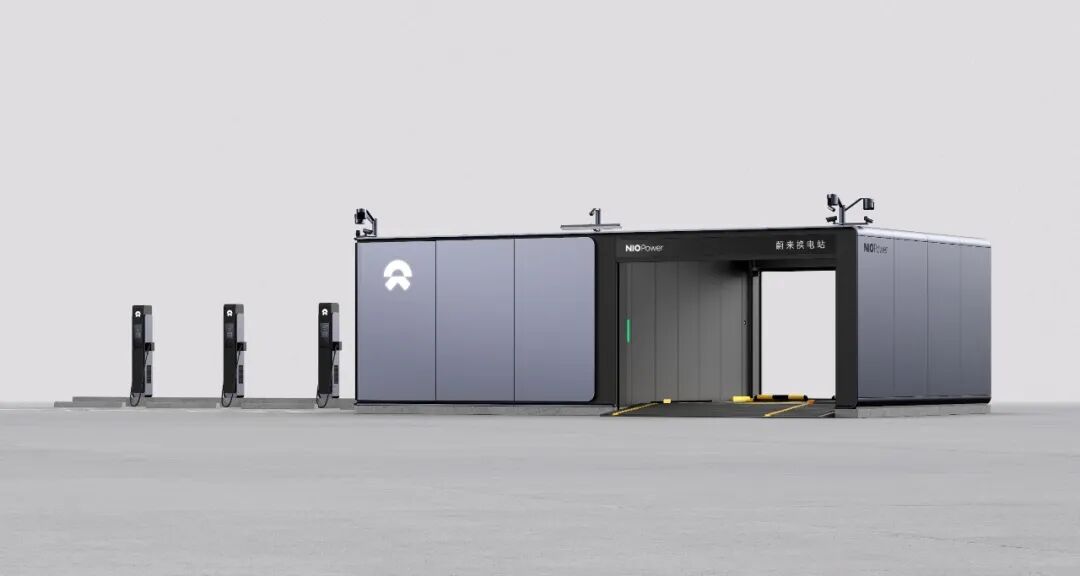
Image Source: NIO
On the other hand, given the current lack of cross-brand compatibility and network sharing, automakers must bear significant costs for station construction and operation, posing substantial challenges for large-scale adoption.
More importantly, as ultra-fast charging technology matures, the comparative advantage of battery swapping—its speed—will diminish.
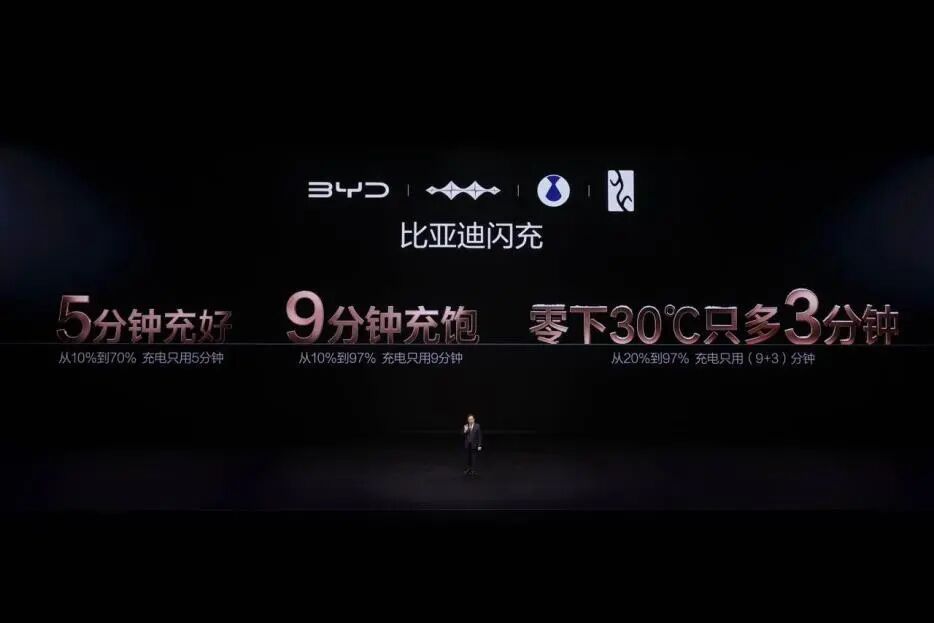
Image Source: BYD
For instance, in March 2026, BYD introduced its second-generation Blade Battery and flash charging technology, enabling a 5-minute charge from 10% to 70% and a 9-minute charge from 10% to 97%. At -30°C, charging takes only 3 minutes longer than at room temperature (20% to 97%).
The following month, CATL unveiled its third-generation Qilin Ultra-Fast Charging Battery, capable of ultra-fast charging at equivalent 10C and peak 15C rates, reaching 98% charge in just 6 minutes and 27 seconds from 10%.
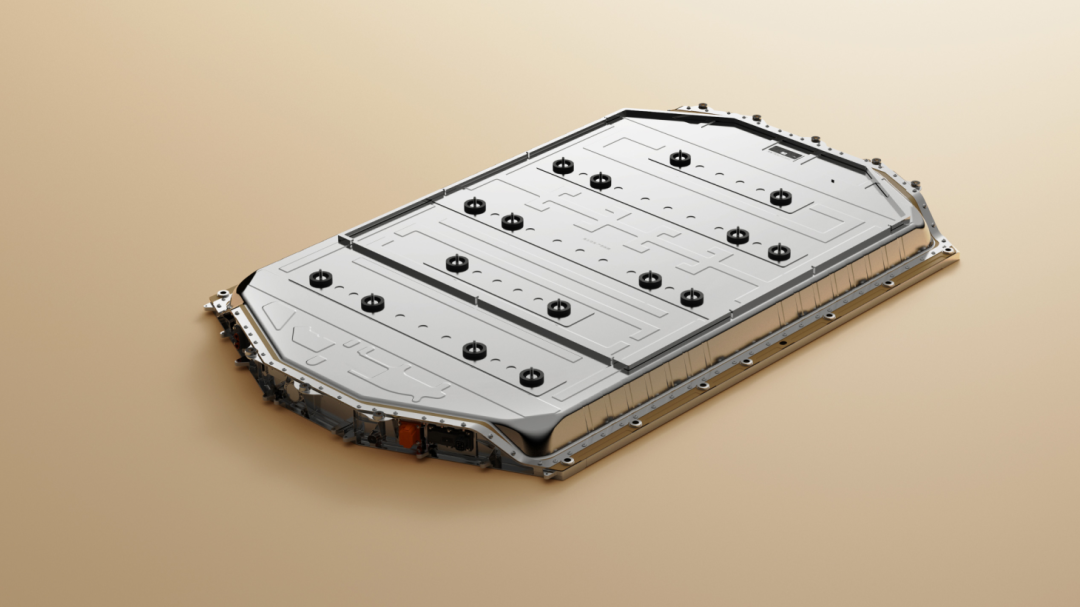
Image Source: Li Auto
In April 2023, Li Auto's President and Chief Engineer, Ma Donghui, explained why Li Auto opted for ultra-fast charging over battery swapping. He noted that electricity has no physical boundaries, but battery swapping requires replacing the entire battery pack, which does have physical limits. Additionally, achieving compatibility across different models and brands is a significant challenge, conflicting with Li Auto's principle of prioritizing efficiency.
Unlike battery swapping, which struggles to establish unified standards, Ma believes charging gun standards are easier to unify and can become a shared resource. Therefore, he does not believe battery swapping can outperform ultra-fast charging in passenger vehicles.
In summary, technical adaptation, station investment, and cross-brand collaboration hurdles have prevented battery swapping from becoming a mainstream energy replenishment method. The advancement of ultra-fast charging technology further erodes its comparative advantage. With brands like Feifan and Ruilan fading, NIO remains the only consumer-facing automaker persistently pursuing battery swapping.
02
Lowering the Barrier to Entry: Battery Leasing Gains Momentum Since 2026, the battery swapping approach has gained traction, not due to significant technological advancements but because of notable changes in China's NEV market environment.
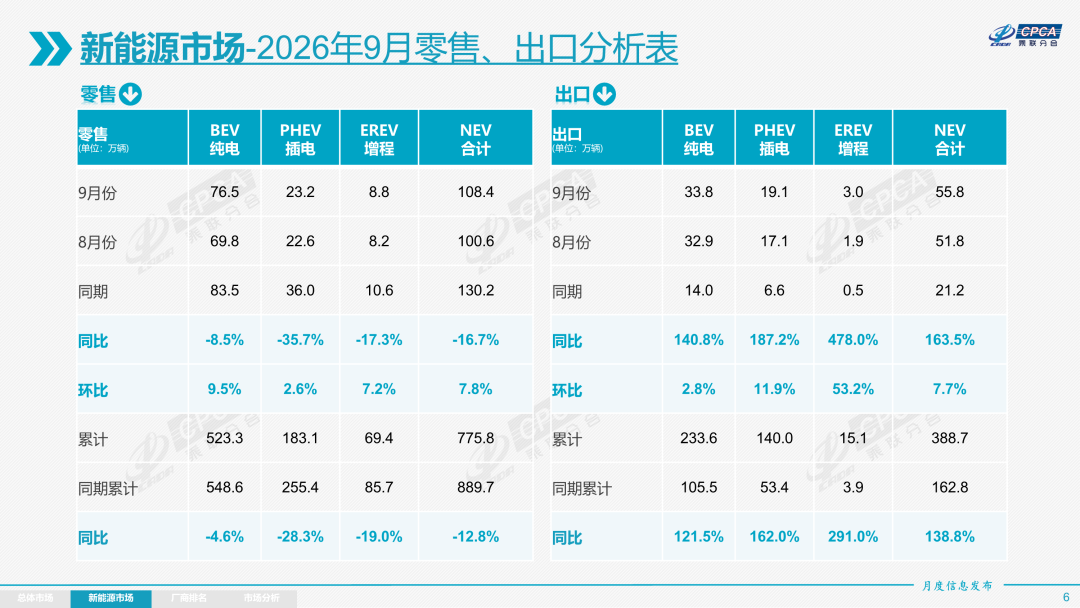
Image Source: China Passenger Car Association (CPCA)
According to CPCA data, in September 2026, retail passenger vehicle sales in China reached 1.618 million units, down 28.0% year-on-year. NEV retail sales declined by 16.7%, with a penetration rate of 67%, showing signs of slowing growth.
Against the backdrop of sluggish retail passenger vehicle sales in China, NEVs also face challenges in sales momentum. For automakers, besides continuing to attract fuel vehicle users, they must reduce the initial purchase cost to entice potential consumers still on the fence.
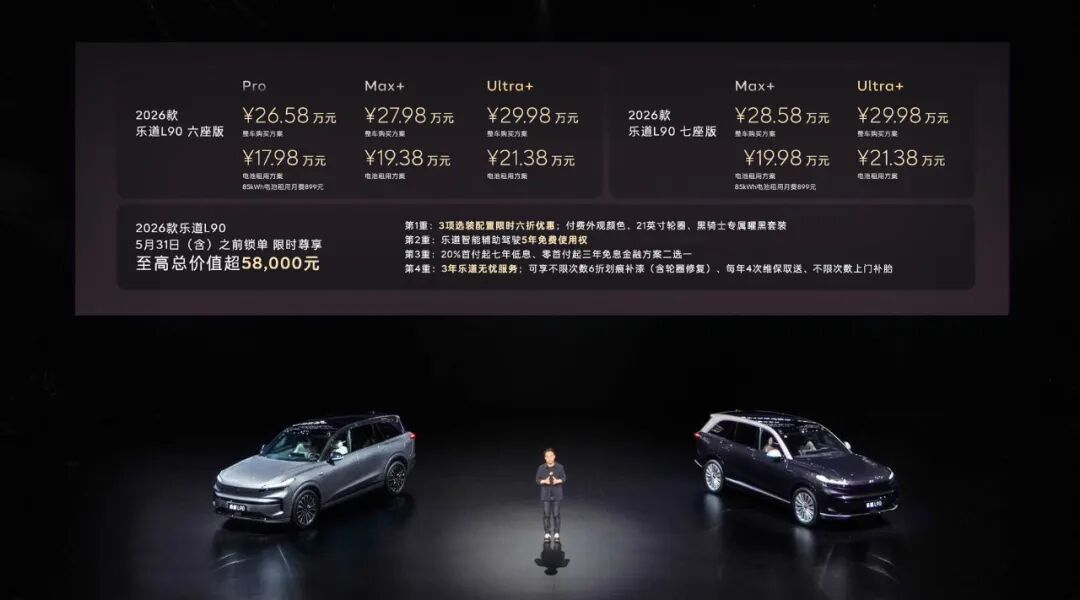
Image Source: NIO
Due to vehicle-battery separation, the battery swapping model can significantly lower vehicle prices. Take the 2026 Lexdao L90 six-seater Pro as an example: its purchase price is RMB 265,800 with an 85kWh battery pack. Under the Battery-as-a-Service (BaaS) leasing scheme, the price drops to RMB 179,800, reducing the initial cost by RMB 86,000, or 32.4%.
It is important to note that the difference between BaaS leasing and outright vehicle purchase lies solely in battery ownership. The lower purchase threshold does not reduce battery capacity or vehicle specifications. Compared to similarly priced models, vehicles under the BaaS scheme offer more competitive configurations.
Additionally, under China's current policies, from 2026 to 2027, eligible NEVs enjoy a 50% reduction in vehicle purchase tax, capped at RMB 15,000 per vehicle. For eligible battery swap models, if the vehicle (without battery) and the battery are billed separately, the taxable amount for vehicle purchase tax is based on the invoice price of the vehicle without the battery.
Using the 2026 Lexdao L90 six-seater Pro as an example, at an outright purchase price of RMB 265,800 and a BaaS price of RMB 179,800, the corresponding purchase taxes are RMB 11,761 and RMB 7,956, respectively, a difference of RMB 3,805. Combined with the RMB 86,000 reduction in the initial purchase price, the total cost savings on vehicle price and purchase tax alone amount to approximately RMB 90,000 under the BaaS scheme, excluding subsequent battery lease payments.
At this stage, automakers' focus on battery swapping is somewhat 'missing the point.' Rather than the technology itself, they are more interested in the price advantages of vehicle-battery separation, hoping to expand the market influence of NEVs through lower purchase prices.
03 Heavy Asset Burden: Profitability Challenges for Battery Swap Stations
Due to limited compatibility among battery swap systems, some automakers have primarily built networks around their own models, incurring substantial asset investments.
Take NIO as an example: as of late September 2026, the company had invested over RMB 20 billion in charging and battery swap infrastructure. Despite this, NIO has yet to achieve annual profitability due to high operating costs.
In April 2026, Yang Jun, General Manager of CATL's battery swap business, stated in a media interview, 'The energy replenishment industry faces significant challenges today, with nearly the entire sector operating at a loss and extremely low utilization rates.'
To improve battery swap station utilization, companies like CATL, NIO, and Geely are enhancing collaboration to standardize industry technologies and interconnect battery swap networks.
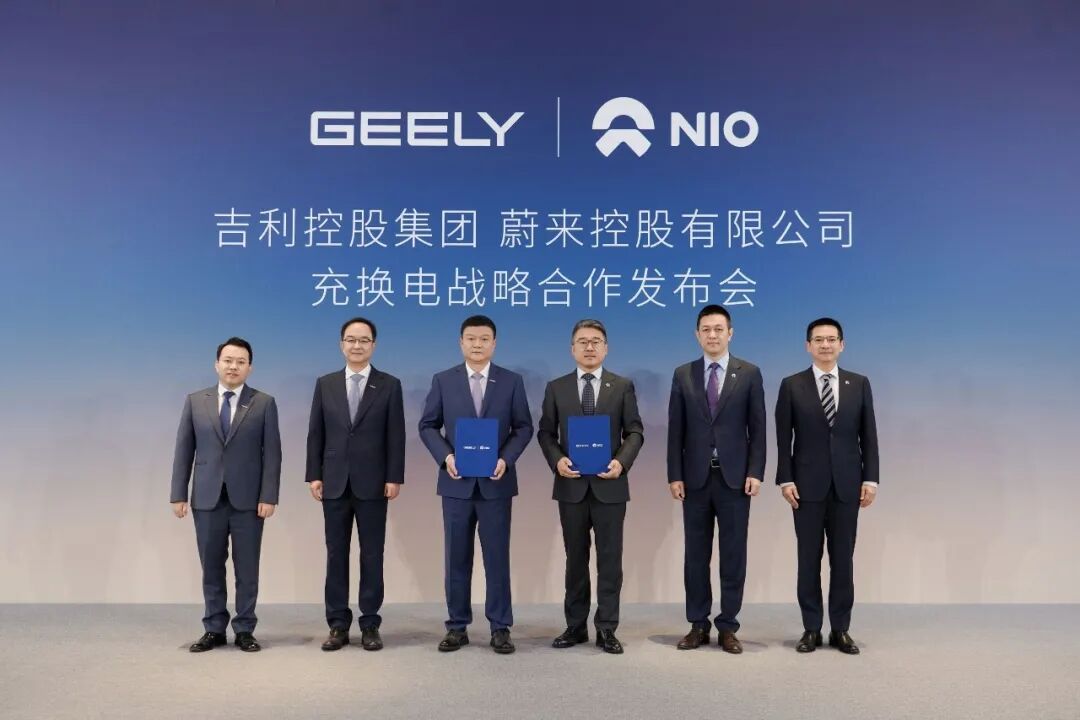
Image Source: NIO
In October 2026, regarding the strategic cooperation on charging and battery swapping between Geely and NIO, Li Shufu, Chairman of Geely Holding Group, said, 'There is no need for duplicate construction in the battery swap sector. It is unnecessary for Geely and NIO to build separate battery swap systems, so we have chosen to merge our related businesses.'
However, financial data from Aulton New Energy, an independent third-party battery swap service operator, indicates that profitability for owned battery swap stations remains elusive.
According to Aulton's prospectus, citing data from China Insights Consultancy, the company ranked third in China by revenue from battery swap station operations in 2025. Nevertheless, its owned battery swap service business is a major contributor to its losses.
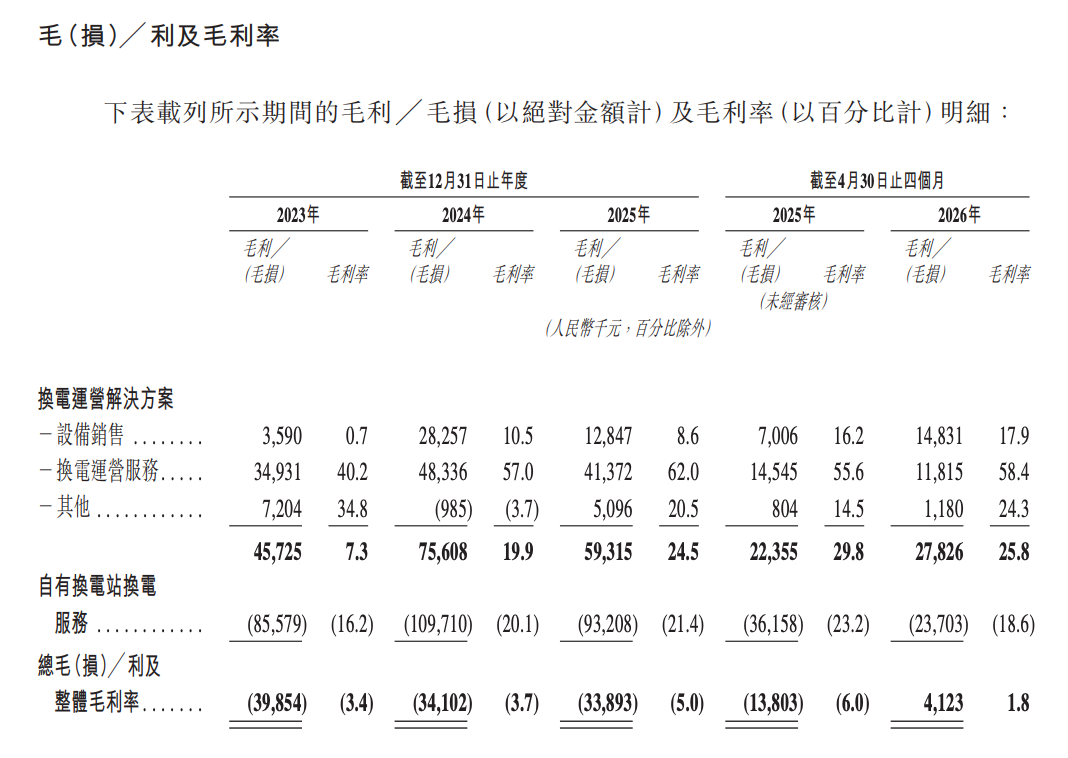
Image Source: Aulton New Energy Prospectus
The prospectus reveals that from 2023 to 2025 and the first four months of 2026, the gross margins for Aulton's owned battery swap service business were -16.2%, -20.1%, -21.4%, and -18.6%, respectively, with gross losses of RMB 85.579 million, RMB 110 million, RMB 93.208 million, and RMB 23.703 million.
Given the persistent losses in its owned battery swap service business, Aulton is transitioning to an asset-light business model, shifting from operating self-owned battery swap stations to providing operational services for third-party stations.
Aulton's situation illustrates that while vehicle-battery separation helps reduce initial purchase costs, the challenges for battery swap businesses do not end with vehicle sales. Automakers, battery swap operators, and battery asset holders must continue to provide services and align rental and service revenues with asset investments to form a sustainable business closed loop (closed loop).
In conclusion, automakers' renewed interest in battery swapping reflects a shift in NEV competition. When technological upgrades alone can no longer drive sales, affordability for consumers has become part of product competitiveness. Vehicle-battery separation removes some battery costs from the purchase price, offering automakers sales opportunities beyond direct price cuts. However, it also extends competition beyond vehicle delivery.
This means battery swapping requires a new profit-sharing mechanism—automakers gain sales, consumers reduce initial expenses, while battery asset holders and station operators rely on long-term services to recoup investments. If automotive sales profits materialize first while asset returns remain uncertain, increased partnerships may not naturally lead to synergy.
Therefore, the more critical aspect of this battery swapping trend is whether automakers are willing to take responsibility for model adaptation, user acquisition, and ongoing operations beyond sales targets. While low purchase prices can open the market, ensuring the viability of the low-price system is essential for battery swapping to become a trusted long-term choice for more consumers.
Interactive Topic
Do you favor ultra-fast charging or battery swapping? Why?
This article is original content from Shijiao Farsight and is prohibited from reproduction without authorization.
-
![]()
Alibaba Cloud and Volcano Engine Compete in Automotive Cloud Market
-
![]()
“After Testing K3.1 Pro Overnight, It Seems Kimi Is Truly Advancing Towards Embodied AI”, “K3.1 Pro, Speed, Task Execution, Allowance, Embodied AI”
-
![]()
BYD Registers Decline in Six Models, Xiaomi Undergoes Leadership Shuffle! Comprehensive Review of BEV Sales Rankings from January to September
-
![]()
DeepSeek’s Product Department Entrusted to a Quantitative Trader
-
![]()
After Two Decades of Anticipation, Wuhan and YMTC Face a Cooling A-Share Market
-
![]()
Why Are Automakers Pivoting to Battery Swapping Amid Rapid Advances in Ultra-Fast Charging?
-
![]()
From Lucent to NVIDIA: When History Echoes
-
![]()
Thermal Effects on Femtosecond Filamentation and Supercontinuum Generation in YAG Crystals: Insights from Ultrafast Nonlinear Optics Study No. 105