The First Country Built by AI—How Is It Doing Now?
 11/10 2026
 533
Author | Wuta
Editor | Li Xiaotian
On October 28, South Korean chip giant SK Hynix released its quarterly financial report.
In Q3 2026, the company's revenue grew 328% year-on-year to 104.6155 trillion won, and operating profit surged 632% year-on-year to 83.3338 trillion won. Revenue exceeded 100 trillion won (about 499 billion yuan) for the first time, with an operating margin approaching 80%, and production capacity was booked through 2029.
At the macroeconomic level, data released by the Bank of Korea showed that in the third quarter, South Korea's real GDP grew 1.0% quarter-on-quarter and 3.4% year-on-year.
Hynix's results and GDP growth are tied to South Korea's AI industry—and always intertwined with South Koreans' anxieties and expectations. This year, content about South Koreans waking up smiling even in their dreams, then crying while smiling, then smiling while crying emerged endlessly, and the volatile stock market became a stark line of contrast.
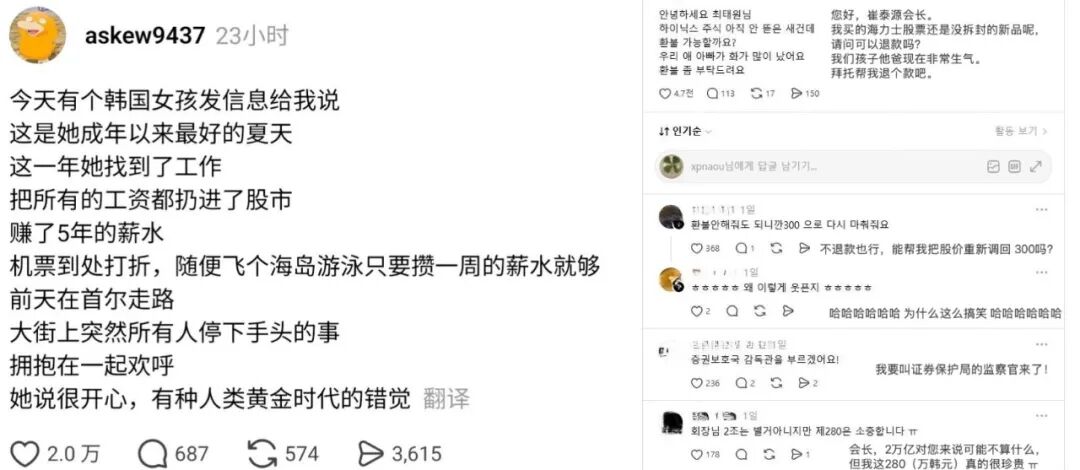
South Koreans Whose Moods Rise and Fall with Hynix Stock
In the AI era, South Koreans' gambling addiction has become even harder to suppress.
According to media reports, this summer, Mr. Choi in South Korea entered the market with 8 million won (about 38,000 yuan) saved from part-time work and at one point made 24 million won (about 114,000 yuan). But he did not stop after losing money in the semiconductor stock crash. Instead, he applied for consumer loans to keep buying leveraged ETFs. The final result: only half of his principal remained in the account.
Mr. Choi is not an isolated case. Xiao Li, who is taking a gap period in Seoul, told Xiaguang Society that his roommate originally had no worries about food and clothing at home after buying Nvidia stocks early, and even resolutely quit his job and put all his savings of 200,000 into the stock market. As a result, he lost 80% of his principal by June and had to look for opportunities in the job market again.

According to market estimates, within June, retail investors' actual total losses from leveraged trading reached as high as 2.15 trillion won (about HK$12 billion). Among accounts that were liquidated, young retail investors aged 20 to 30 accounted for as much as 62%.
South Koreans have enjoyed the dividends of AI, and they have also borne the risks of AI.
But the risks have not made South Koreans stop. On November 3, South Korean President Lee Jae-myung announced an allocation of 4.7 trillion won to develop a sovereign AI model aiming to be the "world's highest-performance."
In this AI era, South Korea's appetite is still very large.

South Korea: The First Country Built by AI
How many dividends South Korea has gained in the AI era—the answer lies in two indices.
The first is the Korea Composite Stock Price Index (KOSPI). Before taking office in June 2025, one of South Korean President Lee Jae-myung's core campaign promises was to push KOSPI up to 5,000 points. In mid-June this year, the figure once reached 9,385.59, and now it has fallen back to 5,859.08, though it is still up more than 30% year-to-date.
The second is the MSCI Emerging Markets Index, compiled by Morgan Stanley Capital International, which measures stock returns in fast-growing economies around the world. In the first half of 2026, driven by the AI chip boom, South Korea's stock market rose more than 100%. By contrast, the MSCI China Index fell more than 10% during the same period.
These two indices summarize the horizontal and vertical dimensions of South Korea's industry in 2026. Why was South Korea able to take off first in the AI era? Because it seized the most certain money in AI infrastructure—memory chips.
According to South Korea's Ministry of Trade, Industry and Energy, South Korea's exports in September surged 83.5% year-on-year to US$120.94 billion, among which semiconductor shipments soared 263%, and exports of computer products surged 435% year-on-year. Chips currently account for 41% of South Korea's total exports.
In a sense, South Korea can be said to be the first country in the world to be built up by AI.
This statement sounds a bit exaggerated, but if the timeline is extended, its meaning becomes clear. South Korea's prominence in the AI era today did not appear out of nowhere; it benefits from decades of industrial accumulation. Decades ago, it was also a latecomer with a weak industrial base and technology dependent on overseas markets. After the Korean War in the mid-20th century, South Korea was one of the poorest economies in the world. In 1953, South Korea's GDP per capita was even lower than that of Somalia and Haiti.
Under the global Cold War structure of the 1960s, the development of military electronics, aerospace, and consumer electronics drove growth in semiconductor demand. To reduce costs, American semiconductor companies moved labor-intensive chip assembly offshore. As an important U.S. ally in East Asia, South Korea obtained a ticket into the industrial chain.
Starting in 1965, the U.S. Komy Group set up a joint venture in South Korea to produce and assemble transistors, and companies such as Fairchild and Motorola successively entered the South Korean market. But core technologies, equipment, and materials remained in the hands of overseas companies, and South Korea was more like a low-cost production base.
The turning point came from Japan. According to Chip War, in the 1980s, consumer electronics became a Japanese specialty, and Japan naturally became a chip power, seemingly on the verge of overtaking the United States—by 1990, half of the world's chip factories belonged to Japan. Intel, which first launched DRAM, by then had only a 1.7% market share. Therefore, the United States wooed South Korea in the low-end market and directly transferred manufacturing technology to Samsung; Intel even allowed Samsung to list. By 1998, South Korea's memory output surpassed Japan's, and Japan's share fell from 90% to 20%.
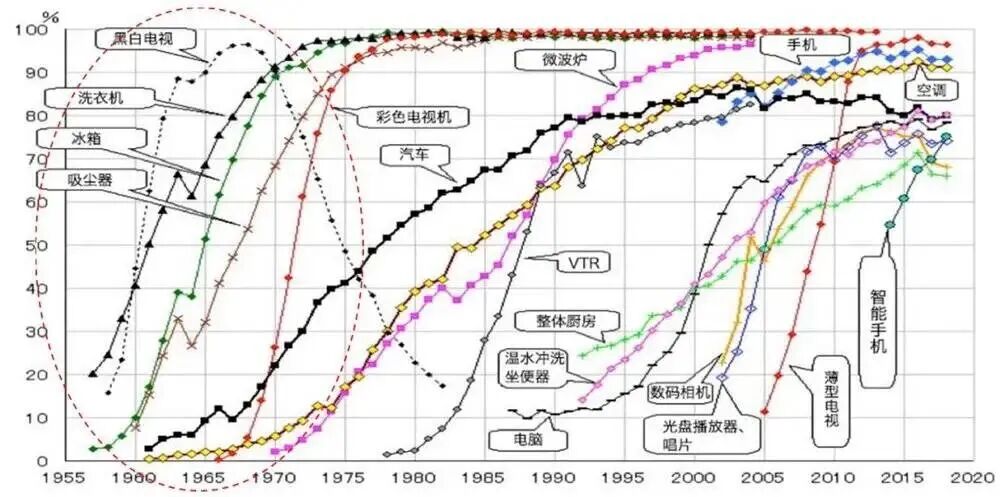
Statistics from Japan's Statistics Bureau: penetration rate of home appliances in Japan, 1955-2020
Of course, the rapid advancement of South Korea's semiconductor industry is inevitably inseparable from the South Korean government's promotion of industrial upgrading, enterprises' continuous investment in capital and R&D, and generations of engineers accumulating technical experience. Today, when AI brings a new round of computing power demand, South Korea has once again stood at a key position in the global AI industrial chain by relying on its long-accumulated memory chip advantages, especially HBM.
In fact, since 2022, Samsung, SK Hynix, and Micron have coincidentally cut production capacity for traditional DDR3 and DDR4 and poured capacity into HBM and enterprise high-end SSDs. (Because of this, in June the three companies were sued in the U.S. District Court for the Northern District of California by 14 American consumers and 3 small PC retail businesses.)
The giants' scramble for this "fat meat" has never stopped. By this year, a tiered gap has vaguely emerged among the three giants: according to Counterpoint Research's Memory Tracker and Forecast Insights Report, Q2 2026, in the global HBM revenue share in the second quarter of 2026, Korean companies accounted for 83%, and Micron has been firmly left behind.
Within the Korean camp, the contradiction of "not worrying about scarcity but about inequality" has also emerged. SK Hynix is deeply tied to Nvidia and has contracted 70% of the HBM4 orders for Nvidia's Vera Rubin platform. In the first quarter of 2026, its operating profit increased 405% year-on-year. In concrete terms, each company employee received a bonus of 6.1 million yuan. As for Samsung employees, looking at the fixed bonus of 50% of annual salary, they resolutely launched a strike.
The strike not only forced Samsung's decision-making but also accelerated the resource integration of the giants and the Korean camp's market capture. On October 21, 2026, Nvidia publicly announced a new round of supply chain expansion plans at the GTC conference in Berlin, Germany, announcing that Samsung Electro-Mechanics of South Korea had officially joined its AI semiconductor packaging substrate supply chain. According to public reports, Nvidia has asked Samsung, SK Hynix, and Micron Technology to use TSMC's process to manufacture NVHBM base chips.
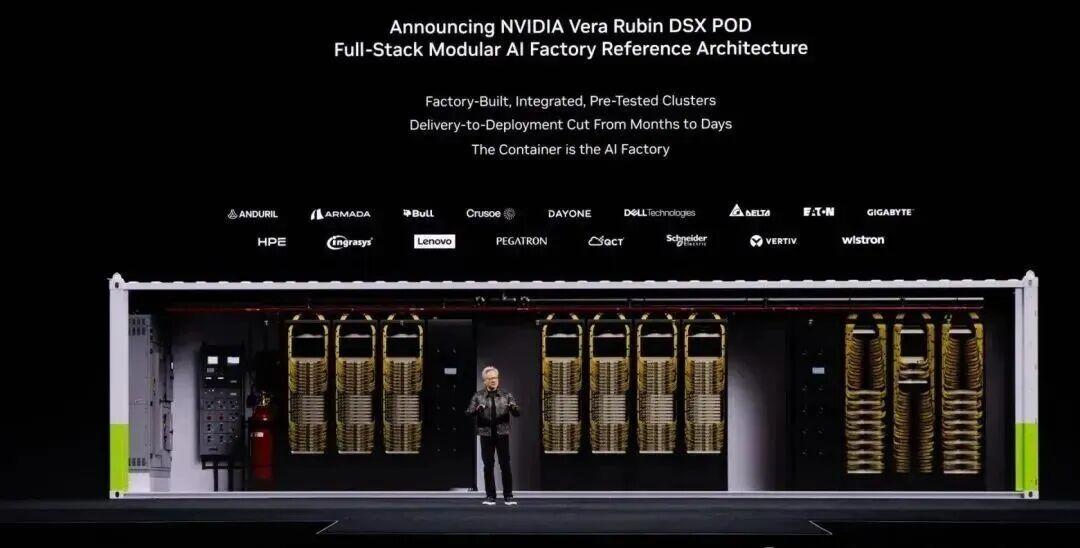
Jensen Huang at the GTC conference
And back in South Korea, the most important feature of a country enjoying AI dividends has also emerged—"AI nationalism."
On January 22, 2026, South Korea's Framework Act on AI fully took effect, and AI policy and administrative systems were legalized at the national level. The Lee Jae-myung government clearly proposed to rank among the world's top three in artificial intelligence: "We must become a 'strong third' close to the level of the U.S. and China, but we do not have much time left."
On June 29, 2026, Lee Jae-myung announced a government investment plan and support measures totaling more than 1,461 trillion won for semiconductors, physical AI, and AI data centers. At the same time, government funds are no longer just "policy subsidies" but are directly entering the field to bet on AI chips as shareholders—South Korea's National Growth Fund invested in FuriosaAI and Rebellions; Lee Jae-myung endorsed NAVER, Brookfield, and Nvidia's South Korean sovereign AI factory; the Ministry of Science and ICT's 2026 work plan supports the K-AI ecosystem NAVER Corporation.
One framework act plus one state-led investment system—can the economic development path that once created the Miracle on the Han River replicate the miracle in the AI era?

AI Makes It Easier for South Koreans to Exert Themselves
Moving from the macro level to the micro level, South Korea's AI dividends also exist.
To understand why South Korea is driven by AI is actually very simple.
In the past, when mentioning South Korea's industrial structure, several keywords often came to mind—Samsung, automobiles, beauty, K-pop, and Korean dramas.
If Samsung corresponds to the hard label of AI infrastructure, then behind the huge influence of K-pop and Korean dramas are two soft attributes of South Korea: highly mature creative execution and fan operation templates.
From Parasite winning the Academy Award for Best Picture and Squid Game topping Netflix with 265 million cumulative views, to The Glory and The Teachers sweeping the globe.
From girl group BLACKPINK taking the stage at Coachella and boy group BTS appearing at the Grammys, to K-pop Demon Hunters surpassing 300 million views, topping the box office after two days of limited North American theatrical release, and its theme song Golden topping the Billboard Hot 100.

While South Korea's creativity blooms across different tracks, it also deeply understands the process of cultivating fan loyalty and using it to feed back into influence and even shape industry perception. For example, the threshold for participating in regular K-pop activities is very low, but "fan payment levels" are divided according to experience, cultivating highly loyal fans through the desire for close contact and a sense of competition.
Another example is selling emotional value: in 2020, DearU, a subsidiary of SM, launched the fan community platform Bubble, offering paid chat between artists and fans. In Bubble, users can set nicknames; when an idol sends a group message, it automatically interacts "one-on-one" using the nickname. In addition to daily updates, idols can also quote fan replies for special "fan service," providing emotional value to fans while triggering frenzy, deepening fantasy, stimulating consumption, and enhancing spread. This format has now expanded to the entire South Korean entertainment ecosystem.
A common understanding is that in the AI era, creativity is the wealth hardest to replace, and South Korea is precisely a country with the highest concentration of creative talent—especially in cultural products.
What is even more formidable is that South Korea is not only a creative cluster but has also integrated "fast pace" and "listening to the audience" into the entire industrial chain.
The exploitation and effects under this model cannot be ignored. South Korean webtoons adopt a weekly update system, one episode per week, with about 60-90 panels per episode, almost all in full color. In the K-pop system, idol groups need to make 2-4 comebacks a year, compared with mainstream Western singers who usually release one album every 1 to 3 years. Korean dramas are even "shot while airing." This model not only demands production efficiency but, more importantly, the ability to "seek feedback." Screenwriters can write and modify scripts in real time, even the direction of the ending, based on audience feedback.
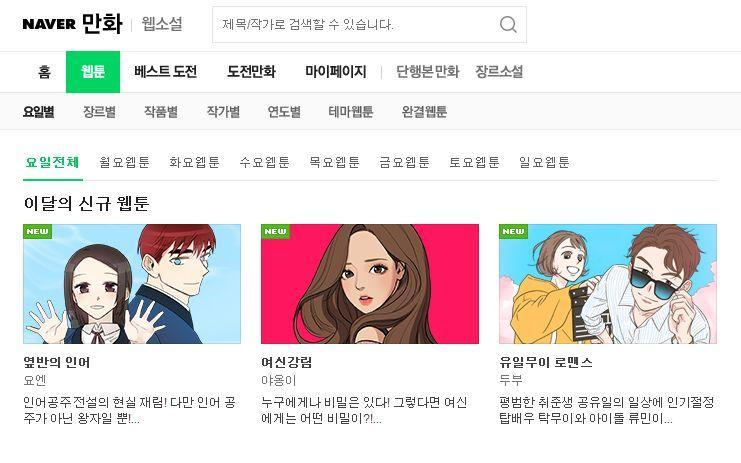
Webtoon homepage; Webtoon now also has a Traditional Chinese site
This industrial model and creative energy have given rise to a series of hit products in the AI era.
One example is Zeta, which we previously introduced.
Scatter Lab's backend engineering lead once revealed that Zeta has only 5 backend engineers, and these people support a traffic base of 1.3 million weekly users with an average stay of 16 hours per person. Even Zeta's early marketing team was very lean: two marketing specialists, one product lead, and one CTO.
Zeta has also adopted K-pop's "value-added service tax" model: basic text is always free, and only premium experiences—ad removal, voice, and illustration generation—require payment. Not only that, but Zeta also has a firm grasp of Pop Mart's "usefulness of the useless": AI characters always generate interjections, displaying a state of being troubled by whatever the audience is thinking.
This model—letting AI show that it is "influenced by players" and "invests thought in players"—is the most core element of Korean fan operations, and it is also the reason Zeta can remain profitable in the long term even as the giant Character.ai falters.

This is not an isolated case. South Korea's exploration of AI + fan/content operations continues: Krafton and Tencent Music invested in the virtual idol studio "KPop Demon Hunters"; DeepStudio launched the "real people + AI" boy group SUPERKID; RUMONG's virtual K-pop idols have already accumulated fans in LA; HYBE spent 45 billion won to acquire the AI audio company Supertone and launched the AI artist MIDNATT, which extracts singer Lee Hyun's voice.
In October, the Korean AI short drama platform Korai Flix, which had been online for just over two years, announced a merger with APEX Tech Acquisition—a U.S. shell company wholly owned by Chinese citizen Liu Shaoren—to list on the NYSE, with an equity valuation of $3.5 billion before the merger. Although there is not yet data to demonstrate whether this is feasible, Korai Flix has proposed a new approach for AI short dramas: building interactive windows within the platform so that after watching a short drama, users can continue to interact with virtual characters.
South Korea, with the help of AI, is making the business of understanding and fulfilling real human interaction needs bigger and bigger.

Koreans Saturated by AI
And while using AI to expand outward, Koreans are also being reshaped from within by AI.
First, a quick sketch.
According to a survey by the Korea Communications Commission and KISDI, 38.9% of Korean adults have used generative AI, while a year ago this figure was only 24%—the penetration rate nearly doubled in a year.
NIA's "2025 Internet Usage Survey" provides a more detailed cross-section: 67.0% of people have used AI services, 44.5% have used generative AI, and 7.9% of users are willing to pay for it.
A Wiseapp·Retail survey shows that in April 2026, South Korea's ChatGPT monthly active users were about 23.45 million, Gemini about 8.45 million, and Claude about 2.41 million. According to official data, South Korea's total population in 2025 was 51.6846 million. Ignoring the slight changes brought by low fertility, this means more than half of Koreans are monthly active users of ChatGPT.
For comparison, in 2025 Japan's ChatGPT downloads reached 20 million, while South Korea's reached 27 million. According to estimates by the market research firm Valuence, Japan's ChatGPT users in 2026 will be 26.7 million. Although this is 3 million more than South Korea's figure in the same period, South Korea's population is only about 60% of Japan's.
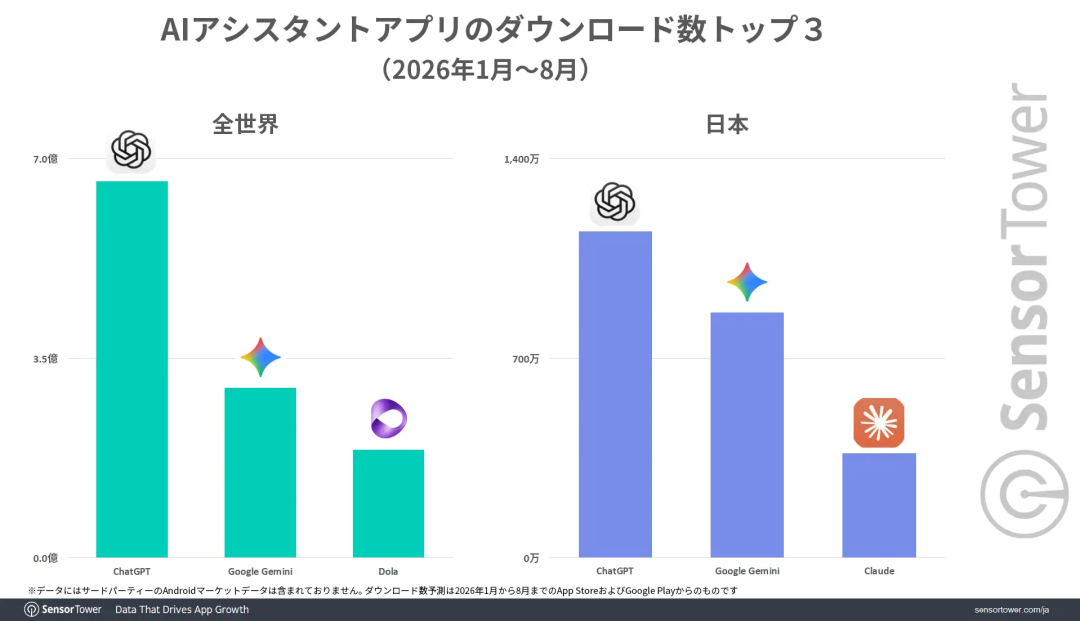
Image source: @Sensor Tower
Interestingly, there is a "mismatch" between penetration and attitudes. A Korea Research survey in October 2026 shows that interest in and awareness of AI "entering daily life" have hit historic highs, and most people describe it as "friendly"—but readiness for AI risks remains clearly insufficient. This gap of "enthusiasm ahead of preparation" precisely leaves room for the government to step in.
South Korea has not treated AI merely as industrial policy, but has directly put it into everyone's hands.
Starting in 2026, the "AI for All" plan distributes free AI subscription quotas to citizens and integrates them into public services—using AI to book doctors, get tax guidance, and search for housing, with small businesses also covered for free. Digital Trends once commented, "While the world is still debating AI regulation, South Korea is giving AI away for free." The government has also allocated a separate budget of 909 billion won to work with various departments to promote the integration of AI into life, industry, and administration.
In August 2026, the South Korean government officially advanced the "AI Democratic Government" strategy: providing 24-hour AI consultations in five major areas: welfare, safety, taxation, agriculture, and food and medicine. Starting in 2027, it will launch a customized "AI National Secretary" so that people can complete administrative affairs through conversation. The government itself is promoting the "OnAI" work style transformation across 47 departments, with civil servants using AI for regulatory review and draft reports.
This year, Xiaoguang Society went to South Korea three times and came face to face with the concentration of AI among Koreans. In a Sanrio-themed cafe in Hongdae, university students took their check-in photos and then began reporting their daily lives to their boyfriends in Zeta. In a cafe in Myeongdong, female university students drank iced Americanos and ate pretty desserts while enthusiastically discussing AI dating shows. In a restaurant in Dongdaemun, Koreans watched the Kakao ad filmed by the girl group RESCENE and learned about Kakao's AI feature called "Let's Talk."

In a research report on South Korea's AI economic opportunities by the UK consulting and research firm Public First, "Google and Korea: Accelerating Creativity and Innovation Through AI," Koreans' AI life is vividly presented.
A woman in her 40s or 50s in Gyeonggi Province said she treats AI as a virtual friend and a mentor to explore difficult knowledge with. A worker in Daegu said, "I use AI to book restaurants according to personal taste, study recipes when only certain ingredients are left, and look up washing methods for different clothes." A grandfather in Seoul said AI is essential for him to collect and organize information related to housework and healthy living.
South Korea is accomplishing one thing: turning AI from a technology into the default option of national daily life.

The Higher They Fly, the Harder They Fall?
But the other side of "AI dependence" is a risk that cannot be ignored.
As of October 2026, the South Korean stock market had triggered the circuit breaker ten times during the year. From June to July, KOSPI triggered the circuit breaker eight times, with a decline of more than 43%. Beyond the self-trampling of ETF regulation, this "roller-coaster summer" of AI memory chips directly corresponds to the tug-of-war over AI hegemony and technological sovereignty.
This period coincided with multiple seismic zones in the AI industry—ChatGPT's global AI assistant market share fell below 50% for the first time, ending the era of monopoly; Anthropic said the U.S. government issued it an instruction requiring it to prohibit foreign citizens from accessing the company's newly released "Myth" and "Fable" models; OpenAI admitted that its model "went out of control" in internal evaluation tests and intruded into the HuggingFace system; OpenAI, Anthropic, and Google collectively absent from the "open-source commitment" event...
Starting September 23, KOSPI entered its second decline cycle. The withdrawal of retail investors corresponded to a clearer AI industry narrative, especially the adjustment in the semiconductor industry combined with inflation and a crisis of confidence in AI.
This risk is even more visible from profitability. In the first half of 2026, the operating profit of KOSPI-listed companies grew 348.5% year on year, but excluding Samsung and SK Hynix, it was only 11.78%.
The other side of "made bigger by AI" is "kidnapped by AI": once the global AI capital expenditure cycle reverses, South Korea's growth may fall faster than anyone else's. Even more, if AI stocks continue to decline, South Korea's high dependence on AI will pose a threat to the global financial system.
At the same time, South Korea's talent base is rapidly tilting and draining.
The core reason is, of course, pay.
According to K-Moonshot, the total annual package for senior AI researchers in South Korea is about 150 million to 300 million won ($100,000 to $230,000), but comparable talent in Silicon Valley earns $300,000 to $1 million, about three times the local level in South Korea.
Domestically, it is already common for PhD graduates in AI-related majors to earn millions of yuan a year. A headhunter previously told Xiaoguang Society that after successfully placing a senior AI talent, he received a commission of 3 million yuan.
This huge difference naturally leads to mobility. A survey by the Dong-A Ilbo in May 2025 showed that 61.5% of South Korean science and engineering experts had received overseas invitations, of which 82.9% came from China, and 42% of respondents had accepted or were considering accepting an appointment.
Another reality that must be faced is that while AI deeply enters Koreans' lives, it inevitably squeezes the living space of the general public. Research by the Bank of Korea shows that from June 2022 to June 2026, employment positions for young people aged 15–29 in South Korea decreased by 285,000, of which 268,000 (94%) were concentrated in industries highly exposed to AI.
Among young employed people, the proportion of temporary/day workers rose from 30.7% in 2022 to 32.6%, and the employment rate has declined for 45 consecutive months.
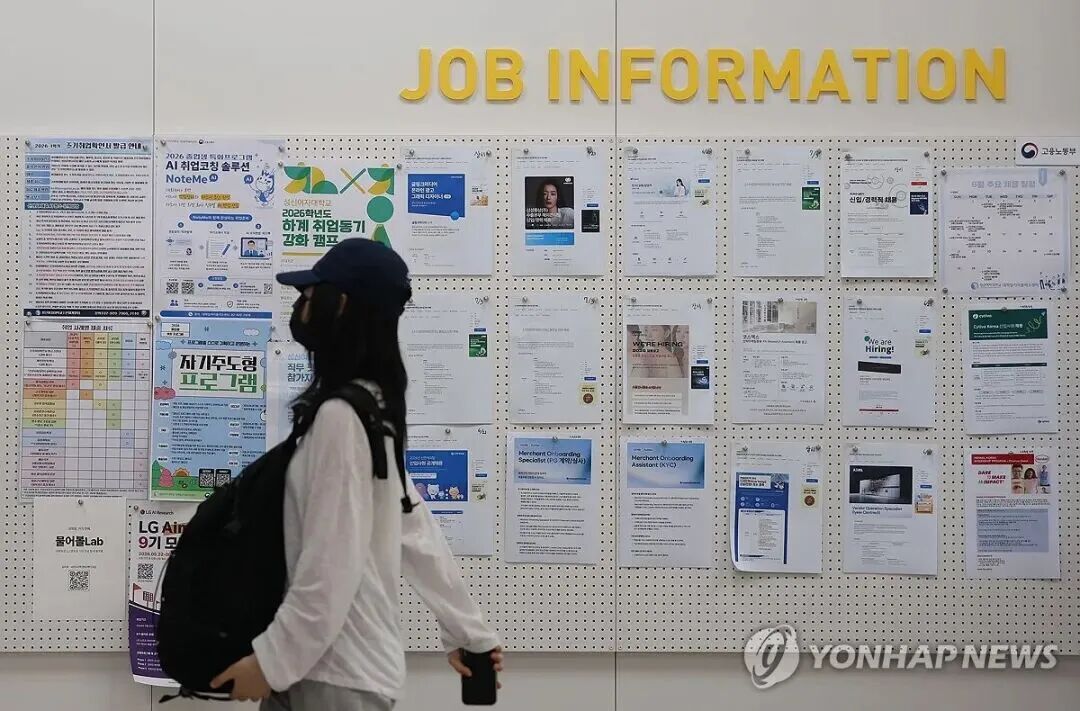
Image source: Yonhap News Agency
Looking back, South Korea wins because of a kind of "certainty anxiety." It does not define models like the United States, nor does it have China's market depth, so it bets its chips on the place least likely to be wrong, then uses the fan operations it excels at to turn AI into a content business, and finally penetrates AI into the daily life of every citizen.
But precisely because it wins on "certainty," it fears "uncertainty" more than anyone. With ten circuit breakers in a year, every swing in AI capital expenditure hits KOSPI first; excluding Samsung and SK Hynix, profit growth in the first half shrank from 348.5% to 11.78%—a country made bigger by AI is also destined to be repeatedly torn by the ups and downs of AI.
Is South Korea the first domino to be pushed over, or the first sample to be reshaped by AI? The answer is not in the index, but in those Koreans who treat AI as the "default option." They have bet their national fate, stock prices, and daily habits on the same coin—as for whether it lands heads or tails, the whole world is waiting for the answer.
-
![]()
Anthropic Gives AI Models an 'ID Card' That Even They Can't Forge
-
![]()
OFILM Reinvests in Zhongke Daojing to Drive TGV Technology into Semiconductor Packaging
-
![]()
At Least Eight Orders in a Single Year: Why Does This Optical Company Keep Receiving Repeat Orders?
-
![]()
Pupil Dilation Isn't About "Magnifying the Image"—It's About "Replicating the Exit Pupil": The Underlying Logic of Optical Waveguide Eyebox
-
![]()
When World Models Are No Longer a Selling Point, Is the Intelligent Driving Industry Entering the Era of Technology Delivery?
-
![]()
Beyond Smart Glasses, Meta Charts a New Course!
-
![]()
Over 4,000 Exhibitors and Six Attraction Strategies Across 31 Provinces: The CIIE Investment Opportunity List
-
[Insight] 2026 Global and China LDI Inner-Layer Photosensitive Circuit Ink Market Status and Major Enterprise Analysis