When World Models Are No Longer a Selling Point, Is the Intelligent Driving Industry Entering the Era of Technology Delivery?
 11/10 2026
 506
From late 2025 to early 2026, the hottest concepts in the intelligent driving industry were undoubtedly world models and VLA. A new model architecture or a new technical route was enough to become the centerpiece of a company's demonstration of technical strength.
But recently, these two concepts seem to be gradually cooling down. Rather than discussing what new model has been launched, more and more companies are talking about how models enter training, simulation, and validation, and how they ultimately become real capabilities on mass-produced vehicles.
This is not actually a slowdown in technological innovation—rather, competition in intelligent driving is entering a more demanding stage. Now that world models and VLA have become mandatory options for implementing intelligent driving, what the industry needs to solve next is whether this set of models actually makes cars drive better.
01 Why Do New Models No Longer Equal New Capabilities?
Over the past few years, new technical routes have continued to emerge in the intelligent driving industry.
End-to-end changed the development approach of traditional modular systems, world models allowed systems to begin attempting to understand and infer dynamic environments, and VLA further explored the connection between visual understanding and driving decisions.
When a technology first appears, the model itself is part of the competitiveness. Whoever proposes a new architecture first and demonstrates new capabilities first can gain more attention.
But as more and more companies enter the same technical route, it becomes difficult to directly equate model architecture with actual driving capability.
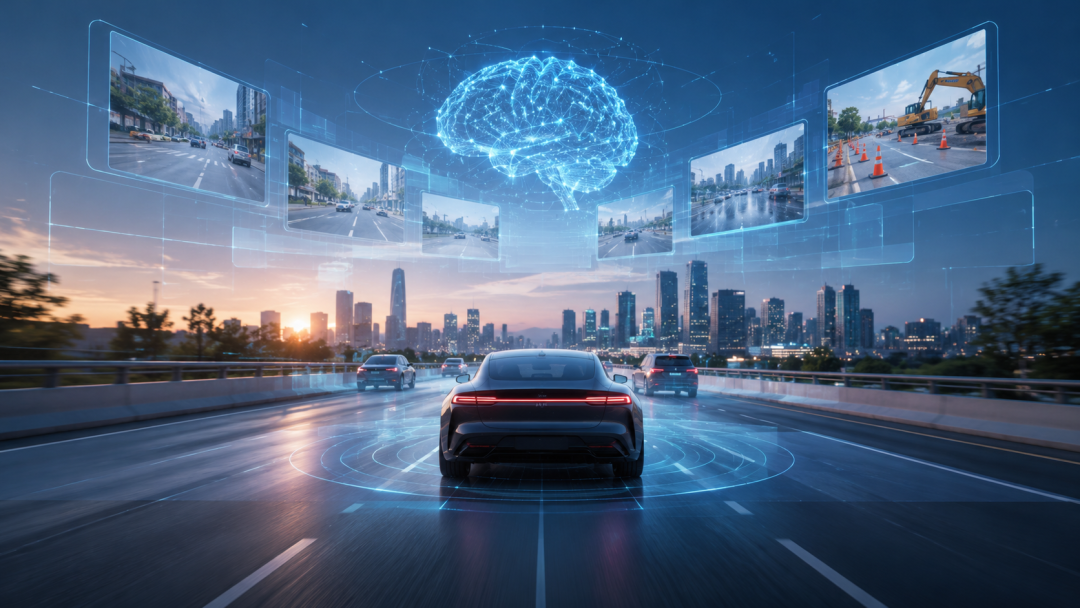
Image source: Internet
A company's use of a world model does not mean the vehicle is necessarily better at handling complex intersections; a VLA being able to understand more semantic information does not mean that this information has been stably translated into reasonable driving actions.
The model is only the starting point of R&D. From model training to data supplementation, simulation testing, and then real-vehicle validation and mass-production deployment, every link in between affects the final result.
In April this year, when XPeng released the X-World world model technical report, the world model had already been used for training, data generation, and closed-loop validation of the second-generation VLA.
Compared with separately demonstrating what a model can generate, this shift is closer to the actual needs of the current industry.
For R&D teams, whether a model can predict the future is only the first step.
More importantly, can it be used to discover problems, construct more test scenarios, and help determine what exactly has changed in the vehicle's driving performance after a model update?
When more and more companies have similar technical directions, comparing model names and architectures alone makes it difficult to judge whose actual capabilities are stronger. In the end, it still has to come back to the vehicle.
02 How Do You Prove That the Model Has Improved?
When large models enter the intelligent driving industry, one problem they truly have to face is how to prove that the model is smart enough. Traditional intelligent driving systems consist of multiple modules such as perception, prediction, planning, and control.
When a problem occurs in a certain link, R&D personnel can analyze relatively clearly where the problem lies and then adjust the corresponding module. The development of end-to-end models has changed this R&D approach.
More and more capabilities are being placed into a unified model and training system, and the changes brought by a single training session may simultaneously affect the vehicle's behavior across multiple scenarios.
To improve passage capability at complex intersections, the R&D team can only supplement more relevant data and retrain the model.
After the update, the vehicle's performance at such intersections has indeed improved, but the overall behavior of the model may also change accordingly.
Will scenarios that were originally relatively stable be affected? Will the vehicle's judgment of risk become more conservative or more aggressive? Will an optimization targeting a local problem introduce new problems in other scenarios?
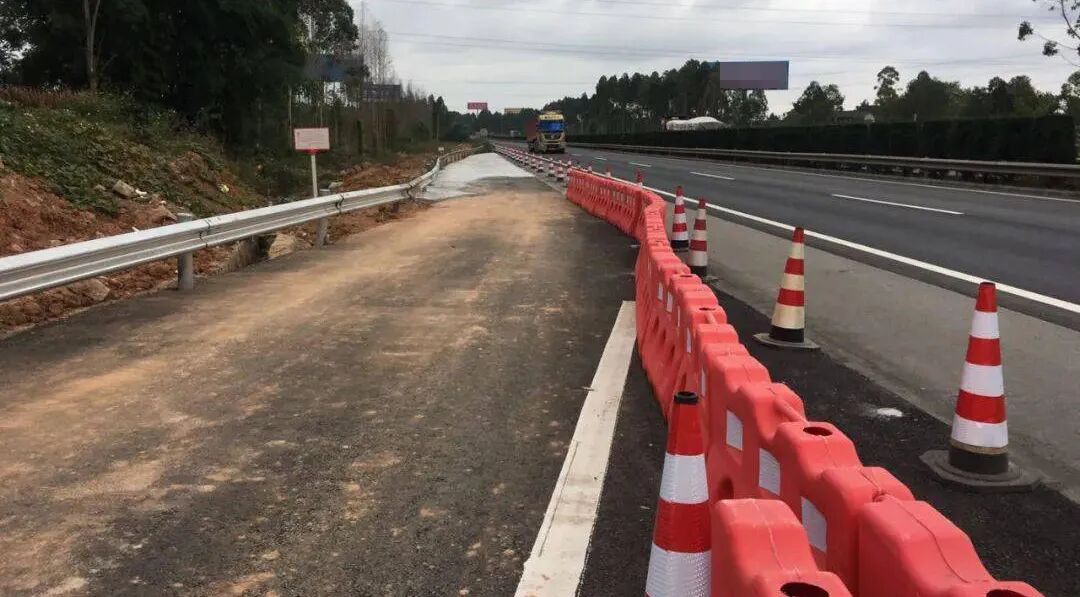
Image source: Internet
This is also the increasingly obvious difference between large-model intelligent driving and traditional software development. When traditional software adds a new function, it can be tested relatively independently.
But the capabilities in a driving model are interconnected, and it is difficult to simply split an update into several parts that do not affect one another.
Therefore, iteration of intelligent driving models cannot only look at whether new capabilities have been added, but must also judge whether the system as a whole has become better after this update. A vehicle successfully passing through a complex construction section once only shows that the model has the ability to handle this scenario.
After truly entering mass production, what matters more is whether the vehicle can still maintain reasonable judgment when the position of construction barriers changes, surrounding vehicles increase, or even the road environment is completely different.
Solving one problem without creating new ones is a requirement that becomes harder to meet as models become more complex.
In the future, the gap between companies may not only lie in whether models can learn new capabilities, but also in whether companies have sufficiently effective tools and systems to know what exactly has changed after each model update.
This is also why simulation and validation are becoming increasingly important in the new generation of intelligent driving R&D.
03 World Models Allow Problems to Be Repeatedly Verified
Real-road testing is the most effective means of discovering problems, but it is not suitable for solving all R&D problems.
If a test vehicle shows hesitant behavior at a construction section today, even if this problem is solved later, the next time it passes through, the position of the barriers, surrounding vehicles, and road environment may be completely different.
For some low-frequency scenarios, companies may even need to wait a long time before encountering a similar problem again.
In other words, after R&D personnel discover a problem on a real road, they cannot immediately obtain enough samples to determine whether the model made an accidental error or has a more general capability deficiency.
The emergence of world models provides a new R&D approach. After a vehicle discovers a problem on a real road, the R&D team no longer has to wait for similar scenarios to appear again, but can actively add variations around this problem.
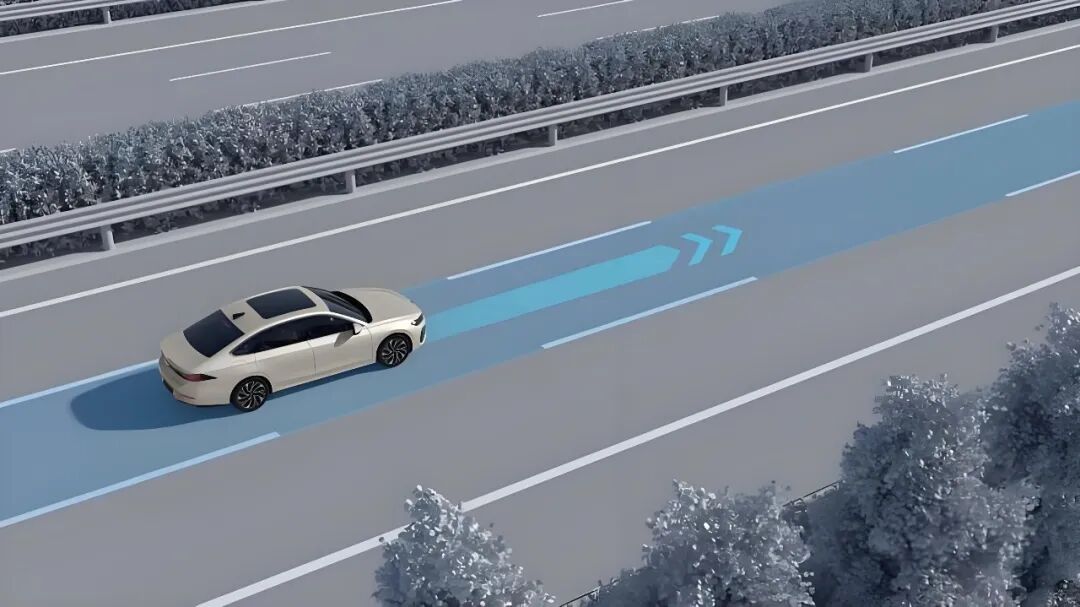
Image source: Internet
If the construction area expands, how will the vehicle handle it? If a vehicle suddenly cuts in nearby, can the original decision still hold? After the road boundary changes, will the model become hesitant again?
In this way, a problem accidentally discovered on a real road can gradually be expanded into a set of scenarios that can be repeatedly tested.
Real roads are still the ultimate environment for testing intelligent driving capability, and it is difficult for world models to fully cover all the complex and random changes in the real world, but world models can change the way R&D personnel handle problems.
Now, companies can start from a real problem, actively change surrounding conditions, and observe the model's performance under different situations.
For increasingly complex driving models, this capability will become more and more important. Because what intelligent driving truly needs to solve is never a single fixed scenario, but a class of constantly changing problems.
04 The Next Stage Is About the Ability to Make Continuous Progress
The decline in the popularity of world models and VLA does not mean that the importance of these technologies has decreased. On the contrary, after they begin to enter training, simulation, and validation processes, competition enters the stage where real deployment truly matters.
In the future, different companies may adopt similar model architectures and may also have increasingly similar computing power and training data. But the final driving performance may still differ greatly.
And these gaps come from the R&D system beyond the model. After a company discovers a problem with a vehicle on a real road, if it can only wait for more data to accumulate before training and road testing, the speed of model improvement will be limited by real roads.
If another company can quickly locate the problem, construct more variation scenarios around the problem, verify different model performances through simulation, and then return to real roads for confirmation, the entire iteration process may be faster.
From this perspective, the next stage of intelligent driving competition is shifting from individual models to the entire R&D closed loop.
Who can discover problems faster, who can expand problems more effectively, and who can more accurately judge changes after model updates will all affect the speed at which vehicle capabilities improve.
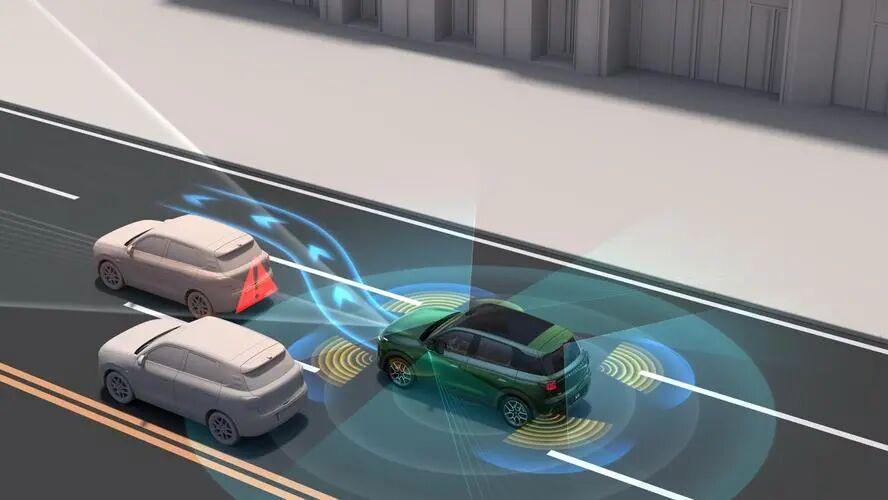
Image source: Internet
In the past, the industry found it easier to compare who was the first to release a new model and whose model scale was larger. Next, competition will become: what problem did a model update actually solve? Can the new capability be stably repeated in more scenarios?
After solving one problem, will it bring new problems in other scenarios? Can these changes ultimately remain stable on mass-produced vehicles? These questions are less topical than the name of a new model, but they determine whether technology can ultimately become product capability.
World models and VLA will continue to develop, and new model architectures will continue to emerge. But as more and more technologies enter the same R&D system, the leading advantage brought by a single release of a new technology may become increasingly insufficient.
This may also be why world models and VLA have recently ceased to be as frequently emphasized in promotion as they were a few months ago.
#AutonomousDriving #WorldModels #VLA
-
![]()
Anthropic Gives AI Models an 'ID Card' That Even They Can't Forge
-
![]()
OFILM Reinvests in Zhongke Daojing to Drive TGV Technology into Semiconductor Packaging
-
![]()
At Least Eight Orders in a Single Year: Why Does This Optical Company Keep Receiving Repeat Orders?
-
![]()
Pupil Dilation Isn't About "Magnifying the Image"—It's About "Replicating the Exit Pupil": The Underlying Logic of Optical Waveguide Eyebox
-
![]()
When World Models Are No Longer a Selling Point, Is the Intelligent Driving Industry Entering the Era of Technology Delivery?
-
![]()
Beyond Smart Glasses, Meta Charts a New Course!
-
![]()
Over 4,000 Exhibitors and Six Attraction Strategies Across 31 Provinces: The CIIE Investment Opportunity List
-
[Insight] 2026 Global and China LDI Inner-Layer Photosensitive Circuit Ink Market Status and Major Enterprise Analysis