Doubao Powers Up! Seres Unveils New AIVA Car—Is the RMB200,000 Market Set for a Shake-Up?
 10/09 2026
 503
503
AI Takes the Wheel Before the Car Hits the Road
About four months ago, Saidoo Technology hosted the AIVA brand launch event, unveiling the brand's inaugural mass-produced model, the AIVA ME7. In late September, the AIVA ME7 made its global debut at the Château de Champ-de-Mars in Paris, France.
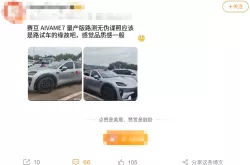
Recently, several automotive bloggers have shared clear, uncamouflaged spy shots of the production-ready AIVA ME7, signaling its imminent market arrival. Coupled with the recent buzz around AITO's 'separation' from Huawei (or more precisely, the launch of a new partnership), the AIVA ME7, backed by Seres' stake in Saidoo Technology, has naturally drawn increased attention.
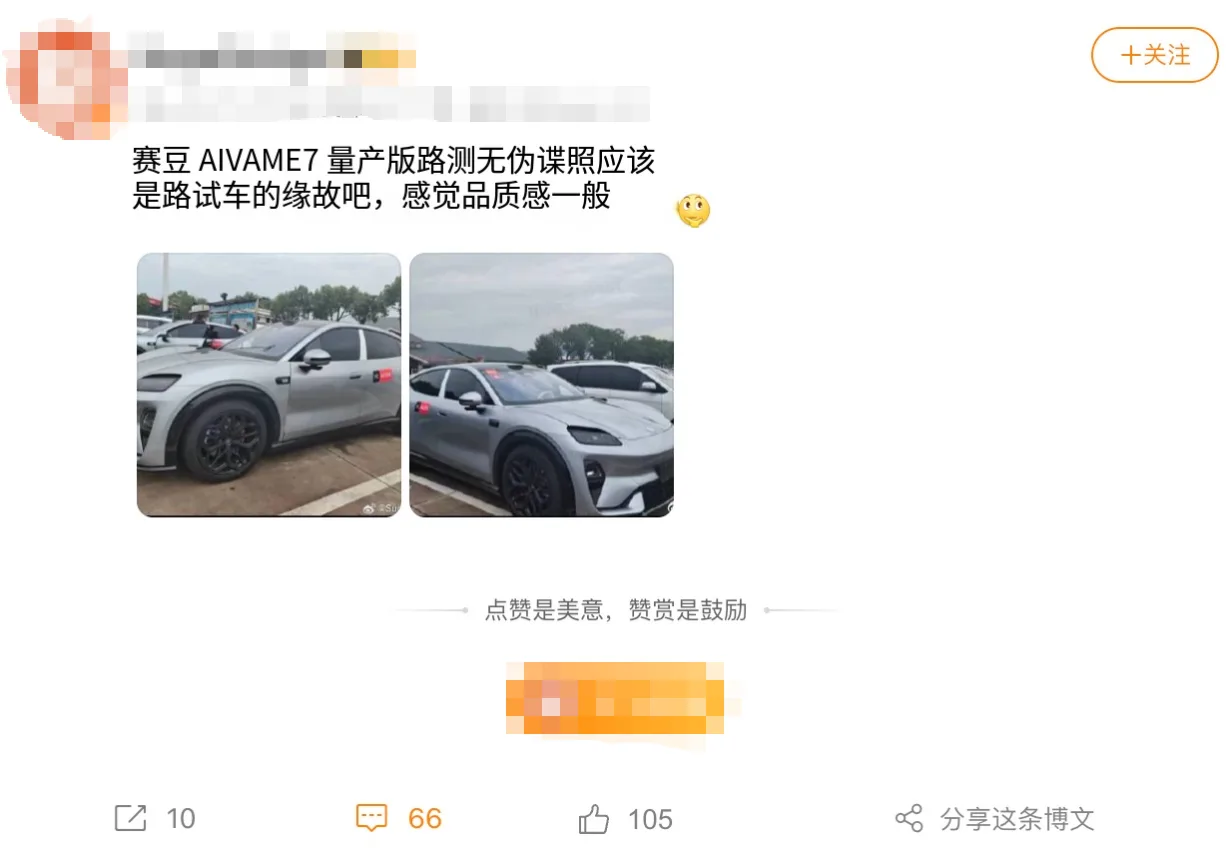
(Image Source: Weibo Screenshot)
For Seres, the AIVA ME7 is more than just a car; it's the answer to the question, 'Can Seres remain competitive after forging new partnerships with Huawei?'
Seres Strikes Out on Its Own, Without Huawei's Glow
From Dongfeng Sokon to a key player in Harmony Intelligent Mobility, Seres has undergone a remarkable transformation, thanks to Huawei's brand and technological support. Despite AITO's impressive sales, its focus remains solely on the SUV market within the RMB200,000 to RMB600,000 price range. An automaker overly dependent on a single supplier with a limited product lineup may face a significant sales slump during product refresh cycles, which is detrimental to its long-term development.
Therefore, Seres has been striving to expand its market reach through other 'de-Huaweified' brands. Blue Electric, the forerunner of Saidoo Technology, was one such endeavor by Seres.
Models under the Blue Electric brand utilize batteries from companies like BYD and Guoxuan High-Tech, with an intelligent driving system based on Horizon Robotics' solutions and only the infotainment system incorporating Huawei's HiCar. Around 2024, as AITO's car sales soared, Blue Electric's popularity and sales also surged, with cumulative deliveries exceeding 30,000 units that year.
At that time, Dianchetong visited a Blue Electric store and observed that while its popularity didn't match that of brands like AITO or Xiaomi, it surpassed many joint-venture brands, with numerous customers engaging with sales staff.
However, when Dianchetong revisited niche brand stores in June this year, it discovered that the Blue Electric store visited two years ago had been replaced by a Geely Galaxy store. Blue Electric had opened a smaller store about three to four kilometers away, but it was devoid of customers, and its overall car sales had been declining since their peak in 2024.
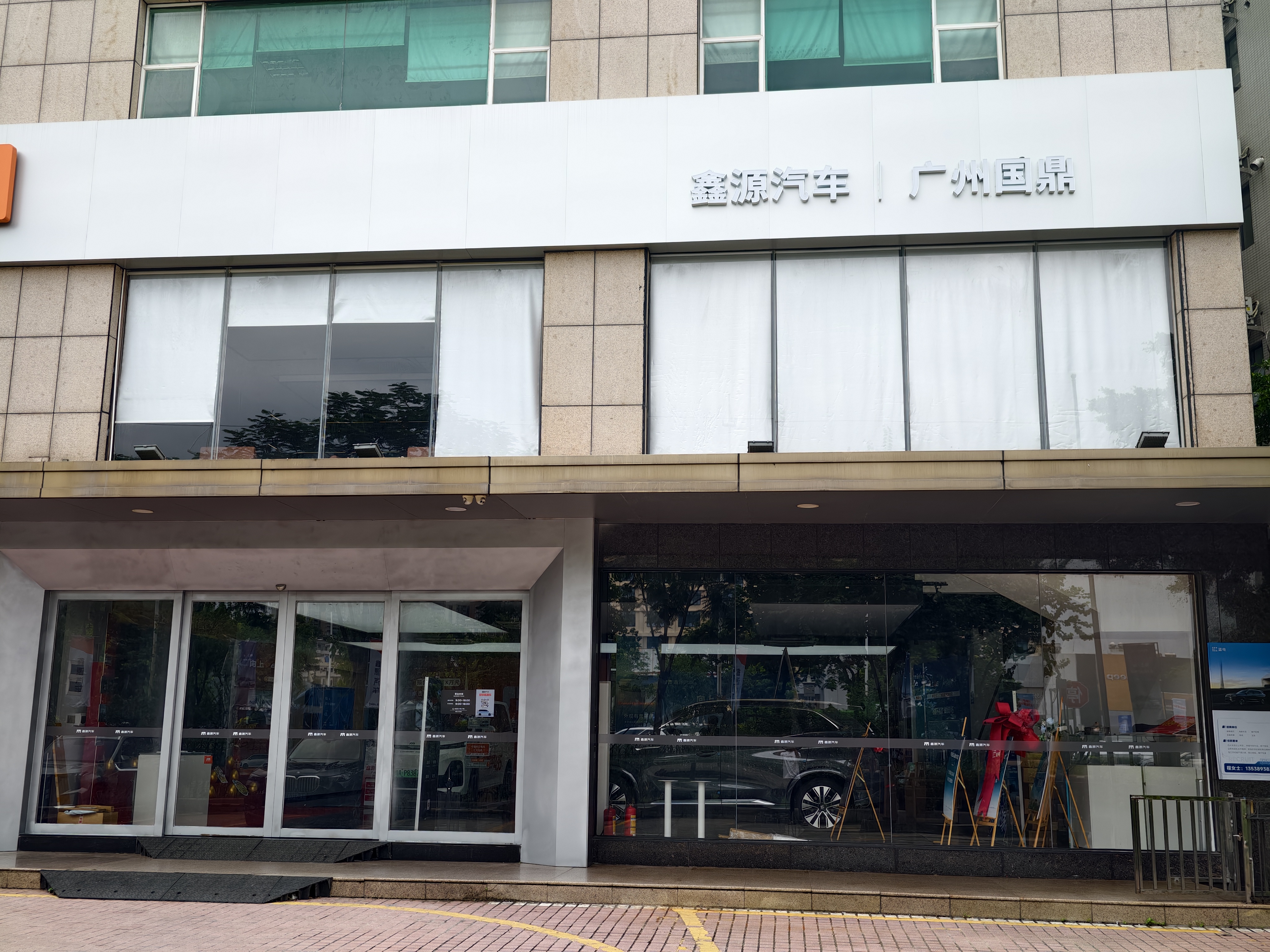
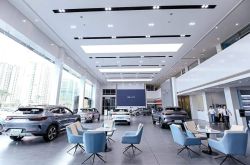
(Image Source: Dianchetong Photography)
When Seres launched the Blue Electric brand, the plan was for AITO to focus on the high-end SUV market within the RMB200,000 to RMB600,000 range, while Blue Electric would target the new energy SUV market in the RMB100,000 to RMB150,000 range, with one 'feasting' and the other 'sipping.'
However, without Huawei's brand support and traffic entry points, the Blue Electric brand lacked market recognition and technological barriers, relying entirely on suppliers for batteries, infotainment systems, and intelligent driving. It struggled to compete with brands like BYD and Geely in the RMB100,000 to RMB150,000 SUV market, leaving only desolation after a brief surge in popularity.
Before the birth of AITO cars, Seres had no experience in researching, developing, producing, or selling luxury cars. Consumers who bought AITO cars did so not because of Seres, but because of Huawei's technological prowess in intelligent driving and intelligent cockpits, as well as its stringent product quality requirements, which were the core factors that convinced consumers to purchase AITO cars.
Ultimately, Seres failed to capitalize on the popularity and traffic generated by Huawei, and its insufficient research and development capabilities rendered the product advantages under the Blue Electric brand insignificant.
Independent brands that rely solely on hardware cost-effectiveness and lack unique intelligent labels will find it challenging to establish a foothold in the new energy vehicle (NEV) elimination race. Seres' restructuring of Blue Electric aims to abandon past models and create new labels while 'de-Huaweifying.'
Doubao Empowers Seres to Turn Car Robots into Reality
When Saidoo Technology and the AIVA brand first emerged, rumors circulated online that Saidoo Technology was a joint venture between Seres and ByteDance, marking ByteDance's formal entry into the automotive industry. This news was eventually denied by ByteDance, but it is confirmed that the AIVA brand is deeply collaborating with Volcano Engine, and its first model, the ME7, will feature the Doubao large model.
The AIVA brand's philosophy is 'AI Defines the Car: AI Comes First, Then the Car.' It leverages AI to explore user needs during product design and optimizes interactions through AI at the experience end, enabling new energy vehicles to independently understand user intentions and complete tasks assigned by users. Undoubtedly, AI is the label Seres has chosen for the AIVA brand.
When discussing AI cars, Dianchetong (ID: dianchetong233) first thinks not of Li Auto or XPeng, which view cars as the ultimate platform for embodied intelligence, but of the discontinued Jiyue Auto. Jiyue Auto, a joint venture between leading automaker Geely and AI giant Baidu, defined itself as a 'car robot,' focusing on super perception, high-level intelligent driving, and self-growth, aiming to transcend being a mere transportation tool and perform tasks as a 'robot.'
Jiyue Auto failed for two reasons: first, Baidu, as both an investor and a supplier, had inherent conflicts of interest, and despite several adjustments to the equity structure, the two sides never aligned on Jiyue's strategic priorities and investment thresholds from the outset; second, the products overly emphasized cutting-edge technological concepts while neglecting the real needs of home users.
The AIVA brand is different. ByteDance appears only as a supplier, with both sides engaging in deep collaboration, and the products are still led by Seres. The Doubao large model developed by Volcano Engine is a top-tier AI large model in China, capable of providing comprehensive AI support for the AIVA brand.
The challenge lies in the short window period for Saidoo Technology and the AIVA brand to establish an AI label. All automakers recognize the importance of AI for future driving and riding experiences and are deeply integrating AI with cars.
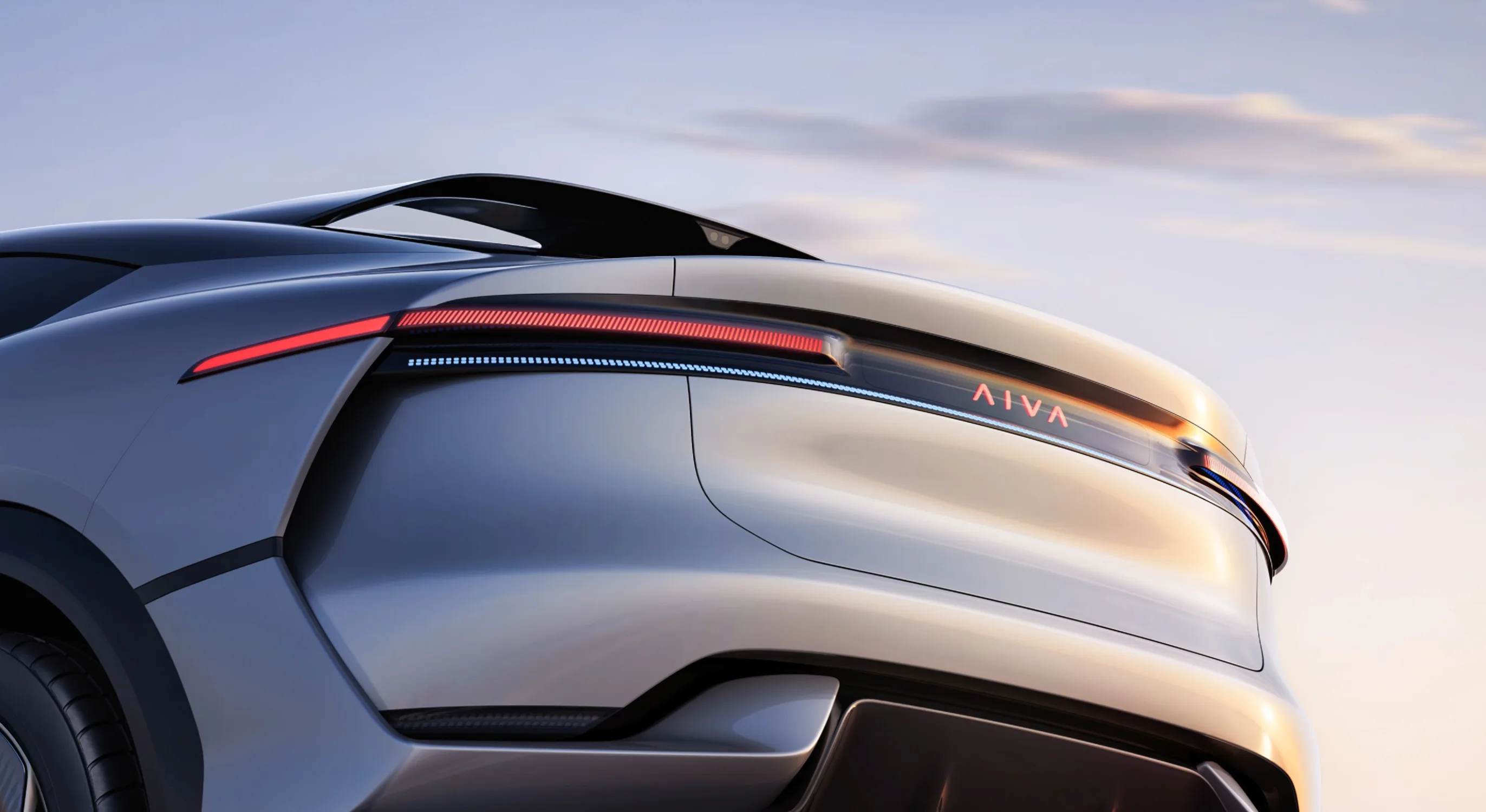
(Image Source: AIVA Official Website)
Xiao Yi in the Harmony cockpit is based on the Pangu large model and integrated with DeepSeek; XPeng's X-GPT large model, Tianji AIOS 6.0, and the second-generation VLA large model achieve cockpit-driving fusion, enabling the Master Agent to understand vague voice commands and execute tasks; BYD has introduced the onboard AI super intelligent agent Didi Xia and also integrated more than ten partner intelligent agents, allowing ticket booking, shopping, and entertainment to be controlled through voice commands.
Through Doubao's AI capabilities and ByteDance's application ecosystem, the AIVA ME7 may lead competitors in AI experience for a certain period but will find it difficult to widen the gap with leading brands. With NEVs gradually incorporating self-developed or third-party large models, onboard AI is rapidly transforming from a differentiated selling point into an industry standard, leaving AIVA with a very short window period.
The good news is that after collaborating with Volcano Engine, the AIVA brand is expected to enhance its promotional capabilities through multiple media platforms under ByteDance, mitigating the decline in brand popularity after 'de-Huaweifying.' Of course, independently establishing sales channels, after-sales systems, and user operation systems remains a challenge for Saidoo Technology, requiring significant upfront investment.
The core issue for the AIVA brand is still Seres' weak foundation. Before partnering with Huawei, Seres had been incurring losses for an extended period and lacked resources to research and develop new energy vehicles. After collaborating with Huawei, Seres achieved profitability in 2024 and 2025 but returned to losses in the first half of this year. The brief profitability was insufficient for Seres to accumulate enough technological foundation, and the AIVA ME7's cockpit and intelligent driving still rely on suppliers like Volcano Engine and Yuanrong Qixing.
In May this year, Saidoo Technology completed a RMB6.671 billion capital increase and share expansion and separated its finances from Seres, isolating risks. Even if Saidoo AIVA ultimately fails, it will not impact Seres. With this insurance, the AIVA brand can afford to be bolder in trial and error.
AI Cars Accelerate Development, AIVA Offers Another Solution
AITO represents the 'Huawei Solution,' where automakers, as manufacturing carriers, introduce a full suite of intelligent solutions from external tech giants, leveraging mature tech brands, the Harmony ecosystem, and Qiankun Intelligent Driving to swiftly penetrate the high-end market. AITO's high sales have validated the feasibility of this solution and have also made automakers like Chery, SAIC, JAC, and BAIC eager to join Harmony Intelligent Mobility.
Saidoo AIVA is another independent path actively explored by Seres in the era of intelligence. It retains Seres' refined vehicle manufacturing, supply chain, and factory engineering capabilities but steps out of Huawei's technological system, partnering with industry chain players like Volcano Engine, Yuanrong Qixing, and CATL, using AI interaction as the brand's core to create an independent brand, independent channels, and an independent product system.
Unlike Blue Electric, the AIVA brand does not continue to focus on the fiercely competitive RMB100,000 to RMB150,000 SUV market but instead targets the more high-end RMB200,000 market. AIVA is not a backup for AITO; its value lies in supporting Seres to complete a diversified layout and bid farewell to dependence on a single brand and a single technological route.
After losing Huawei's endorsement and technological empowerment, AIVA faces even more severe challenges than AITO. Although partners like Volcano Engine, Yuanrong Qixing, and CATL possess strong technological capabilities, they always fall short of Huawei in terms of brand influence and sales channels. It is foreseeable that initial sales of the AIVA ME7 will find it difficult to match AITO's.
In the long run, Seres has accumulated design and manufacturing experience in luxury new energy vehicles and steadily increased its popularity through long-term cooperation with Huawei and the success of the AITO brand. Regardless of whether AIVA succeeds, it is now standing in the spotlight of the automotive industry.
The lesson from Jiyue Auto reminds AIVA that, with AI as its label, the key is whether it can transform hype into functions that users can actually experience. Only by doing so can the AIVA ME7 seize the window period and become a hit.
Source: Leikeji
All images in this article are from the 123RF royalty-free image library. Source: Leikeji
-
![]()
Chery’s Globalization 3.0: What Exactly Does It Entail?
-
![]()
Why Does Apple Opt for Aluminum in Its Phone Cases? Beyond Lightness and Heat Dissipation
-
![]()
Why Is the Time Allotted for Driver Takeover More Critical When the Intelligent Driving System Disengages?
-
![]()
Capturing the Victoria Harbour Fireworks with iPhone 18 Pro Max: A Glimpse into Apple's New Imaging Philosophy
-
![]()
Final Ruling: Domestic Auto Market Fails to Capitalize on Traditional 'Golden September' as Sluggishness Persists
-
![]()
Globalization 3.0: Zhang Guibing Faces His Ultimate Challenge
-
![]()
ChatGPT Teaches Me Mahjong! OpenAI’s Smart UI Test: Revolutionizing AI Interaction
-
![]()
Doubao Powers Up! Seres Unveils New AIVA Car—Is the RMB200,000 Market Set for a Shake-Up?