Final Ruling: Domestic Auto Market Fails to Capitalize on Traditional 'Golden September' as Sluggishness Persists
 10/09 2026
 512
512
September and October have traditionally marked the zenith of activity for the domestic auto market, giving rise to the moniker 'Golden September and Silver October.' Yet, this year's 'Golden September' has proven to be a letdown, with the domestic auto market continuing to languish. The once-prominent seasonal surge associated with 'Golden September' has all but vanished, and consumers are now adopting a cautious, wait-and-see stance.
In September, domestic automakers rolled out a number of high-profile new models, but the overall sales impact was muted. Relevant statistics reveal that while domestic auto sales experienced a slight uptick on a month-on-month basis, they remained notably weaker year-on-year, with a decline surpassing 20%. Fortunately, the overseas market economy is thriving, providing automakers with a crucial outlet to counterbalance the sharp downturn in domestic sales.
The National Day holiday has just concluded, and the China Association of Automobile Manufacturers has yet to release the September production and sales figures for domestic automobiles. However, projections from relevant agencies suggest that domestic passenger vehicle sales saw a marginal month-on-month increase but a substantial year-on-year decline of 24.6%.
The domestic passenger vehicle sales base was notably high last year, and consumers are now holding out for deeper discounts during the National Day holiday period. Despite automakers introducing new models and ramping up promotional efforts, the market stimulation has been limited.
More alarmingly, the dealer inventory warning index has climbed to 63.2%, signaling elevated inventory levels and mounting inventory pressure. Over 80% of dealers report that this year's peak season pales in comparison to previous years.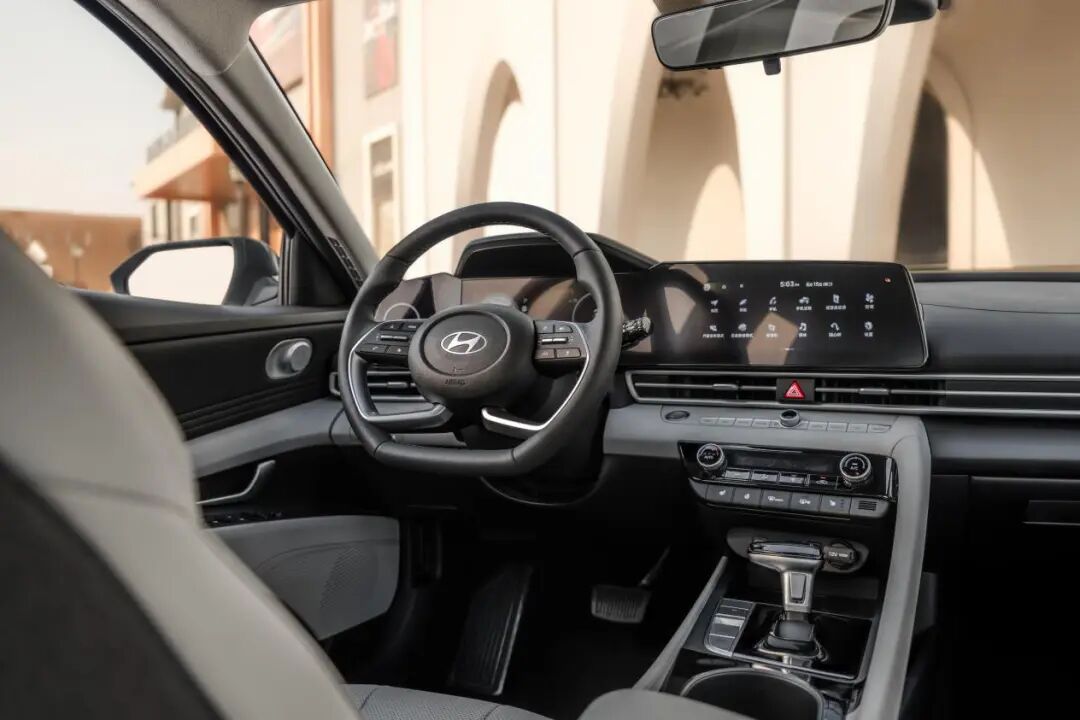
Compounded by soaring oil prices, the market for fuel-powered passenger vehicles has witnessed an accelerated decline this year. Some analysts estimate that the penetration rate of domestic new energy passenger vehicles reached approximately 65% in September, with fuel-powered vehicles plummeting by over 40% year-on-year and experiencing an even steeper production decline. The market share of joint-venture fuel-powered vehicle brands continues to dwindle, hampered by sluggish product iteration and evident intelligence deficiencies, making it challenging to secure replacement orders.
In September, domestic automakers unleashed a barrage of new models and intensified discounts, but fierce competition and price wars persisted in eroding profits.
A slew of new models were introduced on the cusp of the Mid-Autumn Festival and National Day, in a bid to invigorate the market. The terminal market has shifted away from relying solely on straightforward cash discounts, instead employing a mix of incentives such as trade-in subsidies, financial discounts, and insurance packages. Nevertheless, the diminishing marginal effect of price reductions has led to orders surging briefly before swiftly declining. The profit margins of automakers and dealers continue to be squeezed, and price competition has become the norm.
In September, the domestic automotive brand landscape continued to diversify, with overseas markets emerging as the primary growth engine. Data released by automakers indicates that BYD's domestic and overseas sales reached 463,500 units in September, setting the market pace. Chery and Geely leveraged overseas exports to offset domestic pressures. Numerous automakers experienced a decline in domestic sales but a significant uptick in exports, with overseas markets becoming a vital growth trajectory. Small and medium-sized brands are facing immense pressure, with the sales gap widening further and industry consolidation accelerating.
Nearly one-third of October has elapsed. Some analysts anticipate that with a plethora of newly launched models hitting the market, a sales surge is on the horizon. Although the 'Golden September and Silver October' phenomenon may have faded this year, October's data is expected to outperform September's. It is projected that full-year auto sales, both overall and domestic, are likely to register negative growth.
(End)
-
![]()
Chery’s Globalization 3.0: What Exactly Does It Entail?
-
![]()
Why Does Apple Opt for Aluminum in Its Phone Cases? Beyond Lightness and Heat Dissipation
-
![]()
Why Is the Time Allotted for Driver Takeover More Critical When the Intelligent Driving System Disengages?
-
![]()
Capturing the Victoria Harbour Fireworks with iPhone 18 Pro Max: A Glimpse into Apple's New Imaging Philosophy
-
![]()
Final Ruling: Domestic Auto Market Fails to Capitalize on Traditional 'Golden September' as Sluggishness Persists
-
![]()
Globalization 3.0: Zhang Guibing Faces His Ultimate Challenge
-
![]()
ChatGPT Teaches Me Mahjong! OpenAI’s Smart UI Test: Revolutionizing AI Interaction
-
![]()
Doubao Powers Up! Seres Unveils New AIVA Car—Is the RMB200,000 Market Set for a Shake-Up?