Bridging the Gap: From Understanding to Safely Executing Intelligent Driving Commands
 10/26 2026
 577
When a driver simply says, 'Overtake the car ahead,' what should an intelligent driving system do?
At first glance, this seems like a straightforward command.
However, for the system, it's far more complex than just recognizing the word 'overtake.' It must simultaneously evaluate several factors: Is overtaking feasible in the current lane? Is there adequate space in the adjacent lane? What is the state of surrounding vehicles? And most importantly, is the maneuver safe and how should it be executed?
A single natural language instruction, in essence, embodies a complete driving decision-making process.
In September 2026, Changan Automobile unveiled its Tianshu Pilot, publicly introducing a multimodal large model that integrates visual and voice inputs for interactive navigation, supporting natural language instructions and driving behavior memory.
Officials revealed that the solution leverages an end-to-end large model trained on over 20 million high-quality data segments.
This leads to a crucial question: When a driver expresses a driving intention in a single sentence, can the intelligent driving system truly translate that understanding into safe execution?
01 Voice Instructions: The Gateway to Intelligent Driving
Understanding Driving Intentions: The First Step
Traditional in-car voice interaction typically handles tasks like setting navigation destinations, adjusting air conditioning temperature, or controlling music playback, where instructions generally correspond to clear-cut functions.
Interactive navigation, on the other hand, deals with dynamic driving tasks. The same instruction can lead to different driving behaviors depending on road conditions.
For instance, when a driver says, 'Stay as far to the right as possible,' on a multi-lane road, it might indicate a preference for the rightmost lane. Near a highway exit, it could relate to the need to enter the ramp.
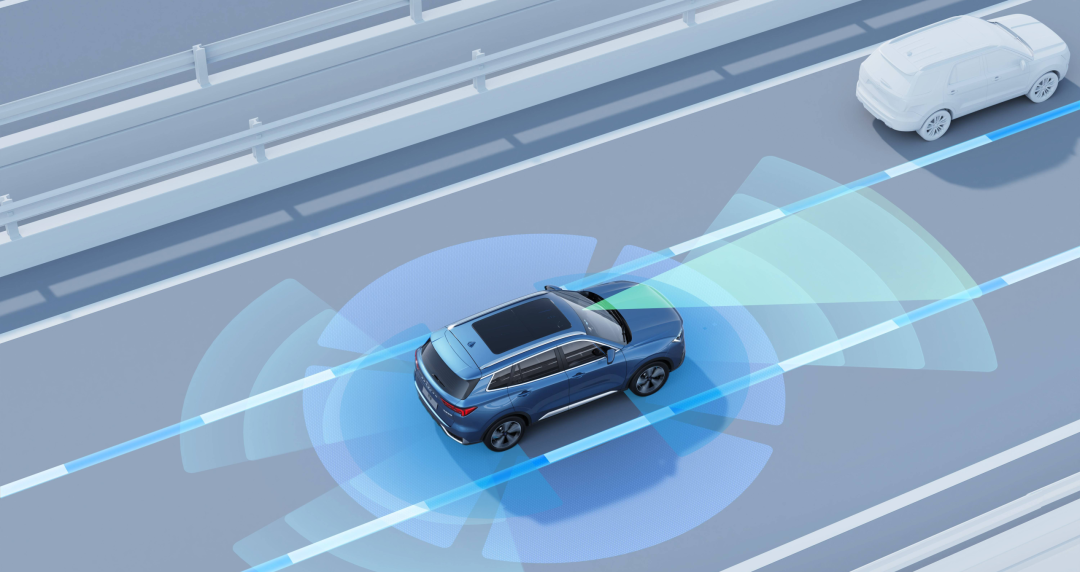
Image source: Internet
However, if the right lane is obstructed by construction or occupied by a parallel-driving vehicle, the system cannot blindly change lanes to the right based solely on this instruction.
The system must combine language expression with contextual cues to ascertain the driver's goal. It must then assess whether the goal can be safely executed based on current speed, lane, navigation route, road structure, and the state of surrounding traffic participants.
These two aspects—understanding intention and ensuring safety—are interrelated but distinct. Understanding the driver's intention does not equate to confirming that the corresponding action is safe and feasible.
From a technical standpoint, natural language provides driving goals or preferences, while visual and other sensors offer information about the vehicle's current environment.
The system must fuse these two types of information to form driving decisions that align with road conditions. Language understanding alone cannot substitute for environmental perception, nor can it directly verify the safety and feasibility of a driving action.
Changan publicly introduced its end-to-end large model and multimodal interaction capabilities that integrate visual and voice inputs. However, multiple sources consulted by the author have not fully disclosed the internal division of these functions or how information is transmitted.
Therefore, it cannot be simply assumed that the system employs a serial architecture where an independent language model parses instructions and a separate driving model executes them. Regardless of the internal model organization, driving instructions must ultimately be constrained by real-time environmental and safety conditions.
02 From Vague Instructions to Driving Actions: What Judgments Are Needed?
Extending natural language vehicle control to vague requests like 'Find a place to park up ahead' complicates the problem further.
The system must determine whether the driver intends to temporarily stop, find a parking lot, or stop after reaching a certain location.
Different goals correspond to different candidate locations and execution methods.
Even if a space appears visually open, it cannot be assumed that parking is permitted there or that the vehicle can safely enter.
After ascertaining the goal, the system must also consider road structure, traffic rules, and the movement of pedestrians and other vehicles to filter feasible parking locations.
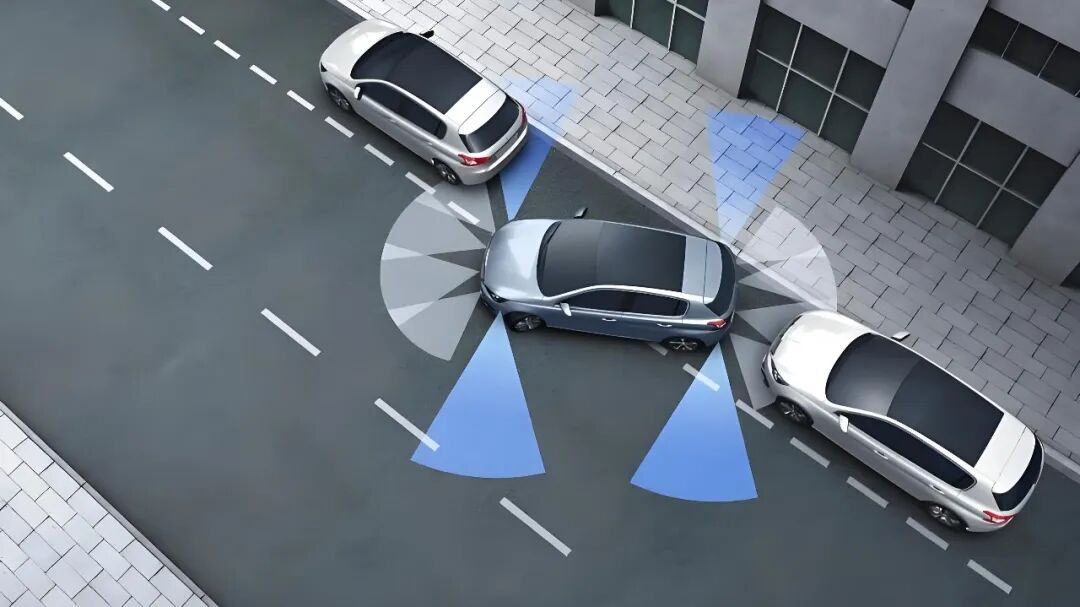
Image source: Internet
If a lane change or entry into a roadside area is required, the system must also assess whether the operation can be performed safely and plan how the vehicle will reach the target location.
During execution, the surrounding traffic state may continue to evolve, necessitating adjustments to the originally feasible path.
If no suitable parking location is found, the system should not force a stop just to fulfill the language instruction. Instead, it should continue driving, prompt the driver, or request further confirmation. This decision must be based on the vehicle's actual functional boundaries, interaction design, and current road conditions, and cannot be uniformly assumed without considering product implementation.
Thus, natural language vehicle control encompasses tasks at different levels, including intention understanding, environmental perception, behavior decision-making, trajectory planning, and vehicle control.
The internal implementation of actual systems may not strictly adhere to these stages in a serial manner, but language understanding alone is insufficient to ensure safe driving.
03 Driving Behavior Memory: Enhancing Natural Interactions, But Not Replacing Real-Time Judgment
The introduction of Changan's Tianshu Pilot also highlights driving behavior memory.
This capability allows natural language interactions to build upon previous exchanges, rather than starting from scratch each time. Drivers may have relatively stable driving preferences. If the system can utilize this information within an appropriate range, it can reduce repetitive communication.
For example, a driver may prefer smooth acceleration and deceleration or habitually adjust lanes in advance for navigation routes. These can serve as potential clues for understanding user needs.
It should be noted that currently available public information does not fully elucidate what specific information Changan's driving behavior memory records, how it is updated, or how it participates in real-time decision-making.
Therefore, these examples can only be used to illustrate possible application directions and cannot be regarded as confirmed product features.
However, even if the system understands user preferences, it cannot treat them as direct driving commands.
Just because a driver usually prefers to drive on the right does not mean the right lane should always be chosen. When encountering construction, congestion, or approaching an exit, the system still needs to make judgments based on the current environment.
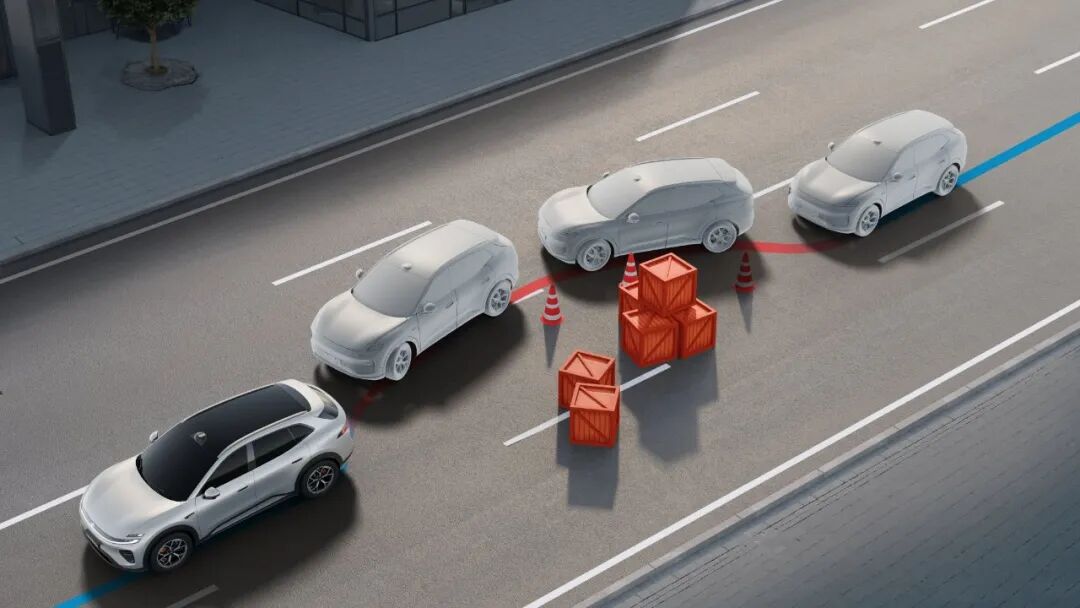
Image source: Internet
Conflicts may also arise between temporary instructions and long-term preferences. For example, a driver may usually prefer smooth driving but once request to overtake the car ahead as quickly as possible.
The system must judge the specific meaning and executable conditions of this instruction rather than simply converting 'as quickly as possible' into more aggressive acceleration or lane-changing actions. The role of driving behavior memory is to assist the system in better understanding the driver, not to lower the safety requirements for driving decisions.
Whether memory can be correctly invoked, how outdated preferences are updated, and how conflicting requirements are handled still need to be evaluated based on specific implementation and verification results.
04 The Real Test: Knowing When Not to Act, Even After Understanding
Natural language interaction expands the ways drivers can express their needs to intelligent driving systems but also increases the range of instructions the system must process.
Fixed commands often have clear operational boundaries, while expressions like 'find a place to park,' 'stay as far to the right as possible,' or 'drive smoothly' require contextual interpretation and may not have a single executable solution.
Evaluating interactive navigation cannot simply focus on whether the system can respond to a specific instruction. It must also examine whether the system can continuously make reasonable driving decisions when faced with vague expressions, continuous instructions, changing road conditions, and conflicting goals.
For instructions with insufficient information or unsatisfied execution conditions, the system must have appropriate ways to handle them rather than acting recklessly to satisfy the driver's expression.
For drivers, the ideal intelligent driving interaction is not about the system doing whatever is said but about the system understanding goals, assessing execution conditions, and adopting appropriate handling methods when conditions are not met.
Understanding instructions is just the starting point. Whether the system can translate instructions into safe and controllable driving behaviors on real roads is the true challenge that natural language interaction needs to address.
#AutonomousDriving #ChanganAutomobile #TianshuPilot
-
![]()
Alibaba Cloud and Volcano Engine Compete in Automotive Cloud Market
-
![]()
“After Testing K3.1 Pro Overnight, It Seems Kimi Is Truly Advancing Towards Embodied AI”, “K3.1 Pro, Speed, Task Execution, Allowance, Embodied AI”
-
![]()
BYD Registers Decline in Six Models, Xiaomi Undergoes Leadership Shuffle! Comprehensive Review of BEV Sales Rankings from January to September
-
![]()
DeepSeek’s Product Department Entrusted to a Quantitative Trader
-
![]()
After Two Decades of Anticipation, Wuhan and YMTC Face a Cooling A-Share Market
-
![]()
Why Are Automakers Pivoting to Battery Swapping Amid Rapid Advances in Ultra-Fast Charging?
-
![]()
From Lucent to NVIDIA: When History Echoes
-
![]()
Thermal Effects on Femtosecond Filamentation and Supercontinuum Generation in YAG Crystals: Insights from Ultrafast Nonlinear Optics Study No. 105