The Four Major EV-Exclusive "Black Technologies" That Gas Cars Can Only Dream Of
 11/10 2026
 392
What exactly are you buying an EV for?
When confronted with this question, most consumers immediately think of one thing—saving money. In reality, beyond lower running costs, EVs come with a host of built-in characteristics that gas cars simply cannot match. These exclusive features give EVs standout advantages across multiple dimensions—power, chassis, braking—and keep delivering new surprises to users in their daily driving lives.
● High-Power External Power Supply
▲ Representative models: AITO M9, Exeed ES, MG 07, etc. Whether pure electric or plug-in hybrid, these vehicles essentially all carry battery packs of dozens or even hundreds of kWh. Their primary job is, of course, to drive the car—but thanks to their large capacity and high power output, branching out into side ventures becomes far more convenient than with gas cars that rely on nothing more than a 12V battery.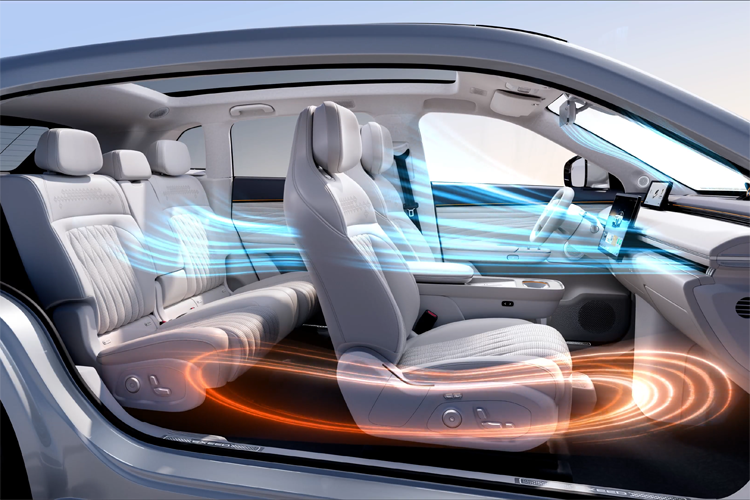
First, every powered configuration in the vehicle enjoys virtually unlimited power redundancy. The most intuitive example for users is undoubtedly the air conditioning. Whether cooling in summer or heating in winter, running the compressor or heat pump while sleeping is perfectly sufficient. There's no need to hold back the way you would in a gas car, worrying about carbon monoxide backflow posing a safety hazard.
Beyond that, today's domestic EVs are remarkably generous when it comes to premium features—refrigerators, TVs, plush sofas, heated/ventilated/massaging seats. Part of this is economies of scale driving costs down, but a fully adequate power supply system also gives manufacturers the confidence to stack on configurations. For gas cars, a 12V small battery rated at 200W is already considered conscientious—and it's barely enough to power the infotainment and intelligent driving systems. The high-end features mentioned above can only be used with confidence when the engine is running.
Finally, there's the EV-exclusive external discharge function. Lighting, mobile offices, rice cookers, induction cookers—these are all basic operations. If altitude sickness is a concern, you can even hook up a high-altitude oxygen concentrator. Conditions permitting, you can even wire it up for household power supply (V2G virtual power plant), directly shifting cheap nighttime valley electricity to daytime use. For gas cars, anyone who has experienced long-distance self-driving camping knows that a large-capacity portable power station is basically essential equipment.
● Millisecond Electronic Control & Kinetic Energy Recovery
▲ Representative models: Xiaomi SU7, BYD Han, etc. How do gas cars control power output? Traditional gas cars need to control the engine throttle opening via the accelerator to regulate intake air volume, combined with precise ECU-controlled fuel injection to further manage speed and output power. Among these, naturally aspirated engines still deliver adequate power response, while turbocharged engines also have to contend with turbo lag. Basically, after pressing the accelerator, it takes 1–2 seconds to raise the revs, and then clutch coupling/decoupling and transmission downshifting are needed to increase torque before power can reach the wheels. Just talking about it is exhausting.
By contrast, power transmission in EVs is far more direct and simple. Thanks to the motor's full-range output and low-speed high-torque characteristics, its rotor can reach the wheels directly through the reducer and half shafts. With high-frequency electronic control modules, the power output from the battery needs only millisecond-level response to be fed back to the wheels. This is a power response speed that gas cars can never achieve. In addition, when it comes to four-wheel drive, EVs no longer rely on components such as drive shafts and differentials. Front and rear decoupled dual motors can solve the torque distribution problem that has plagued four-wheel-drive gas cars for a century.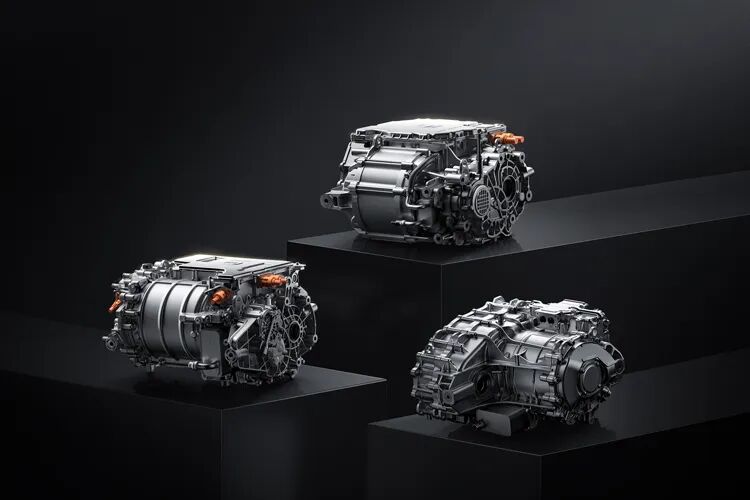
Beyond the revolutionary change in how power is delivered, kinetic energy recovery systems have also been taken to new heights on EVs. In essence, drive motors and generators are the same thing. Just as the battery drives the wheels through the motor, conversely, the wheels can charge the battery through the motor. Therefore, all EVs on the market support kinetic energy recovery, and some high-end cars can even achieve 500kW-level power generation. This not only improves range but also greatly benefits braking performance when combined with the braking system.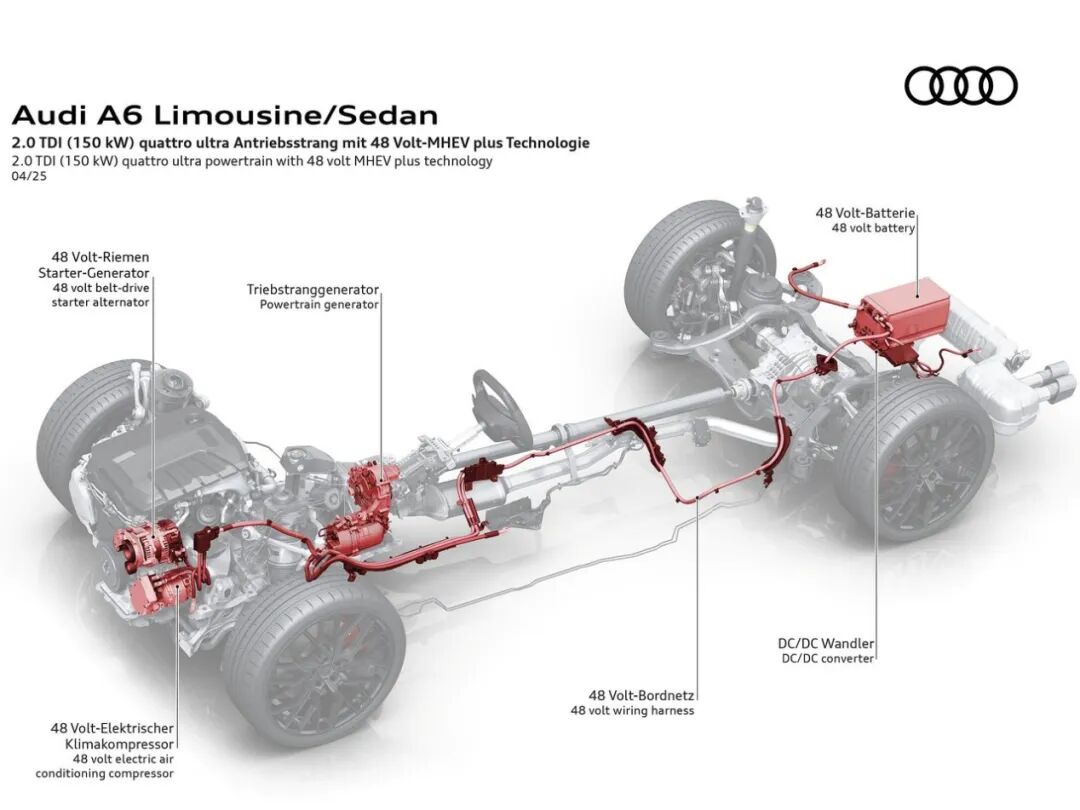
Of course, some blue-plate gas cars can also support kinetic energy recovery—mainly mild hybrids equipped with P0 or P1 motors, such as the Audi A5L, Mercedes-Benz C-Class, Cadillac XT5, etc. However, these cars use motors purely as assistance. Currently the most advanced is the Audi MHEV PLUS mild hybrid system, whose peak energy recovery power tops out at 25kW. Compared with pure electric or electric hybrids, it's not even in the same league.
● Distributed Drive
▲ Representative models: DENZA N9, ZEEKR 9X, AMG GT EV, etc. For gas cars, transmitting power from the engine and transmission to each wheel requires not only drive shafts and differentials but also complex mechanical or electronically controlled limited-slip systems to manage torque distribution along each power path. This is undoubtedly one of the biggest engineering headaches for major automakers—while EVs sidestep this stumbling block entirely through distributed electric drive solutions.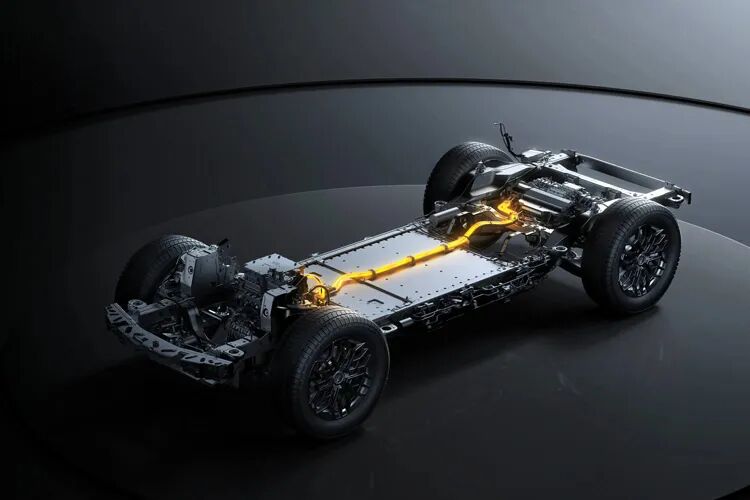
For EVs, the approach major manufacturers take is simple: whether front axle or rear axle, left wheel or right wheel—wherever power is needed, install a motor there and run a wire over to supply power. This distributed electric drive solution has made front-and-rear dual-motor four-wheel drive commonplace for EVs, and the "front 1, rear 2" three-motor vector electric drive is also rapidly gaining popularity. Meanwhile, systems like BYD's e4 platform directly equip each of the four wheels with a wheel-side motor, so that each wheel has completely decoupled torque distribution.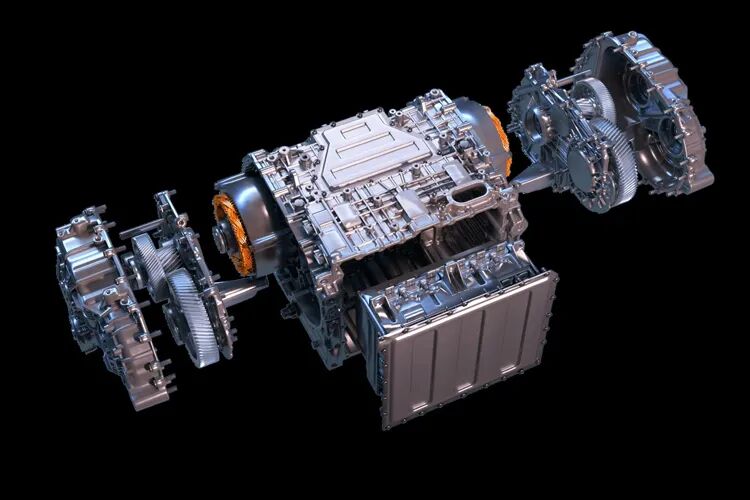
It is precisely this revolutionary change that gives distributed electric drive safety redundancy unimaginable in gas cars. Taking BYD e3/e4 as an example, theoretically, if one or two wheels lose grip due to a blowout, the electronic control system can actively offset the yaw moment through differential torque—and driving straight is completely fine. As for normal driving conditions, a full-size SUV like the DENZA N9 (2026 model) can directly generate reverse yaw moment through rear-wheel vector drive when steering sharply, offsetting roll at its source. It can raise straight-line driving speed after a blowout to 180km/h and achieve a moose test result of 210km/h—ending the contest outright.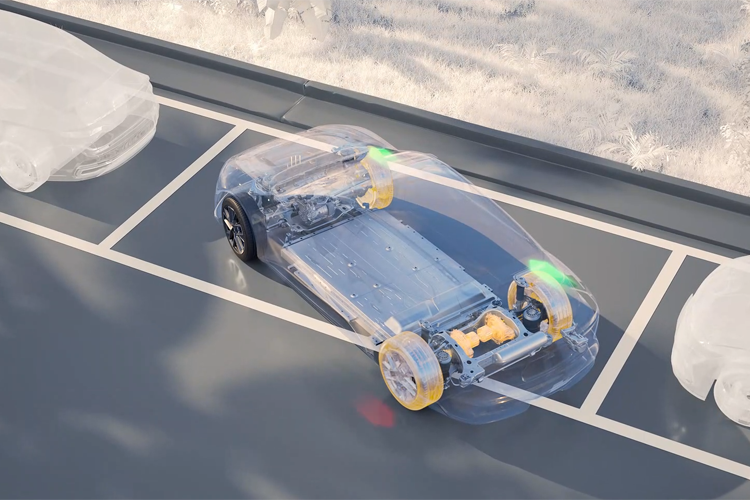
In addition, distributed electric drive controls not only power distribution but also the steering of each motor, greatly expanding the functionality of the vehicle's drive system. Taking the YANGWANG U8 based on the e4 platform as an example, by rotating the left and right wheels in opposite directions, the car can turn in place like a tracked vehicle (such as a tank)—undoubtedly an impossible knot for gas cars with a single power source. As for products with a "front 1, rear 2" layout, although they cannot achieve such an extreme effect, they can still minimize turning radius through compass-style turning.
● High-Voltage Active Suspension
▲ Representative models: BYD YANGWANG U7/U8/U9, Li Auto L9 Livis, AITO M9 Ultimate. Active suspension can't really be called an EV-exclusive black technology. Flagship models from German BBA all feature active air suspension systems, but they are basically low-voltage power supply systems. Their focus is on suppressing pitch, compensating for bumps, and adjusting chassis height. The peak power of hydraulic or air pumps is only a few kW—just enough to support the body.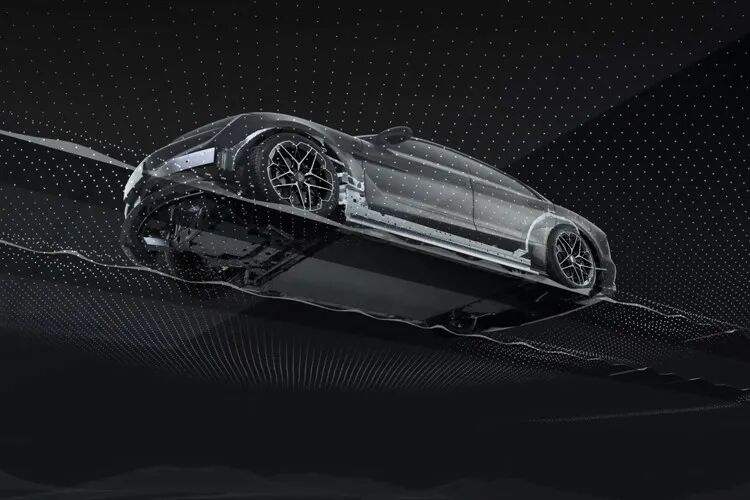
However, active suspension systems with 400V or even 800V high-voltage power supply systems are a completely different story. They can raise system power to the 50kW level through distributed electronically controlled actuators. The most typical example is BYD's DiSus series suspension system, which greatly expands the functional boundaries of active suspension.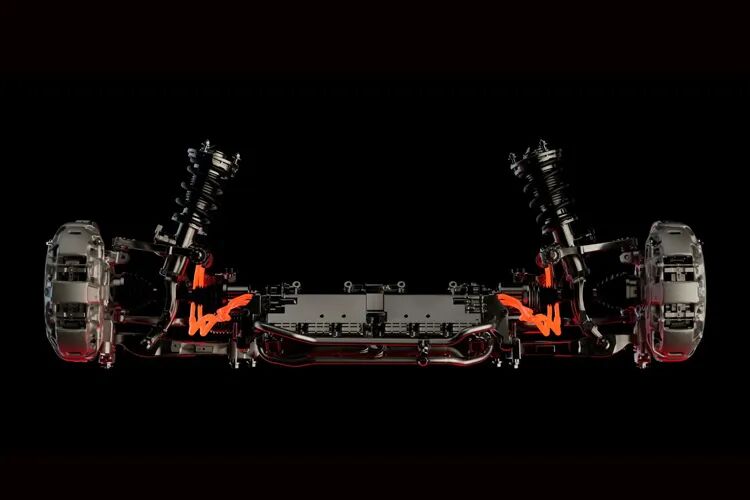
For example, DiSus-P Ultra can lift any one wheel through four independent hydraulic actuators and walk on three legs. For off-road vehicles such as the YANGWANG U8 and FANGCHENGBAO Bao 8, this can truly be called the most valuable black technology.
Then there's the DiSus-X on the YANGWANG U9 Xtreme. Backed by a 1200V high-voltage electrical system, this thing directly uses dual-valve hydraulic dampers + high-voltage pump units + four independent hydraulic actuators to achieve an exaggerated 12000N single-wheel actuation force and 500mm/s lift speed for active suspension. Height and stiffness adjustment are basic operations; it can even make this sports car—with a curb weight of 2475kg—jump in place. In the eyes of any Italian sports car manufacturer, this kind of function can only be called alien technology.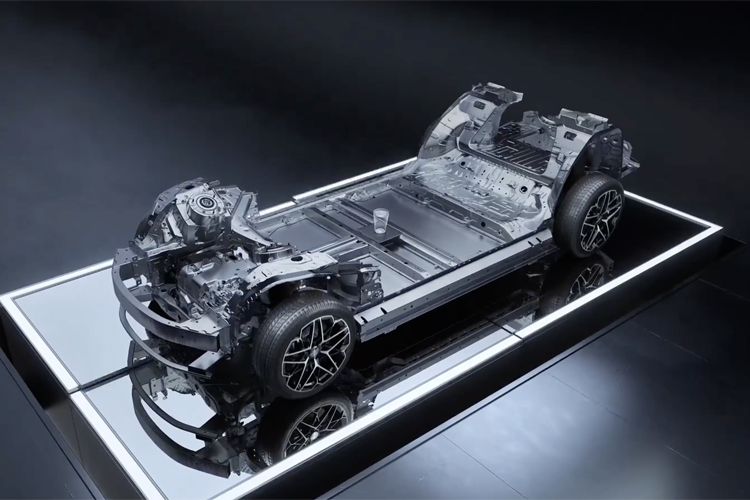
Of course, the most revolutionary is still the DiSus-Z on the YANGWANG U7. Other suspensions at least still have springs, air, or hydraulics as actuation media, while this suspension system directly replaces the traditional combination of springs + dampers with four linear motors. Through high-voltage electronic control, it can achieve precise control of lift, damping, and rebound—and can even reversely drive the mover through wheel movement to charge the battery. Looking across the century-long history of automobile development, this is a black technology worthy of being recorded in history.
Final words: Entering the new energy era, changes in drive methods have triggered a fundamental transformation in the functional attributes of passenger cars, which in turn has brought revolutionary changes to users' car usage. Today's EVs are gradually transforming from simple transportation tools into mobile living spaces with multiple functions. At the same time, from an industry perspective, the large-scale adoption of EVs is also driving major changes in the entire society's energy structure. Shrinking demand for fossil fuels is almost inevitable, and the power grid will also inevitably develop toward a more diversified supply/demand system.
-
![]()
Anthropic Gives AI Models an 'ID Card' That Even They Can't Forge
-
![]()
OFILM Reinvests in Zhongke Daojing to Drive TGV Technology into Semiconductor Packaging
-
![]()
At Least Eight Orders in a Single Year: Why Does This Optical Company Keep Receiving Repeat Orders?
-
![]()
Pupil Dilation Isn't About "Magnifying the Image"—It's About "Replicating the Exit Pupil": The Underlying Logic of Optical Waveguide Eyebox
-
![]()
When World Models Are No Longer a Selling Point, Is the Intelligent Driving Industry Entering the Era of Technology Delivery?
-
![]()
Beyond Smart Glasses, Meta Charts a New Course!
-
![]()
Over 4,000 Exhibitors and Six Attraction Strategies Across 31 Provinces: The CIIE Investment Opportunity List
-
[Insight] 2026 Global and China LDI Inner-Layer Photosensitive Circuit Ink Market Status and Major Enterprise Analysis