Why Are the Most Innovative Young People Choosing Xiaohongshu as the App Store for the AI Era?
 04/15 2026
 747
747
Author|Lin Yi Editor|Focus Editor
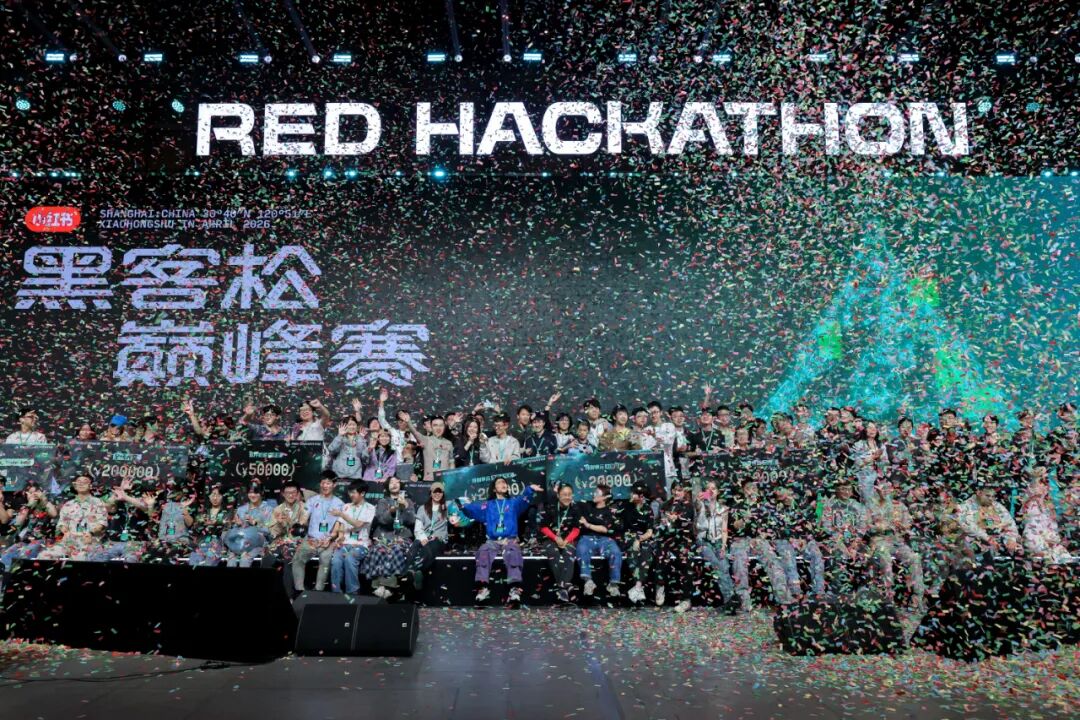
In April 2026, Xiaohongshu welcomed its largest-ever offline tech event—the inaugural Hackathon Summit—at the Shanghai Zhangjiang Science Hall.
The event kicked off on April 7th, with closed-door development taking place on the 8th and 9th, followed by Demo Day presentations and awards on the 10th. Over the course of 48 intense hours of development, 200 top participants formed temporary teams, collaborated, transformed their ideas into code, and created demos.
Unlike traditional hackathons, there was no secrecy here—everyone was eager to share their projects. In Silicon Valley-style hackathon culture, ideas are closely guarded assets. However, in this competition, one team's members shared their concept with rivals on the first day, who not only stayed but encouraged them to "make it into the Top 10."
These young people, accustomed to "Build in Public" on social platforms, represent a typical sample of today's AI application entrepreneurship. They are no longer traditional programmers who only write code but a diverse group of new-generation creators. Among them are numerous geeks skilled in the latest AI tools, AI-native users from Generation Z and even Generation Alpha, as well as many startup founders who have already secured early-stage funding. At the demo event, you could see product teams where half the members were artists, cross-disciplinary groups attempting to launch personal computers into space via satellites, and even developers with disabilities addressing real, personal pain points.
Just two years ago, Xiaohongshu, primarily a lifestyle community, lacked a dedicated tech content category. Today, the platform's annual growth in tech content releases exceeds 100%, with the number of creators growing by over 200%. The total exposure for topics related to "hackathon" alone has surpassed 100 million views. Currently, 160,000 developers are active on the platform, with over 90% developing more than one product within a year.
From Vibe Coding, intelligent agents, embodied intelligence to AI hardware, a visible migration is underway. The question is: Why are the most innovative people in the AI era flocking to Xiaohongshu?
Code is no longer the barrier to innovation; demand insight is
AI has largely leveled the playing field for innovation. In the past, hackathons focused on coding skills, frontend-backend architecture coordination, and who could code the longest. Now, the popularity of Vibe Coding (natural language programming) has reduced development barriers to nearly zero. Coding skills are no longer scarce; what matters is the ability to design interactions between humans and objects or systems.

This technological democratization allows non-traditional geeks from various fields to break through professional barriers and step onto the innovation stage. At the demo event, 13-year-old junior high student Yang Xizhe not only skillfully used AI programming but also taught millions on Xiaohongshu to memorize English words using AI. Liberal arts high school student RPONE developed an Apple screen-reading app through self-study, reaching the sixth spot on the paid tools chart. Zhang Zhenyao, a French major, ventured into embodied intelligence, creating a low-cost quadruped robot dog capable of doing laundry.
Tsinghua physics graduate student Wang Junkai developed "Mira," a soft-hardware AI emotional companion, showcasing technology for good. As a companion device, it alleviates mental fatigue during tedious tasks by proactively monitoring and adjusting the environment, such as dimming lights or playing music. This frees researchers from emotional stress caused by mundane "dirty work," allowing them to rediscover the joy of pure intellectual pursuit.
Even more touching is how technological inclusivity empowers minorities to reshape their destinies. Wang Ning, who regained mobility after three years of paralysis, became the product manager for three million people with spinal cord injuries. His self-developed EMA (electronic muscle stimulation) device bypasses foreign patents, reducing costs to under 30,000 yuan, filling a gap in the medical system's periphery. He then conceived products like smart urinals that directly address pain points.
However, technological democratization raises a new question: When everyone can code, what sets you apart?
Chen Jinchu, a serial entrepreneur who has participated in hackathons domestically and abroad for years, offers an observation: Pre-AI products tended to be geeky showcases with technical sophistication but weak transmissibility (spreadability). In contrast, at least one-fifth of the projects in this Xiaohongshu hackathon would go viral if posted on the platform.
The difference lies in "human touch."
Brain-controlled wheelchairs operated by thought, MIRA lamps with active sensing and emotional feedback, pocket guitars enabling anyone to play music anytime—these products all originated from insights into genuine human pain points.
Counterexamples exist as well. One team created an "aggregation tool to help you choose the cheapest model." While technically sound, it lacked human touch and transmissibility (spreadability).
This distinction determines who truly succeeds. As Chen Jinchu puts it, the AI application layer has no absolute technical barriers; true success hinges on marketing, storytelling, and meme-making abilities. Thirteen-year-old Yang Xizhe also discovered that a project's starting point is no longer code thickness but idea quality and depth of pain point insight.
Build in Public completely rewrites the innovation path
Demand insight is the starting point for innovation, and Build in Public is the shortest path to validate these demands. On Xiaohongshu, innovation shifts from closed-door development to user-driven co-creation.
Traditional product development follows: closed-door development → polishing → market launch. This group, however, uses a "pitch idea → rapid validation" approach, seeking the right path through authentic feedback in the comments section: identify pain points → post surveys → receive feedback → create minimum demos → continue posting → iterate based on comments → find partners, acquire seed users, even secure funding. This transparent community participation ensures products have "human touch" from birth and allows developers to precisely uncover long-tail needs easily overlooked by traditional methods.
Over the past year, Xiaohongshu has seen over 1.1 million posts related to "Build in Public," primarily from users born in the 2000s and 2005s.
Sun Donglai's dream-sharing app Dreamoo exemplifies this path. He posted a survey without paid promotion, generating 200,000-300,000 views and over 5,000 interactions. Commenters shared dreams daily or even started serializing them as novels on Tomato Novel (Fanqie Novel). Realizing the underestimated demand, he scrapped heavy VR features based on feedback, switched to 2D, and gained 3,000 seed users in the first month without paid promotion.
Tang Yu, developer of a smart cane, documented his entire process on Xiaohongshu—how he conducted research, encountered pitfalls, and incorporated user suggestions. Commenters pointed out: "Your product's users and buyers are separate. Blind people won't buy it themselves; their families will. You need to figure out how to reach them." Others noted the high price, prompting him to consider using smartphone processing power to replace some hardware and reduce costs. These iterative directions all came from the comments. Unexpectedly, a sizable client found them through Xiaohongshu for algorithm training and supply chain integration.
High school student Xian Xinglang couldn't afford the $99 annual Apple developer fee. He posted on Xiaohongshu seeking help from popular developer Huasheng, who shared the message online. Xiao Hong, founder of the renowned agent company Manus, saw it, sent the money, and said: "50% of talent comes from positive feedback." With this sponsorship, Xian's emotion management app ranked among the top 50 globally in Apple's Swift Student Challenge and later met Tim Cook.
Such stories are not rare on Xiaohongshu. Tsinghua student Jin Qunlin, founding an AI marketing video startup, found four co-founders through Xiaohongshu private messages after sharing his entrepreneurial ideas. Chen Yuntao, a Gen Z robotics entrepreneur, met his co-founder through the platform.
The community isn't just a source of traffic—it's a source of co-founders. Users are not just content consumers but product managers and testers. New AI app company Flowith built 10 Q&A groups with 500 members each on Xiaohongshu, directly converting community feedback into high-frequency product iterations. Ten of their 30 team members were recruited through Xiaohongshu. As their CMO put it: "Xiaohongshu genuinely helps us go viral and achieve significant leverage at low cost."
This cross-disciplinary knowledge flow deeply resonates even with seasoned technologists. Song Jinke, a Hong Kong University postdoc and core promoter of LangChain (one of China's earliest RAG solutions), found cross-disciplinary innovation inspiration on Xiaohongshu. While developing the companion hardware "Yaka 1020," as a software expert, he browsed design sketches and philosophies shared by industrial designers and hardware developers on Xiaohongshu, compensate (filling) his hardware aesthetics gap and successfully transitioning from circuit board to toy design. From initially feeling out of place to heavy reliance over six months, Song discovered on Xiaohongshu what vertical tech forums couldn't offer—real people with authentic aesthetics and cross-disciplinary experiences freely interacting.
From posting surveys and demos to instant optimization based on comments, developers here complete the full loop of "demand discovery → MVP validation → product co-creation."
From lifestyle community to AI-era innovation incubator
Why has Xiaohongshu become the hub for this wave of innovation migration? The answer lies in its differentiated underlying ecosystem.
First is its egalitarian distribution mechanism. Unlike centralized short-video platforms favoring one-way content consumption, Xiaohongshu is a bidirectional UGC community. Many developers at this hackathon reported that Xiaohongshu's recommendation algorithm is highly precise, directly connecting product and technical details to specific interested circles. This precise reach empowers developers with immense freedom to grow, efficiently matching them with core seed users, like-minded technical partners, and even keen early investors during their nascent stages.
Second is its irreplaceable "human touch." It's neither as hardcore and dry as pure tech forums nor as incapable of hosting serious professional discussions as general entertainment platforms. With 350 million monthly active users, Xiaohongshu accumulates vast, specific life scenarios and long-tail needs. When geeks' cutting-edge technologies meet genuine Volkswagen (mass) pain points here, intense chemical reactions occur. This explains why a mass community not only doesn't dilute tech concentration but fosters the most grounded AI innovations.
This egalitarian distribution logic aligns perfectly with the "Build in Public" culture: You don't need fame first, just expression. Being seen enables connections.
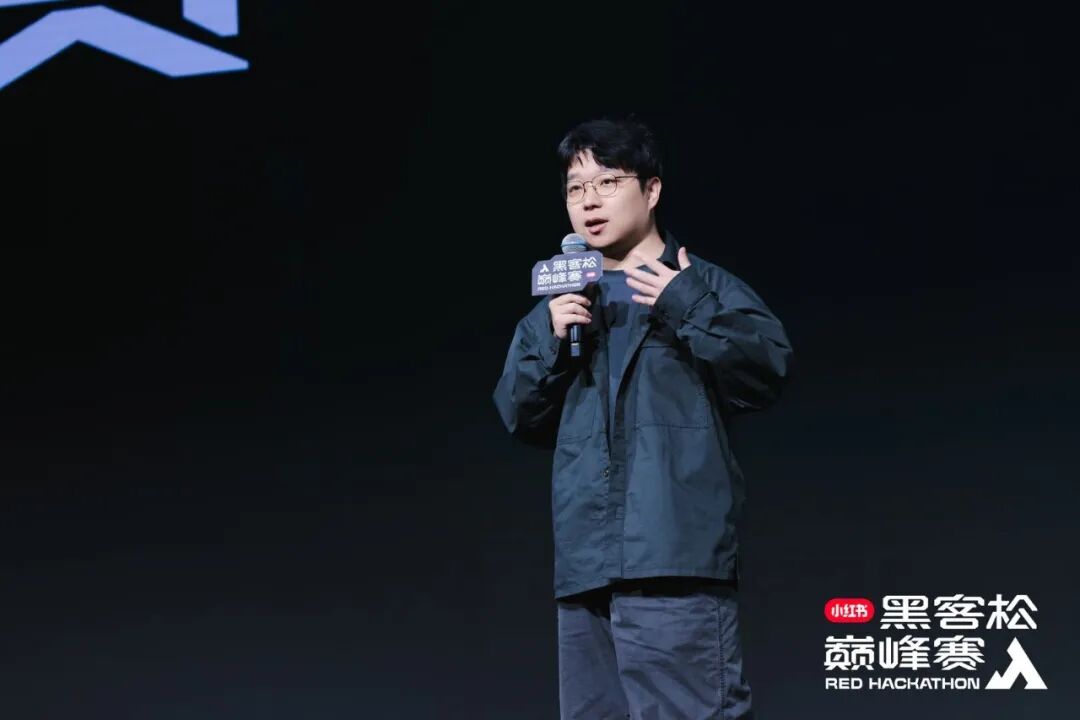
Sanbing described Xiaohongshu's role as a "connector": making real human needs visible, enabling high-density connections between entrepreneurs and investors, and bringing academia and industry together. He said: "To be a connector, content isn't what we need most—it's making creative people visible. Only when seen can connections trigger."
To support this vast innovation ecosystem, beyond content, Xiaohongshu provides systemic, full-lifecycle support for these Builders.
Last year, the platform launched an open platform supporting developer access to widgets and C2C transaction functionality for closed-loop monetization, with crowdfunding features planned to precisely address hardware developers' mass production challenges. Additionally, the community is deepening ties with external top-tier tech ecosystems. This hackathon partnered chiefly with HarmonyOS, providing developers with foundational technical support. The cross-disciplinary team "Hey! Star," attempting to launch personal computers into satellites, utilized HarmonyOS's AR features and sensor capabilities to hand-build an end-side personal satellite operating system in 48 hours, winning the "HarmonyOS Special Unit Award" at the hackathon summit.
Regarding capital and stage resources, Xiaohongshu's strategic investment department continuously scouts quality projects on the platform, offering financing channels to developers. The top teams at this hackathon earned direct access to the 2026 WAIC World Artificial Intelligence Conference, stepping onto the global tech stage.
This exceeds what a mere content community can achieve.
"The Newly Created," and new stories
At this hackathon gathering countless top minds, we witness a vibrant new generation of AI talent: self-taught programming high school seniors in liberal arts, anime-character-cosplaying second-generation enthusiasts, with 62% of participants being Gen Z, including pre-teen prodigies. This generation, raised in social media, inherently understands how to leverage communities for public sharing and collaborative co-creation. 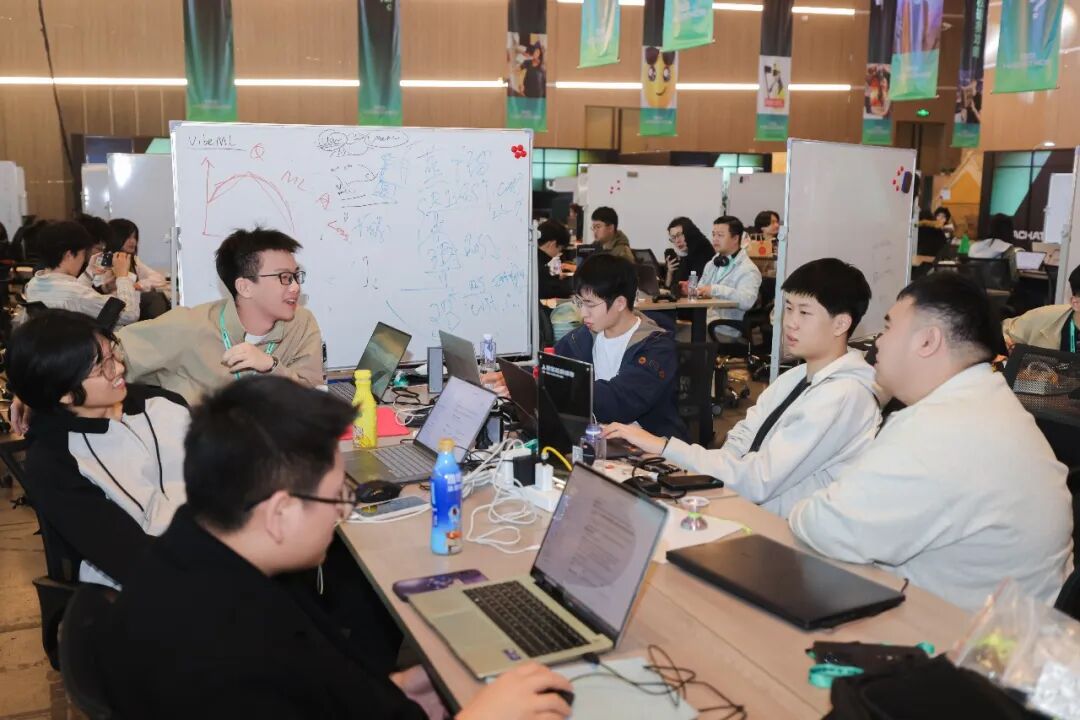
This is likely the youngest hackathon ever, with this collective image echoing Xiaohongshu community head Palu's summary of this generation's shared ethos: "Act, don't wait." At the demo event, he said: "Build in Public isn't just a strategy—it's a value system, part of creation itself."
From a broader platform perspective, behind the hackathon lies Xiaohongshu's evolution beyond a lifestyle sharing hub. It's transforming from its original lifestyle community into the AI era's App Store and innovation incubator.
This continuous self-growth capability of the community originates from the unique underlying ecosystem of UGC communities.
When a developer shares a half-finished demo and it is seen by others who share the same concern; when a user with a specific need voices their real pain point, triggering another engineer capable of solving the problem.
This bidirectional, human connection enables creators at the amateur stage to precisely reach their first batch of seed users, allows niche needs to be fully exposed within a mainstream community, and fosters ongoing chemical reactions between the tech-savvy and real-life scenarios. UGC content, an egalitarian traffic distribution mechanism, and precise recommendation algorithms collectively establish a connectivity infrastructure centered around 'interests,' enabling people interested in the same topics to find each other.
In a sense, this hackathon represents a concentrated demonstration of Xiaohongshu's technological ecosystem development over the past two years. From the 2025 Indie Developer Competition to this Hackathon Summit, from the original lifestyle content ecosystem to the massive influx of tech and AI-native communities this year. Behind each wave of new participants lies the natural emergence of the community ecosystem.
Such breakthrough stories have been continuously unfolding over the past year, from the explosion of gaming and anime enthusiasts to the growth of tech verticals. These are merely another validation of this underlying logic in the AI era.
Perhaps looking back in a few years, this hackathon will, to some extent, represent a precious collective memory for this generation of AI creators. Young people from all corners of the world coding through the night under the same roof, freely forming teams, sharing ideas without reservation, and exchanging far-fetched ideas beside tents late at night. These shared moments far transcend the significance of any specific product or award. For them, the hackathon becomes a utopia where they can shed their social identities and work pressures, enjoying the pure joy of creating to solve problems within a limited timeframe.
And the value of the community lies precisely in making such encounters possible. Communities that continuously nurture new groups and ecosystems have also found their new narrative in the AI era.
-
![]()
The Allure of 'Acquisition Spree': Li Shufu's Left Turn, Xu Jiayin's Right
-
![]()
Strategic Transformation Yields Results: Phoenix Optics Reports 10.9% YoY Rise in Core Net Profit for H1 2026
-
![]()
Three Key Growth Trajectories Synergize! Crystal-Optech Reports 3.478 Billion Yuan in Revenue for H1 2026
-
![]()
Semi-Annual Report Sparks XPENG Motors Buzz
-
![]()
1.6 Billion Big Order Secured! SeeYA Technology's Revenue Soars by 287.87% in the First Half of the Year
-
![]()
Baidu's Profits Plunge by 68%: Unraveling the Mystery Behind the Numbers
-
![]()
Baidu’s Profits Tumble by 68%! Where Has All the Money Gone?
-
![]()
Hynix’s Taobao Store Shuts Down Abruptly: What Should Customers Do About Warranty Services for Memory Modules?