Huawei and Apple Forge Ahead in Market Entry: When Will AI Glasses Experience Their 'iPhone Moment'?
 04/15 2026
 675
675
Author | Wuzi
The AI glasses market is heating up, with more players joining the fray.
Image source: Apple
On April 13, 2026, Huawei Consumer Business Group officially announced that it would unveil its inaugural AI glasses at the Huawei Pura Series and Full-Scenario New Product Launch Event on April 20. These glasses boast a screen-free, lightweight design. Coincidentally, Bloomberg reported that Apple is also developing AI glasses, codenamed N50, slated for a 2027 release—also screen-free.
Huawei and Apple are not the pioneers in the AI glasses arena. Following Meta's ignition of the AI glasses market in 2023, tech firms like Xiaomi, Kwark, and Li Auto have launched their own offerings.
As global tech behemoths, Huawei and Apple's simultaneous foray into the AI glasses market signals that these devices are not just another smart gadget but have the potential to become an entry-level terminal.
However, in stark contrast to the fervent development of AI glasses by tech companies, the market currently appeals mainly to tech enthusiasts and has yet to captivate the general public.
This raises a pertinent question: Why has the AI glasses industry reached a stalemate of 'internal excitement but external indifference'? When will AI glasses products undergo a revolutionary 'iPhone moment'?
01
Smart Glasses Have Been Around, but AI is Sparking a Second Wave
Smart glasses are not a new concept. In April 2012, Google introduced Project Glass, an AR glasses model weighing just 50g, supporting functions like photography, video recording, and calls. However, due to its high price and limited battery life, the product failed to gain significant market traction.
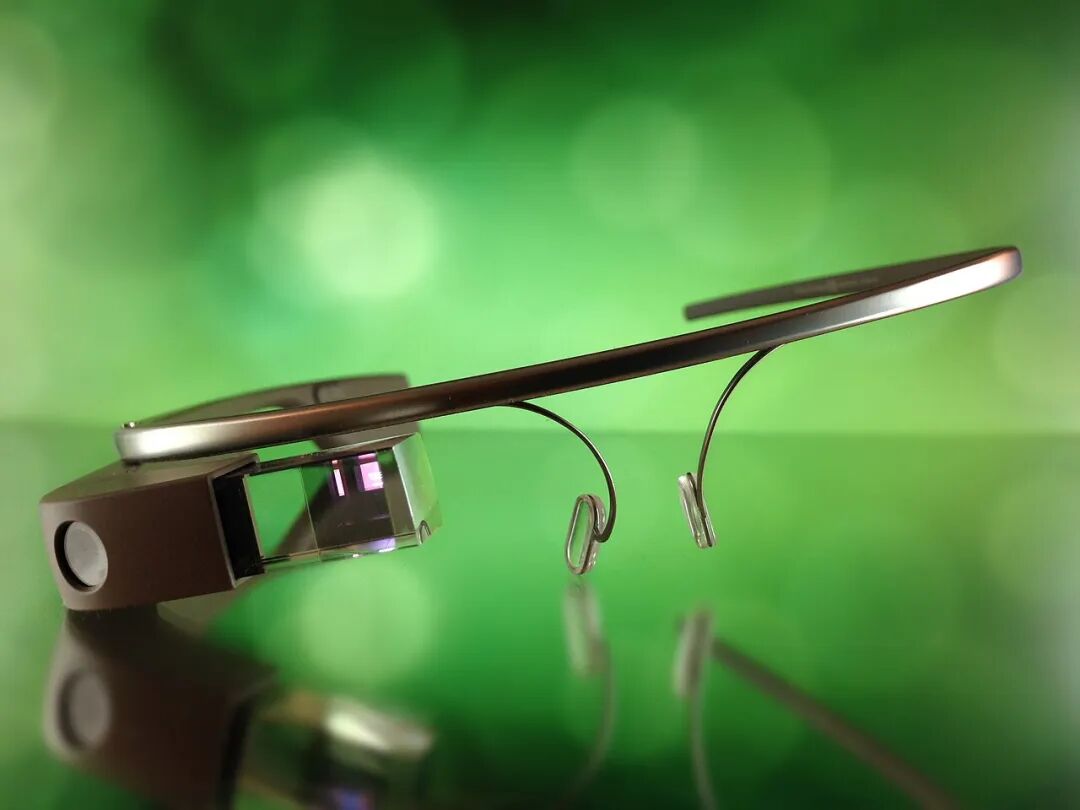
Image source: Google
Given the 'impossible trinity' of performance, battery life, and portability, smart glasses have since evolved into two extremes. One category, exemplified by AR and VR glasses, sacrifices portability for superior display capabilities. The other, represented by Bluetooth glasses, prioritizes lightweight design and portability but offers limited functionality.
Although AR, VR, and Bluetooth glasses each cater to niche audiences, their lack of core use cases for ordinary users has confined them to niche positioning, preventing them from becoming mass computing platforms comparable to smartphones.
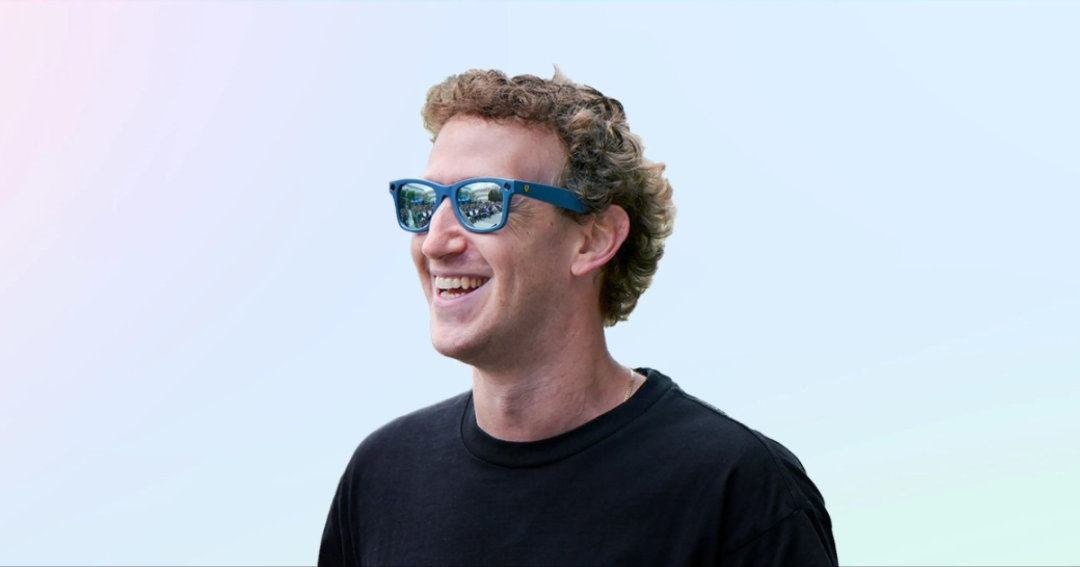
Image source: Meta
Recognizing the challenge of display-based glasses in gaining market acceptance, Meta, a company fully committed to the 'metaverse,' took a different approach. In September 2023, Meta collaborated with Ray-Ban to launch the AI glasses Ray-Ban Meta, abandoning display functionality and adopting a design and weight comparable to ordinary glasses. The product was an instant success.
According to EssilorLuxottica, the manufacturer of Ray-Ban Meta, 7 million units of the AI glasses co-developed with Meta were sold in 2025. From 2023 to 2024, EssilorLuxottica sold a total of 2 million AI glasses.
From a product design standpoint, Ray-Ban Meta is similar to Bluetooth glasses, both being more lightweight than traditional smart glasses. However, compared to the limited functionality of Bluetooth glasses, Ray-Ban Meta incorporates cameras and AI, significantly expanding its use cases.
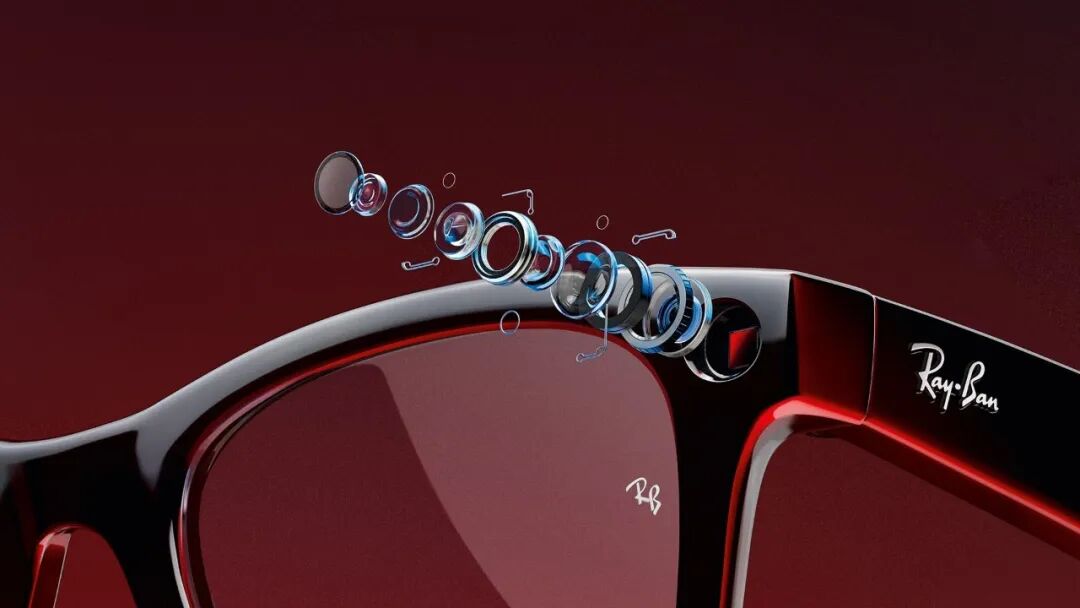
Image source: Meta
Ray-Ban Meta integrates Meta's self-developed Llama model, enabling users to issue commands to the glasses via natural language for tasks such as checking the weather, identifying surroundings, and taking photos/videos. In essence, smart glasses infused with large models resemble an always-online intelligent assistant, freeing users' hands and enabling one-click operations.
Farsight believes that the success of Ray-Ban Meta fundamentally stems from Meta's deep understanding of market demand for glasses. Users primarily need a pair of glasses they can wear daily, with technological features being secondary.
By prioritizing lightweight design to meet the basic need of 'wearability' and then deeply integrating AI technology to significantly expand capabilities, Ray-Ban Meta naturally attracts users seeking novelty.
02
AI Glasses Face Design Homogenization, with Ecosystems Creating Differentiated Experiences
The success of Ray-Ban Meta not only opened up new possibilities for Meta but also ignited the 'AI glasses' market.
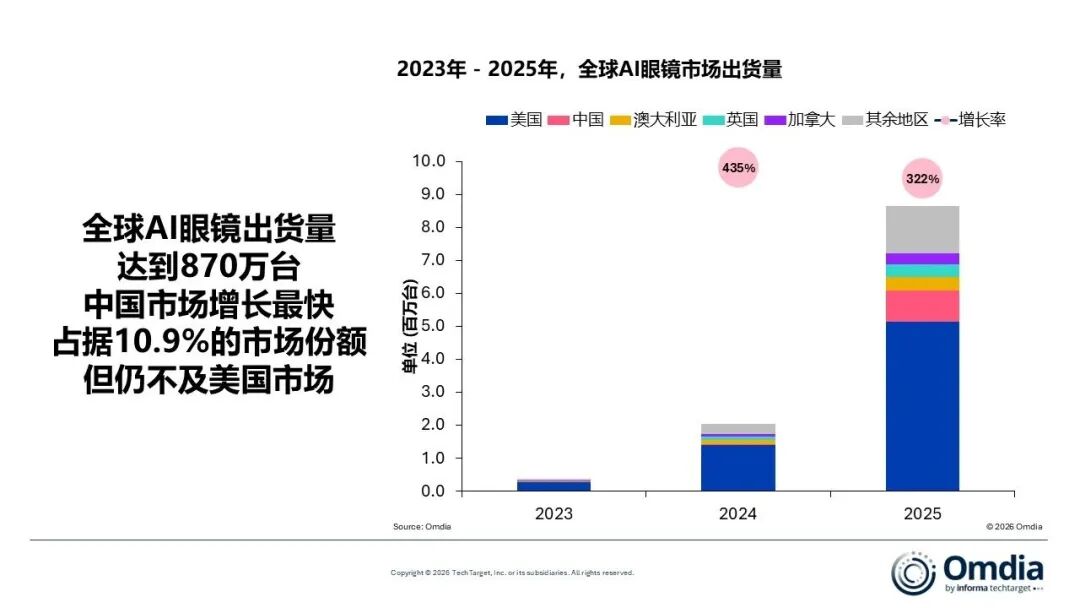
Image source: Omdia
Data from Omdia shows that global AI glasses shipments reached 8.7 million units in 2025, a 322% year-over-year increase. Shipments are expected to exceed 15 million units in 2026. In 2025, China's AI glasses shipments reached approximately 1 million units, making it the fastest-growing AI glasses market globally, accounting for 10.9% of the global market and ranking second.
Seeing the accelerating release of dividends in the AI glasses market, tech companies like Xiaomi, Rokid, and Alibaba have entered the fray, launching products along the lines of Ray-Ban Meta.
Due to highly similar design philosophies and hardware configurations, most AI glasses on the market today offer comparable basic experiences, supporting four main functions: photography, audio playback, AI Q&A, and ecosystem interconnection. The differences primarily lie in the ecosystem interconnection dimension.

Image source: Kwark
For example, as a product developed by an automaker, one of the standout features of Li Auto's AI glasses, Livis, is its deep integration with Li Auto vehicles. Users can control the vehicle and check its status via natural language. Leveraging Alibaba's rich e-commerce ecosystem, Kwark's AI glasses support services like Alipay's 'Scan to Pay,' Taobao's real-time price comparison, and Fliggy's itinerary reminders.
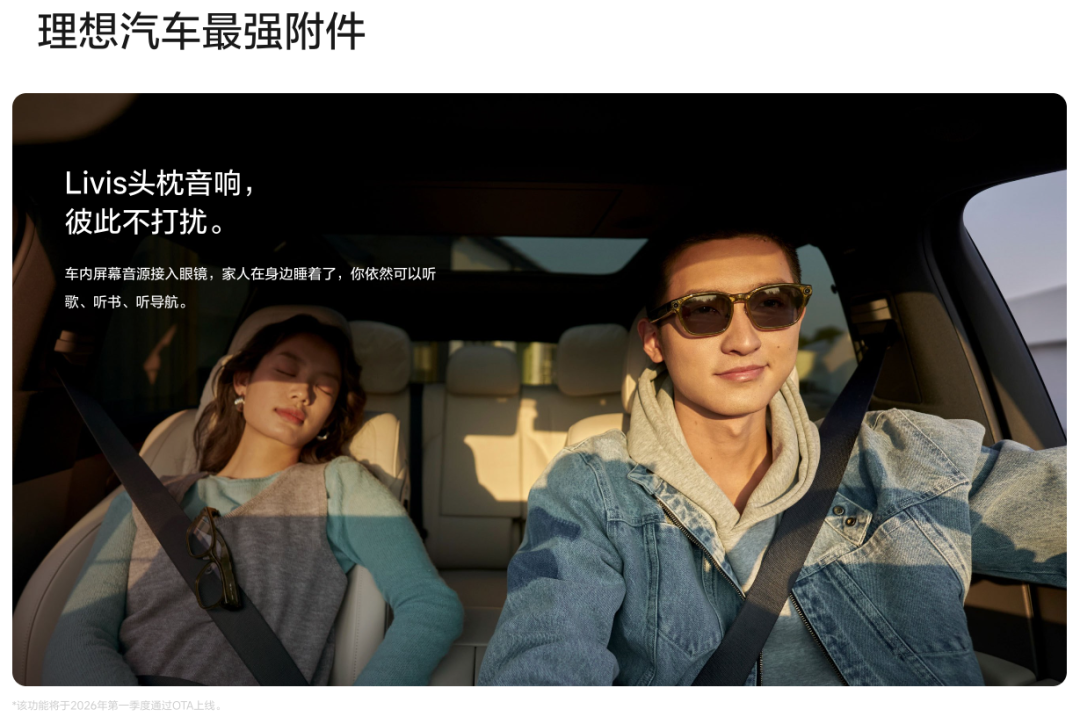
Image source: Li Auto
Xiao Li, a Li L6 owner, had long been frustrated by the lack of headrest speakers in his vehicle and recently purchased Li Auto's AI glasses, Livis. 'I've been following Livis since Li Auto first launched it last year, but I didn't see much use for it at the time. However, after a recent system update added headrest speaker functionality, I decided to buy it,' Xiao Li told Farsight.
Next, the AI glasses launched by Huawei and Apple will also focus on building core competitiveness through their ecosystems. According to Bloomberg, Apple's AI glasses will require pairing with an iPhone to enable functions like photography/video recording, call answering, and notification receiving. Its core AI capabilities will rely on Siri on iOS.
In response, Liu Jiansen, Research Director at Omdia, stated, 'The ultimate winners in the AI glasses market will be those who can seamlessly integrate AI glasses into a broader device ecosystem—connecting glasses with smart devices, user environments, and services to provide real value in users' interconnected lives.'
However, it's important to note that while smartphones vary in performance, their core functions and usage paradigms are highly consistent, creating stable user expectations and a foundation for scalability.
Imagine if only Alibaba's phones supported online shopping, WeChat's phones supported social networking, and Douyin's phones allowed short-video browsing. The mobile internet ecosystem would not be as prosperous. From this perspective, AI glasses' varying interconnection capabilities due to different ecosystem barriers are not inherently differentiated advantages but rather signs of product immaturity.
If AI glasses remain trapped in ecosystem silos, they may attract niche segments but will struggle to form a unified product perception and ecological synergy, ultimately limiting industry scale expansion and innovation vitality.
Clearly, breaking down ecosystem barriers and moving toward standardized capabilities is a crucial step for AI glasses to enter the mainstream market.
03
Three Major Challenges to AI Glasses Adoption
Despite global AI glasses shipments reaching the tens of millions, this pales in comparison to smartphones, which ship in the billions. This largely indicates that AI glasses have yet to reach their true 'iPhone moment.'
The reason is that while AI glasses offer a significantly improved user experience compared to traditional Bluetooth or VR glasses, they have not created revolutionary product value that can convince ordinary users to make a purchase.
Xiao Li, who bought Li Auto's AI glasses, Livis, for their headrest speaker functionality, said, 'I already wear prescription glasses. Although Livis is relatively lightweight and has a long battery life, wearing them all day still causes ear pain, making them far less comfortable than my prescription glasses.'
As a result, Xiao Li revealed that he only wears Livis when driving and switches back to his regular prescription glasses at home or in the office.
Applying Yu Jun's (former Baidu VP of Products and Chief Product Architect) product value formula, 'Product Value = (New Experience - Old Experience) - Migration Cost,' Livis creates unique ecological interconnection value for users. However, the need to accommodate more components also increases migration costs, leading Xiao Li to switch between AI glasses and regular prescription glasses.
It's worth noting that currently, only a portion of the Chinese population wears glasses daily, while many users have no habit of wearing glasses. Considering that AI glasses have yet to fully win over glasses wearers, persuading those who do not need glasses to adopt them voluntarily will be even more challenging.
After in-depth experience with AI glasses, Farsight believes that for these products to become the core entry point of the next era, they must simultaneously evolve in three dimensions: hardware, functionality, and user experience.
From a hardware perspective, AI glasses need to become even lighter. Currently, the mainstream weight of AI glasses has been reduced to around 40g. While this is lightweight enough, it is still twice as heavy as prescription glasses, which weigh around 20g. If AI glasses cannot convince nearsighted users to wear them for extended periods, they will struggle to reach a broader audience.

Image source: Rokid
In terms of functionality, tech companies should not rely solely on ecosystem advantages as competitive barriers when developing AI glasses. Instead, they should achieve functional parity through open APIs. For example, in June 2025, Rokid's AI glasses collaborated with Alipay to launch the 'Scan to Pay' function. Recently, Li Auto's AI glasses, Livis, also added support for Tesla vehicle control.

Image source: OpenAI
From a user experience perspective, as OpenAI CEO Sam Altman said, 'Imagine if we could create an AI that is with you in any environment, serving you. This could be a very compelling direction for AI hardware development.'
AI glasses should not follow the path of traditional smart devices like smartphones, earphones, or action cameras. Instead, they should leverage their comparative advantages—such as being worn on the body, having AI always online, and enabling first-person perspective shooting—to explore unique 'killer' application scenarios.
Reviewing the history of technological development, no revolutionary product achieves success overnight. Even the iPhone underwent multiple iterations, evolving from an early experimental form into a smart terminal that reshaped the industry landscape.
Viewing the AI glasses industry through this lens makes its current stage clearer. After nearly three years of industrial exploration, AI glasses have yet to reach their true 'iPhone moment.' However, their rapidly climbing shipments and the entry of leading tech companies send a clear signal: AI glasses are not a false proposition but have the potential to become a trillion-dollar product category.
With the push from tech giants, AI glasses, even if they cannot replace smartphones, will likely integrate into users' daily lives in a more natural and accessible way, expanding the boundaries of 'human-computer interaction.'
Interactive Topic
Have you purchased AI glasses? Do you think they will become the entry point of the next era?
This article is original content from Farsight and is prohibited from reproduction without authorization.
-
![]()
Registered Capital Slashed to 372 Million Yuan! Yutong Optical Finalizes Industrial and Commercial Change Registration
-
![]()
Zhuque-3 Successfully Lands, and 'Time Traveler' Secures Another ¥100 Million in Funding: China's Commercial Space Industry Experiences a 'Dynamic August'
-
![]()
Autohome Faces a Shrinking Window of Opportunity
-
![]()
Even a Titan Like Musk Has Faced Setbacks in Fulfilling Promises
-
![]()
AI Office: The End of the Racing Era, Context Becomes the Key to Success
-
![]()
Domestic Vehicle Chassis Revolution ②: The Steering Wheel Remains, But Mechanical Connections in the Steering System Are Decreasing
-
![]()
Exploring MiniMax Design: Can Video Editing Be as Simple as Speaking?
-
![]()
Why Can SenseTime Achieve Profitability While CloudWalk Still Faces Challenges, Despite Both Adopting Large Models?