Net Profit Soars by 48.3%! This Financial Report Unveils the 'Books' of High-End Optics
 04/15 2026
 748
748
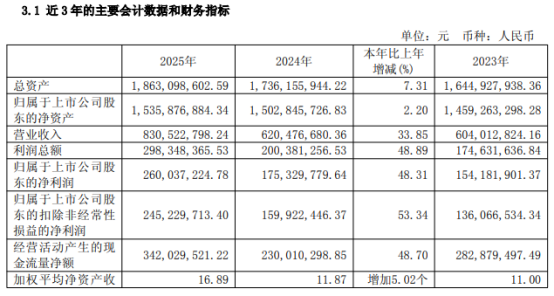
On April 15, Xiamen Lidin Optics Co., Ltd. (hereinafter referred to as 'Lidin Optics') unveiled its 2025 annual report. The report showed that the company achieved revenue of RMB 831 million, marking a 33.9% year-on-year increase. The net profit attributable to shareholders reached RMB 260 million, up 48.3% year-on-year. Meanwhile, the net profit attributable to shareholders after deducting non-recurring items stood at RMB 245 million, representing a 53.3% year-on-year surge.
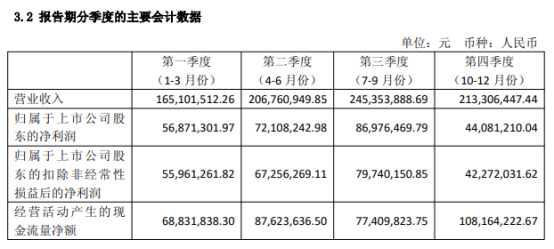
Against the backdrop of the overall pressure facing the current optical lens industry, these results are truly remarkable. However, a more in-depth analysis of the quarterly data reveals a different picture. In the fourth quarter of 2025 (Q4), while the company's revenue still managed to maintain a 29.0% year-on-year increase, reaching RMB 213 million, the net profit attributable to shareholders took a hit, falling by 26.1% year-on-year to RMB 44.08 million. The Non-GAAP net profit (net profit after deducting non-recurring items) also saw a decline of 19.1%, showcasing the characteristic of 'increased revenue but decreased profit'.
Lidin Optics stated that the substantial growth in both revenue and total profits was mainly attributed to a significant rise in order income for its core business, optical lenses, in 2025. The company has consistently focused on the high-end market for optical lenses. In particular, it has achieved remarkable success in boosting the sales of professional products, such as those used in drones and unmanned logistics.
This trend sends a clear signal: As the market for smartphone lenses reaches saturation and the price war for automotive lenses intensifies, manufacturers with genuine capabilities in customized R&D and high-reliability mass production are speeding up their shift towards high-barrier niche segments. These segments include drone vision, industrial machine vision, and intelligent logistics perception. By doing so, they are reaping profit returns that far surpass those of traditional markets.
Additionally, given that the company's overseas revenue accounted for a staggering 75.40% of its total revenue, the annual report disclosed exchange losses of RMB 10.0102 million in 2025. This represents a significant shift compared to the exchange gains during the same period last year, which had a negative impact on the current period's profits.
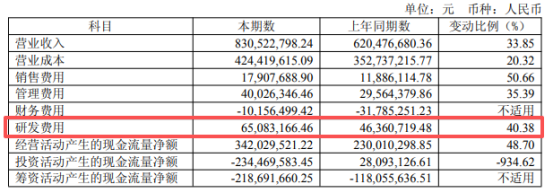
Furthermore, the gross profit margin for Q4 alone was 46.05%. This indicates a slight year-on-year increase of 0.36 percentage points. However, it also shows a significant quarter-on-quarter decline of 5.24 percentage points compared to Q3, suggesting short-term changes in the cost structure or product mix during that quarter. The company did not provide a specific explanation for the year-on-year decline in net profit for Q4 in this annual report. The market may subsequently keep a close eye on whether the company further discloses relevant details during its earnings briefing or on interactive platforms.
Such short-term fluctuations do not change the long-term value assessments. The optical lens industry has long moved beyond the stage where success could be achieved merely through standard product capacity scale. Especially in emerging fields like drones and unmanned logistics vehicles, each lens is almost a 'custom part'. This requires manufacturers to be deeply involved in product definition and scenario testing for their clients.
Lidin Optics' impressive full-year high growth has solidified its leading position in the professional optical niche market. Meanwhile, the Q4 profit retreat serves as a wake-up call to the market: The path to high-value scenarios is not without obstacles. Companies need to maintain a clear understanding of profit quality during the period of robust order volume growth.
This year, competition in the professional-grade market of the optical industry is gradually entering its second phase. What truly determines corporate value will no longer be the simple accumulation of shipment figures. Instead, it will be the technological sophistication and depth of scenario understanding behind each lens.
-
Alibaba’s Earnings Soar with Triple Catalysts: Full-Stack AI Hits Maturity, Capital Efficiency Drives Sustainable Growth
-
![]()
Raking in Big Profits Overseas! Chery’s Overseas Revenue Makes Up 70% in H1, with Gross Margin Climbing to 16.1%
-
![]()
Alibaba’s New Fiscal Quarter: 45% Revenue Surge in Alibaba Cloud, Enhanced Profitability in AI Cloud, but Widening Losses in the Application Layer
-
![]()
The AI Version of 'PayPal Mafia' Has Arrived: 20 AI Startups Raise Over $4.6 Billion in Funding
-
![]()
Wang Jian's Vision: Paving a Pathway for Alibaba Through AI
-
![]()
Hyundai Motor Workers Strike Today, Fearing Job Losses to Robots
-
![]()
Embracing 'Light': O-film Unveils Its 'Illuminating the Future' Strategy
-
![]()
SenseTime’s SenseNova U1.5 Lite Goes Open Source: Ushering in a New Era of Predictable AI Image Generation