OPPO's Big Brand Year: New Questions That Matter More to Me
 04/15 2026
 754
754
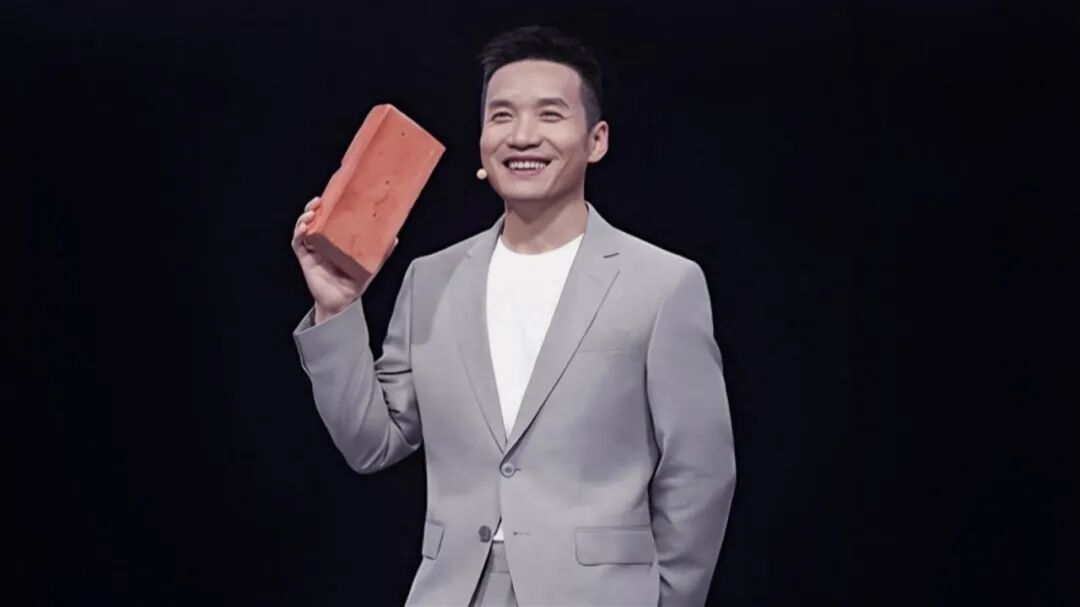
The Second Half Proposition for the Principle-abiding Player.
Omdia has just released a report on the Chinese mainland smartphone market for the first quarter of 2026, and it's quite thought-provoking. Total shipments for the quarter reached 69.8 million units, down 1% year-on-year. The industry continues to move steadily within a mature market cycle, but notable shifts have occurred among leading brands.
Huawei reclaimed the top spot with a 20% market share, while Apple secured 19% thanks to strong sales of its iPhone 17 series throughout the cycle. OPPO maintained its solid third-place position with 11 million units shipped, capturing a 16% market share.
In today's industry climate, this number is quite significant. Over the past quarter, the gap between leading brands has widened sharply. Some brands saw growth exceeding 40%, while others experienced declines of over 30%. Amid such volatility, OPPO managed to hold its ground, matching its market share from the previous year and outperforming the overall market average.
Since the beginning of the year, OPPO has maintained a high level of activity.
realme officially rejoined the OPPO ecosystem, completing the brand matrix integration. The Find N6 foldable phone set a new record for first-day sales among all brands and form factors in the past year. OPPO signed a deep strategic cooperation agreement with JD.com to achieve RMB 100 billion in sales over three years. At MWC Barcelona, OPPO and MediaTek jointly unveiled on-device full-modality AI large model technology. In just a few days, the annual imaging flagship Find X9s series will make its debut.
Many in the industry are calling 2026 OPPO's "big brand year." I've discussed this with numerous industry insiders, and there's considerable anticipation for this company that has long upheld "principle" as its core value. Today, let's explore several key questions about OPPO and its position in the second half of the smartphone industry.
01
Efficiency and Balance in Brand Integration for Market Preservation
In a mature consumer market, the top priority isn't aggressive expansion but maintaining the core business and improving internal efficiency. OPPO's most significant move this year has been realme's full reintegration, which has been crucial for stabilizing its 16% market share.
In January 2026, OPPO officially announced that realme would become an independent sub-brand under its umbrella, fully rejoining the OPPO ecosystem. This ended years of separate operations for OPPO's main brand, OnePlus, and realme in the domestic market. Starting in March, realme gained access to OPPO's nationwide network of over 30,000 offline service centers. From April onward, the realme community and official store gradually completed seamless migration of user benefits, with no major user fluctuations during the integration process.
During the smartphone industry's rapid growth phase, a multi-brand strategy helped OPPO achieve full market coverage across all price segments. The OPPO main brand focused on offline channels and the mid-to-high-end mass market. OnePlus targeted the online performance segment and high-end tech enthusiasts, while realme captured young users and the online cost-effective market with its "Dare to Leap" positioning. Together, these three brands supported OPPO's market volume.
Entering the mature market era, the multi-brand parallel model presented new challenges. Overlapping product lines in the key 2,000-3,000 RMB price range, along with redundant investments in supply chain procurement, channel resources, and marketing across the three brands, diluted overall profit margins. During its independent operation, realme faced sustained pressure in the fiercely competitive online market, leading to two rounds of organizational optimization by the end of 2025. Reintegration became a logical choice.
After realme's return, OPPO reorganized its product lines at the group level, establishing clear differentiated roles: the OPPO main brand focuses on the offline mass market and high-end flagship segments, OnePlus deepens its presence in the domestic online performance market, and realme primarily serves overseas online markets outside China.
This well-defined matrix directly optimized previous internal resource competition while leveraging economies of scale to enhance OPPO's bargaining power in supply chain procurement. This was key to maintaining market share despite significant cost increases for memory chips in 2026.
In its first full quarter after realme's return, the OPPO ecosystem stabilized its 16% market share, delivering a qualified performance amid widespread fluctuations among leading brands. Meanwhile, OPPO signed a strategic cooperation agreement with JD.com in March, setting a target of exceeding RMB 100 billion in sales across JD's channels over the next three years, continuously improving its online channel layout (layout).
Beyond the efficiency gains from brand integration, OPPO faces new balancing challenges.
realme's core user base consists of young consumers seeking extreme cost-performance ratios, differing from the user profiles of OPPO's main brand and OnePlus. During integration, OPPO can retain users smoothly through benefit migration and product alignment.
Simultaneously, realme has built strong channel foundations and user reputation in overseas markets like Southeast Asia and India. After its return, OPPO can balance domestic market integration with overseas expansion through organizational optimization, ensuring stable growth in its overseas base.
02
Mindset Cultivation After Breakthroughs in Premium Products
The industry has discussed premiumization for Chinese manufacturers for years.
Competing in the premium market requires continuous product iteration and long-term brand mindset cultivation. OPPO's premiumization journey has spanned many years, and 2026, its big brand year, marks a crucial node for deepening its premium presence.
Omdia data shows that in Q1 2026, Huawei and Apple combined captured 39% of the domestic market share. In the 4,000+ RMB premium segment, their combined share exceeded 60%, dominating China's premium smartphone landscape. OPPO's sustained premium market efforts have helped it secure its position within this structure.
The Find N6 foldable phone, released in March 2026, represents OPPO's latest premium market offering. Leveraging two core technologies—the Titanium Alloy Sky Dome Hinge and Sky Dome Memory Glass—it earned TÜV Rheinland certification as the "flattest foldable phone globally," addressing the screen crease issue that has plagued the foldable industry for eight years.
On its first sales day, the Find N6 set a new record for first-day sales revenue among all brands and form factors in the past year. The 16GB+1TB top-tier version quickly sold out across multiple channels. In overseas markets like Thailand, first-day sales surged 245% compared to the previous generation.
The foldable market represents one of the few growth engines in today's premium smartphone segment. Counterpoint data shows that China's foldable smartphone shipments grew over 50% year-on-year in 2025, becoming a core growth area despite overall market decline.
OPPO's sustained investment in the foldable segment has established its leading position in China's foldable market. Multiple iterations of the Find N series have also given OPPO product competitiveness to compete head-on with leading brands in the 10,000+ RMB ultra-premium segment.
Next, OPPO will release the Find X9s Pro and Find X9s Ultra imaging flagships on April 21. The Find X9s Ultra stands as the industry's only Ultra model in 2026 where every camera has been fully upgraded, featuring dual 200MP imaging configurations and deep joint tuning with Hasselblad, continuing OPPO's deep cultivation of premium mindset in smartphone imaging.
Continuous product innovation forms a solid foundation for OPPO's premiumization. Competition in the premium market involves both parameter and configuration comparisons, as well as brand value communication and user mindset capture.
Tony Chen has repeatedly emphasized in public that "principle" is OPPO's core value—to isolate external pressures and temptations, maintain a normal mindset, and do the right things. OPPO's premium brand image building will rely on both sustained product iteration and long-term user value communication to form stable brand recognition among users.
China's domestic premium market has now entered a new competitive phase.
Huawei's Mate 80 series continued strong sales in Q1 2026, with single-model sales ranking first in the domestic market. The Pura 90 series is also set to launch soon. Optimized Kirin chip production capacity has enabled Huawei to achieve full price segment coverage from entry-level to flagship models.
OPPO's premiumization path will face Apple's ecosystem barriers as well as Huawei's brand appeal and user loyalty in China's premium market. Sustained product innovation and mindset cultivation will remain its long-term focus.
03
Experience Delivery After Deep AI Technology Cultivation
In 2026's smartphone industry, AI has transformed from a bonus feature for flagship models into a must-have across the industry.
From Apple and Samsung to Huawei, Xiaomi, and vivo, all leading manufacturers are intensively releasing AI-related technological achievements, with comprehensive development of on-device AI well underway. OPPO has also completed its strategic layout (layout) early in this industry transformation.
At MWC Barcelona 2026, OPPO and MediaTek jointly hosted the "AI for Life" keynote, showcasing their latest collaboration in on-device AI. The most industry-focused announcement was the technical preview of "OmniModel," the industry's first on-device full-modality AI large model.
This model achieves cross-dimensional understanding of multimodal information including text, images, and audio, capable of performing complex tasks like real-time scene Q&A, image content recognition, and natural language interaction. All computations occur locally on the device without cloud dependency, ensuring data privacy and fast response times.
Liao Jinsong, President of OPPO Research Institute, mentioned during the event that on-device intelligent computing forms a crucial foundation for OPPO's AI strategy, aiming to make AI a real-time, perceptible terminal experience for users. Around this core, OPPO has established a complete AI system.
At the chip level, OPPO collaborates deeply with MediaTek and Qualcomm to optimize AI computing power from the chip foundation. At the system architecture level, the self-developed AI LoRA architecture reduces memory peak usage, solving the memory bottleneck for running large on-device models. At the application level, features like on-device AI translation, AI portrait lighting, and AI imaging optimization will cover OPPO's mainstream models with the full rollout of ColorOS 16.
The comprehensiveness of this technological layout keeps OPPO in the first tier of industry competition for on-device AI. The current industry reality is that technological breakthroughs in on-device AI are still being translated into actual user experiences.
Overseas research firm SellCell's survey shows that 73% of Apple Intelligence users and 87% of Galaxy AI users infrequently use AI features in daily life, perceiving limited practical value. The domestic market shows a similar pattern, with most users' awareness of smartphone AI focused on basic functions like AI photo editing and voice assistants. Perception of technologies like on-device large models and full-modality interaction, which manufacturers heavily promote, is gradually increasing.
This represents the direction for OPPO's continued AI strategy development.
From an industry development perspective, the smartphone industry has moved past its golden age of rapid growth into a mature phase of Stock game (market share competition). Industry concentration continues to rise—Omdia data shows that the six leading brands (Huawei, Apple, OPPO, vivo, Xiaomi, Honor) now control 94% of the domestic market, with survival space for smaller brands continuously shrinking and the Matthew effect reaching historic highs.
For OPPO, realme's integration, foldable breakthroughs, and AI layout (layout) essentially prepare it for this long-term competition. Tony Chen announced years ago that OPPO would invest 50 billion RMB in R&D over three years, focusing on cutting-edge technologies like 5G/6G, AI, AR, and big data while building core capabilities in underlying hardware technologies and software engineering.
The current market environment presents new challenges for OPPO.
Since 2026, global memory chip prices have continuously risen, with their proportion in total smartphone costs surging from 12% in 2025 to 25%, creating significant cost pressure for Android manufacturers. OPPO recently announced price increases for some models in its A series, K series, and certain OnePlus models to cope with rising component costs.
Huawei and Apple haven't implemented large-scale product price hikes, leveraging cost advantages from long-term procurement agreements to expand market share. Facing both cost pressures and competition from leading brands, OPPO will maintain stable profit margins in the mid-range market through supply chain optimization and product mix adjustments. The mid-range market forms OPPO's sales foundation, and the company will seek a stable balance between cost control and market share.
Simultaneously, OPPO continues advancing its full-scenario ecosystem construction. Apple has built stable barriers in the premium market through its software-hardware integrated ecosystem, creating strong user stickiness with seamless collaboration among phones, tablets, computers, and watches. Huawei has similarly constructed a full-scenario smart ecosystem with HarmonyOS. OPPO is also expanding its IoT products, smartwatches, and tablets to continuously deepen ecosystem synergy and broaden device coverage.
Returning to the initial topic, OPPO's current foundation lies in its 16% market share, while its dense (intensive) market actions define its big brand year. In the smartphone industry's second half, long-term persistence and execution will determine brands' ultimate success.
The integrated multi-brand matrix will continuously release synergies and achieve optimal resource allocation. Product breakthroughs in the premium market will translate into user brand mindset, opening growth space amid competition among leading brands. Comprehensive on-device AI layout (layout) will deliver daily experiences perceptible to users, establishing new competitive advantages in the AI era.
The market always rewards brands that persist in user value and long-term principles with positive feedback. For OPPO, which has always emphasized "principle," the key to navigating cycles lies in returning to fundamental user needs, consistently doing the right things, and doing them well.
Original content from Xinmou
— END —
-
![]()
Registered Capital Slashed to 372 Million Yuan! Yutong Optical Finalizes Industrial and Commercial Change Registration
-
![]()
Zhuque-3 Successfully Lands, and 'Time Traveler' Secures Another ¥100 Million in Funding: China's Commercial Space Industry Experiences a 'Dynamic August'
-
![]()
Autohome Faces a Shrinking Window of Opportunity
-
![]()
Even a Titan Like Musk Has Faced Setbacks in Fulfilling Promises
-
![]()
AI Office: The End of the Racing Era, Context Becomes the Key to Success
-
![]()
Domestic Vehicle Chassis Revolution ②: The Steering Wheel Remains, But Mechanical Connections in the Steering System Are Decreasing
-
![]()
Exploring MiniMax Design: Can Video Editing Be as Simple as Speaking?
-
![]()
Why Can SenseTime Achieve Profitability While CloudWalk Still Faces Challenges, Despite Both Adopting Large Models?