Alibaba’s AI Division Takes on the 'GMV' Challenge
 04/15 2026
 499
499
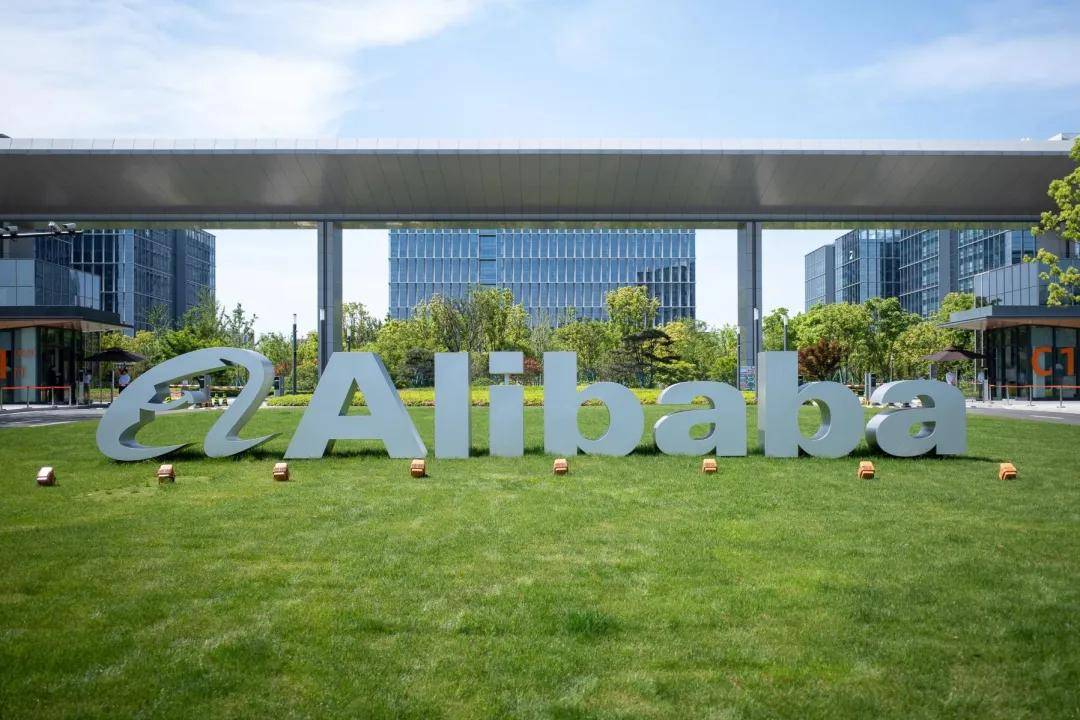
Wu Yongming Aims to Diversify Revenue Streams for Alibaba’s AI Division.
Author | Jing Xing
Editor | Gu Nian
GMV (Gross Merchandise Volume) was once the key metric for growth in Alibaba’s e-commerce empire. Whoever could attract more merchants, secure more orders, and drive more transactions was positioned at the heart of Alibaba’s power structure.
In the AI era, Alibaba has started to adopt this familiar business language, but the focus has shifted from the volume of commodity transactions to Token consumption.
In mid-March, Alibaba established the ATH Business Group. On April 8th, Wu Yongming issued another internal memo, further refining the AI organization: Tongyi Lab was elevated to a business division, led by Zhou Jingren; Li Feifei was appointed CTO of Alibaba Cloud, focusing on AI cloud infrastructure; Wu Zheming became Group CTO, overseeing the AI inference platform; and a Technical Committee was formed, personally led by Wu Yongming. These moves signify Alibaba’s ambition to elevate AI from a cloud-based business module to a Group-level commercial cornerstone.
Historically, Alibaba’s AI monetization primarily came from increased cloud service revenue. Now, Alibaba aims to sell “new commodities” tailored for the AI era—Tokens—and has restructured its internal organization around their production, distribution, and consumption. Traditionally, Alibaba’s organizational adjustments have often followed the Double 11 shopping festival, primarily aimed at optimizing for GMV.
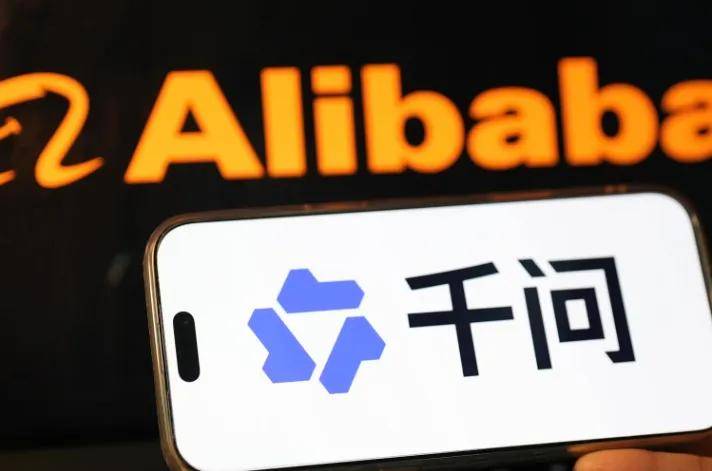
Within the new ATH Business Group, Tokens have become Alibaba AI’s equivalent of GMV. Around this new transaction model, Alibaba has constructed an “AI infrastructure network” on the supply side: Tongyi provides the models, Alibaba Cloud handles the infrastructure, the inference platform ensures efficiency, and Wukong, Qianwen, and other innovative businesses transform capabilities into products.
In his internal memo, Wu Yongming described AI Agents as a historic opportunity: “On the eve of the AGI explosion, a vast number of digital tasks will be supported by billions of intelligent agents, powered by model-generated Tokens, becoming the primary medium for interaction between humans and the digital world.”
Concurrently, Alibaba launched an internal AI incentive plan, offering employees free Token quotas for using paid AI tools and reimbursements for purchasing external development tools.
While Tokens can serve as Alibaba AI’s GMV, to be as compelling as e-commerce GMV, this consumption cannot be confined within Alibaba. Especially in a conglomerate with complex businesses and rich internal scenarios like Alibaba, significant Token consumption within Taobao, Tmall, and DingTalk can optimize organizational collaboration and strengthen AI’s strategic position. However, whether this translates into genuinely new commercial revenue depends on whether external clients and developers are willing to keep paying.
Developers contribute to Alibaba Cloud, while external clients may look to Taobao and Tmall. This is another layer of meaning behind “Alibaba’s AI Division Takes on the GMV Challenge”: at the e-commerce level, AI products must ultimately drive GMV for merchants.
Also on April 8th, changes were revealed within Alibaba’s China E-commerce Business Group. Zhang Kaifu, previously in charge of AI business, had his role adjusted. The “Intelligent Search and Recommendation Product Division,” which he led in building over the past year, was formally split, with its core multimodal R&D team integrated into the ATH Business Group. This indicates that Taobao and Tmall’s previously “self-use” oriented AI system is being re-extracted and incorporated into the Group’s Token commercialization framework.
An unexpected outcome is that HappyHorse, a popular video generation model from Alibaba’s ATH Innovation Division, originated from the Future Lab under the Taobao and Tmall Group. The project leader is Zhang Di, formerly the technical lead for Kuaishou’s Kling.
Meanwhile, Taobao and Tmall have started recruiting AI Agent service providers, with the Qianniu platform upgrading to “Qianniu Claw,” planned for promotion around the 618 shopping festival. Merchants using Qianniu Claw will consume Tokens, with costs shared by merchants or jointly borne by merchants and service providers. After these adjustments, selling Agents to merchants and validating Token value through business results have become key.
This brings Alibaba AI’s commercialization back to a classic Alibaba-style question: Can AI drive GMV? If Tokens represent internal GMV within ATH, then real GMV from merchant businesses is the ultimate test for the external market. The former addresses organizational operation, while the latter determines commercial viability.
In the past, Taobao and Tmall carried the pressure of transaction volume. Now, ATH carries the pressure of Token consumption. Alibaba is demanding that AI, like its past e-commerce business, be result-oriented, focused on commercial conversion, and growth-assessed.
GMV once defined Alibaba’s e-commerce empire. Now, Alibaba aims to first define its AI business with Tokens. This aligns perfectly with Wu Yongming’s statement at Alibaba’s earnings call: using Tokens as commodities, AI applications as distribution channels, and high-quality models as advertising, to drive MaaS (Model as a Service) business growth. Faced with the historic opportunity of intelligent agents, Alibaba chooses to let AI “emerge from the cloud,” all “eyes on profit.”
Yet, AI has not yet become Alibaba’s next Taobao or Tmall, but it has already shouldered Taobao-style GMV assessments.

AI-Driven E-commerce
Compared to previous years’ exploration of large models, a significant shift in Alibaba’s recent adjustments is the reversal of the primary-secondary relationship between its e-commerce main business and AI operations. AI is transitioning from a supporting role in superficial e-commerce transformations to becoming the core engine of Alibaba’s future growth. Whether AI capabilities can be sold and services consumed using e-commerce transaction logic will determine if Token consumption can replace GMV as Alibaba’s new growth metric.
“In the past, merchants spent hours daily on store visits, advertising placement, and SEO optimization. In the future, a 7x24 intelligent team will take over operations,” summarized an e-commerce industry observer regarding Taobao’s merchant intelligent agent features.
On March 26th, the head of Taobao and Tmall Group’s merchant platform announced the upcoming launch of the “Longxia Version” Business Assistant, providing merchants with end-to-end, low-cost intelligent agent operational capabilities.
Currently, Alibaba has built a matrix of six intelligent agent products available to merchants, marking a massive competitive game.
Even before ATH’s establishment, various Alibaba business divisions chose to independently develop and iterate intelligent agent products, such as Alibaba International’s Accio Work, Alibaba.com’s AI Business Assistant, 1688’s Aoxia, and Alimama’s AI Wanxiang. With the addition of the Wukong platform from the ATH Business Group, Alibaba is offering merchants a full-spectrum, all-types intelligent agent matrix across their entire operations.
Previously, Alibaba’s AI strategic focus leaned toward the consumer (C) side. Last year, Alibaba separated the Tongyi application team from Alibaba Cloud and placed it under the Intelligent Information Business Group to ensure Tongyi’s influence among C-side users. It merged the Tmall Genie team with the Kuake team to explore market opportunities for AI hardware.
Subsequently, by merging the Intelligent Information and Intelligent Connectivity Business Groups to form the Qianwen C-side Business Group covering Qianwen, Kuake, AI hardware, Shuqi, and UC, Alibaba attempted to establish Qianwen as a super AI-to-C gateway, extending from online platforms to scenarios like glasses, computers, and cars, bringing Qianwen closer to ordinary users.
However, as the intelligent agent market rapidly matured, Alibaba swiftly pivoted, targeting the B-side market with greater Token consumption potential as its next primary objective. With the integration of the e-commerce intelligent search and recommendation multimodal team into ATH and the replacement of scattered merchant AI tools with Qianniu Claw, AI-driven e-commerce has found its core carrier.
For Alibaba, shifting intelligent agent revenue focus to the B side is not just about merchants’ greater need for Agents but also about upgrading revenue models and profit margins. Under the MaaS model, merchant intelligent agents will directly drive massive subscription fees and Token usage fees, extending the platform’s revenue reach beyond advertising and commissions. Meanwhile, B-side merchant payments offer advantages of high average revenue per user, high willingness to pay, high profit margins, and low customer acquisition costs.
Financial report data more intuitively demonstrates the potential of e-commerce intelligent agents.
In Q4 2025, Alibaba’s China E-commerce Customer Management (primarily commission and advertising revenue) reached RMB 102.664 billion, with an adjusted profit margin around 22%, but revenue year-over-year growth was only 1%. Cloud services (including revenue from API calls, model services related to large models) reached RMB 43.284 billion, with an adjusted profit margin of 9%, but revenue year-over-year growth reached 36%. The AI Agent layout for B-side merchants means finding a larger, more maturely paying, and more profitable market for AI.
For merchants, this means a shift in past cost accounting methods.
Previously, Taobao and Tmall’s revenue mainly came from merchant transaction commissions, advertising placements, and value-added services for operational tools, with merchants calculating ROI based on advertising spend. In the large model era, AI began intervening in merchant decision-making, assisting in after-sales service, advertising placement, and inventory management. In the Agent era, the ROI calculation system between platforms and merchants is thoroughly reconstructed. When AI Agents can monitor competitor prices 7x24, automatically optimize advertising strategies, batch-generate product materials, and handle intelligent customer service inquiries, merchants must factor in saved labor and traffic costs to assess the value of purchasing intelligent agents.
Screenshots shared by users show that Alibaba’s Wukong offers around 5 million free Tokens daily, but they are consumed extremely quickly. A Wukong user told “Shixiang” that they mainly experimented with the free trial Tokens but found the testing effects unsatisfactory, with the free quota insufficient to complete effective tasks.
This is also a pain point the ATH Business Group urgently needs to address: how to steer intelligent agents away from ineffective thinking and into addressing merchants’ pain points, enabling the Token economy to bridge the last mile.

Stepping Out of Alibaba Cloud
Alibaba’s moves have been notably aggressive.
In early March this year, Lin Junyang, the core leader of Alibaba’s Tongyi Qianwen, and several key R&D personnel successively left their positions, likely due to intense conflicts between R&D goals and commercialization KPIs.
After Lin Junyang’s departure, the Qwen3.5-Omni version ceased open-sourcing, revoking developers’ free download and secondary training permissions, fully tightening model control to support the paid system. Concurrently, Alibaba Cloud service prices increased, and the Wukong intelligent agent saw frequent releases, further accelerating Alibaba’s AI commercialization pace.
Compared to ByteDance’s AI business organizational adjustments in 2024, both Alibaba and ByteDance chose to centralize resource management, mobilizing the entire organization through a unified command center and strengthening core model departments.
ByteDance opted to upgrade its AI business to a first-tier strategic department, on par with the Douyin business line, directly reporting to CEO Liang Rubo. It established two major AI teams, Seed and Flow, with Seed focusing on large model R&D and Flow on AI products.
The strategic thinking behind this is to create an independent innovation department, with rapid trial-and-error as the primary goal, exploring future intelligent application forms to avoid existing businesses interfering with the innovation pace.
In contrast, Alibaba chose to have its Group CEO personally lead, integrating scattered Tongyi, Qianwen, and Maas into ATH. The new Business Group is no longer an independent innovation special economic zone but the Group’s main force, pursuing ultimate commercialization with the highest-caliber team configuration. Wu Yongming explicitly stated that Alibaba Cloud and AI commercialization revenue should exceed $100 billion within the next five years.
Looking at global internet giants, Alibaba is making an unprecedentedly aggressive adjustment: AI stepping out of the cloud.
Through the ATH Business Group layout, Alibaba is laying out an AI infrastructure network, with Tokens as the “electricity,” Tongyi as the “power plant,” MaaS and inference platforms as the “transmission network,” and Qianwen, Wukong, and other application platforms as the “power-consuming terminals.” The entire network is directly scheduled by the CEO, with unified decision-making by the Technical Committee to ensure efficient operation from power generation to consumption.
Microsoft, Amazon, and Google all follow a cloud+AI strategy, deeply integrating their large model teams with cloud service departments. The rationale behind this is that models can leverage the existing computing clusters and government-enterprise customer resources of cloud businesses. This integration enhances unit prices and boosts payment willingness by offering models as value-added items for cloud services, thereby forming a commercial closed loop (Note: "closed loop" is retained for accuracy, as it is the same in Chinese) of cloud infrastructure + large models + industry applications, rather than independently pursuing commercialization paths.
Now, with the establishment of the ATH Business Group, Alibaba is undergoing a comprehensive realignment, utilizing AI to break free from the cloud-centric approach. As intelligent agent technology matures, the commercial scenarios for large models are no longer centered around private deployments for government-enterprise clients. Instead, they cater to enterprises, developers, and even ordinary merchants and users across the market, distributing Agent capabilities through Token distribution channels.
If this vision materializes, the daily Token consumption of a single e-commerce merchant could one day surpass that of past enterprise clients.
On the capital market front, Alibaba urgently requires a story with broader prospects. With the growth of its Chinese e-commerce business stalling at 1% and its core business facing stagnation, Alibaba desperately needs an AI narrative to bolster its Group valuation.
Previously, some investors in the capital market believed that Alibaba was overreaching by simultaneously engaging in flash sales and AI, two costly endeavors. However, the independence of ATH and its parity with e-commerce and Alibaba Cloud signify a shift in Alibaba's valuation logic, with e-commerce, flash sales, cloud services, and Token stories providing multi-pillar support.
Yet, aggressive transformations inevitably come with growing pains.
Take e-commerce scenarios as an example: ATH and Taobao-Tmall are both competing for the same merchant marketing budgets. While ATH aims to maximize Token consumption and enhance merchant marketing efficiency with AI Agents, Taobao-Tmall merchants are also considering leveraging AI to optimize marketing placements, achieving higher transaction volumes with lower traffic costs.
On the consumer side, Taobao's shopping assistant can already perform basic functions such as finding products, comparing prices, viewing reviews, and generating consumption advice. This conflicts with Taobao-Tmall's growth approach of maximizing ad space exposure and conversion. ATH is solely responsible for growing Token consumption, while potential shrinkage and losses in intermediate links are borne by Taobao-Tmall.
This was one reason why mainstream apps like Taobao, Meituan, Pinduoduo, WeChat, and Gaode previously banned Doubao's mobile AI assistant, a dilemma that Alibaba must now resolve.
Meanwhile, Alibaba needs to maintain the leading position of the Tongyi model in handling complex tasks, keep up with the soaring demand for intelligent agents, and capitalize on the strong willingness of B-end customers to pay. All the while, it must ensure that the next wave of the AI boom does not arrive too soon. During this limited window of opportunity, Alibaba needs to race against time.
-
![]()
The Allure of 'Acquisition Spree': Li Shufu's Left Turn, Xu Jiayin's Right
-
![]()
Strategic Transformation Yields Results: Phoenix Optics Reports 10.9% YoY Rise in Core Net Profit for H1 2026
-
![]()
Three Key Growth Trajectories Synergize! Crystal-Optech Reports 3.478 Billion Yuan in Revenue for H1 2026
-
![]()
Semi-Annual Report Sparks XPENG Motors Buzz
-
![]()
1.6 Billion Big Order Secured! SeeYA Technology's Revenue Soars by 287.87% in the First Half of the Year
-
![]()
Baidu's Profits Plunge by 68%: Unraveling the Mystery Behind the Numbers
-
![]()
Baidu’s Profits Tumble by 68%! Where Has All the Money Gone?
-
![]()
Hynix’s Taobao Store Shuts Down Abruptly: What Should Customers Do About Warranty Services for Memory Modules?